
How to Stop a Cavoodle Jumping Up on People (Step-by-Step)
Stop your Cavoodle jumping up on people with this step-by-step positive-reinforcement plan. Realistic timelines, common mistakes, and when to call a pro.

Written by Bradley Brown
Founder & editor · Reviewed 2026-06-30
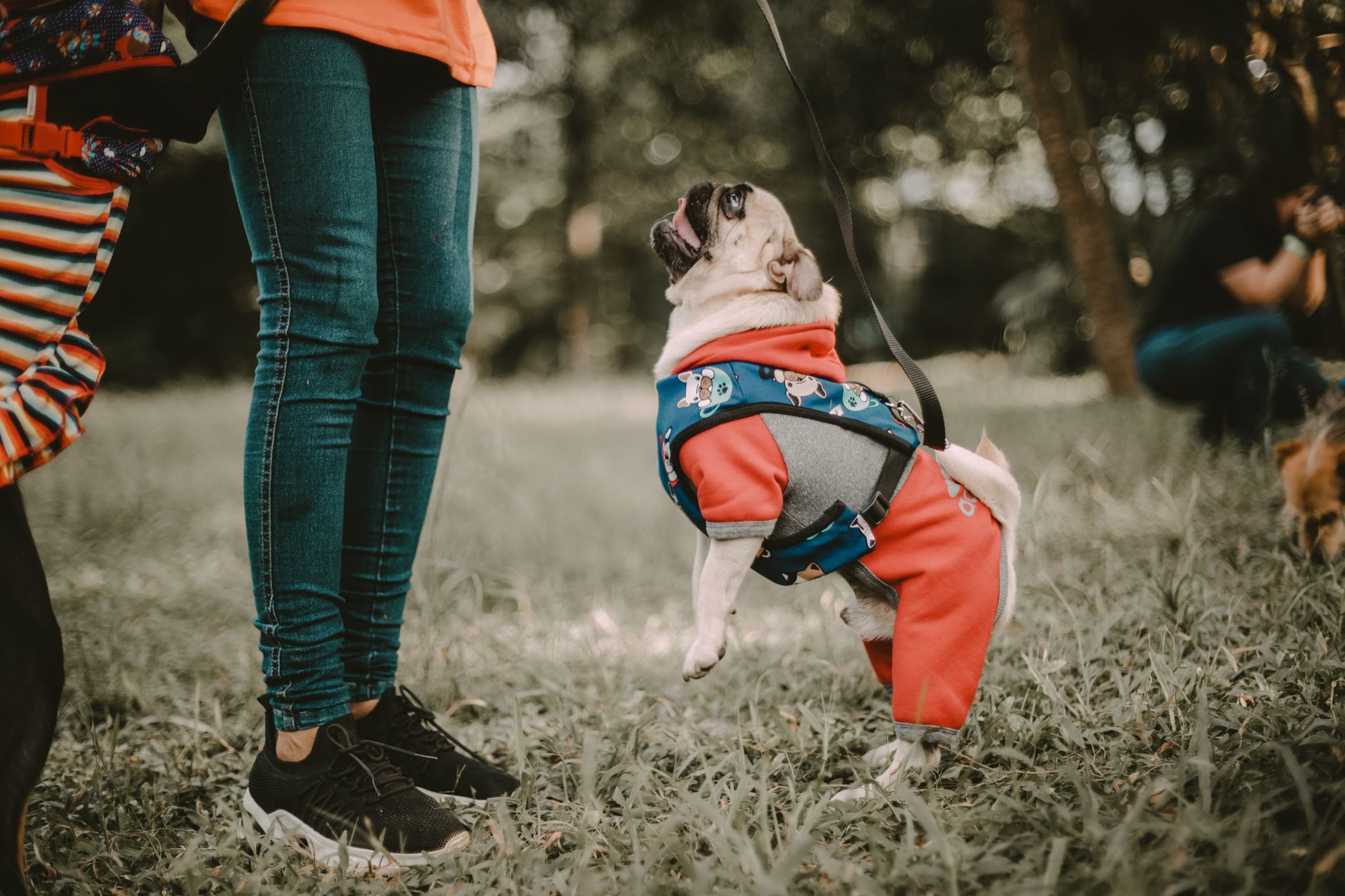
Cavoodles are enthusiastic greeters. That spinning, leaping welcome might seem cute when they're a 5 kg puppy, but the same behaviour from an excited adult — or directed at a child or elderly visitor — is a problem worth fixing early. The good news: jumping up is one of the more straightforward behaviours to change with a consistent, reward-based approach.
Why Cavoodles Jump Up in the First Place
Jumping up is attention-seeking behaviour, plain and simple. Puppies jump at their mother's face to solicit food and interaction. When your Cavoodle jumps on you and you look at them, push them down, or even say "no" — they've succeeded. Any reaction is reinforcement. Cavoodles are also a Cavalier King Charles Spaniel × Poodle cross, meaning you've got a dog bred for human company and sensitive to social feedback. They read your face and body constantly, which makes them very trainable, but also very good at finding any response and using it.
The Core Rule: No Attention for Four Paws Off the Ground
Before any step-by-step training makes sense, lock in this principle: your Cavoodle only gets attention, eye contact, touch, and speech when all four paws are on the floor. Every person who interacts with your dog must follow this. One person caving — a visitor who thinks it's sweet, a child who doesn't know the rules — resets progress significantly.
Step-by-Step Training Plan
Step 1: Manage the Environment First
Training works faster when you reduce opportunities for the unwanted behaviour to be rewarded accidentally.
- Use a lead or house line (a light 1.5–2 m cord attached to the collar indoors) during greetings so you can physically prevent jumping before it happens.
- Gate or crate your Cavoodle before guests arrive, then bring them out on lead once the guest is seated and calm.
- Brief visitors before they walk through the door. A quick text — "Please ignore him completely if he jumps, turn your back and cross your arms" — saves a lot of undone work.
Step 2: Teach the Incompatible Behaviour — "Four on the Floor"
Rather than only punishing jumping, teach your Cavoodle what to do instead. A dog sitting or standing with four paws on the ground physically cannot be jumping.
- Have treats ready in a pouch or pocket before any high-excitement moment (you arriving home, guests entering).
- The instant your dog approaches without jumping — or the instant all four paws return to the floor — mark it with a calm "yes" and deliver a treat low, near your hip, not up near your chest (which encourages upward movement).
- If they jump, turn away silently, cross your arms, and wait. No eye contact, no speech, no pushing them down. The moment four paws land, turn back and reward.
- Repeat in short 2–3 minute sessions multiple times a day.
Step 3: Add a Specific Cue
Once your Cavoodle is reliably keeping four paws down in low-distraction settings, layer in a "sit" or "off" cue:
- Say the cue once as they're about to greet you.
- If they comply, reward immediately.
- If they don't, go back to step 2 — the behaviour isn't solid enough yet for a verbal cue to be meaningful.
Avoid repeating the cue multiple times. "Sit sit sit sit" teaches your dog that the first three repetitions don't count.
Step 4: Proof the Behaviour with Distractions
This is where most owners stall. The dog is perfect at home alone with you but launches at strangers. That's because they haven't generalised the rule.
- Practise with known visitors who will follow your instructions, then move to less familiar people.
- Vary your own arrival energy. Come home calmly sometimes, excitedly other times — your Cavoodle needs to hold the behaviour regardless.
- Practise on walks. Ask a willing stranger to approach slowly. Reward calm greetings at your side before the person reaches your dog.
Step 5: Greet on Your Terms
Once the jumping is largely gone, teach your dog that you initiate greetings by crouching down to their level. This gives them the face-sniff and fuss they're seeking, but on your schedule. Many Cavoodles that jump are simply desperate to get closer to your face — giving them legitimate access to that when they're calm removes a lot of the motivation to jump.
Realistic Timeline
| Scenario | Approximate timeframe |
|---|---|
| Puppy under 16 weeks, consistent household | 2–4 weeks |
| Adult dog, consistent household | 4–8 weeks |
| Adult dog, inconsistent household or frequent visitors | 2–4 months |
| Dog with a long history of reinforced jumping | 3–6 months with professional help |
These are rough guides. Progress depends almost entirely on consistency across everyone the dog meets, not just the primary trainer.
Common Mistakes That Slow Progress
- Kneeing or pushing the dog away. This is physical interaction — exactly what they wanted. It also risks injury with a dog as small as a Cavoodle.
- Saying "down" or "off" repeatedly without the behaviour being trained first. Words mean nothing until they've been paired with outcomes.
- Allowing jumping "just this once" with certain people (grandma, the kids). Variable reinforcement schedules make behaviours more persistent, not less.
- Only practising during actual greetings. You need deliberate training sessions that simulate arrivals — walk out the back door and return, have a family member practice entries — not just hoping it resolves during real life.
- Training when the dog is already over threshold. If your Cavoodle is spinning and barking, they can't learn. Calm them first (walk away, wait for a sit), then reward.
When to Get Professional Help
Consider working with an accredited trainer (look for membership with the Pet Professional Guild Australia or the PPGA, or a trainer using force-free methods) if:
- The jumping has been happening for over a year and shows no improvement after 6–8 weeks of consistent work.
- Your dog is knocking over children or vulnerable adults, creating a safety risk that can't wait.
- The jumping is accompanied by mouthing, nipping, or frantic arousal that doesn't settle quickly.
- Household members can't or won't follow a consistent protocol — a trainer can often help with the human side of the equation too.
A couple of sessions with a good trainer typically costs $150–$350 AUD and can cut months off your training timeline by identifying exactly where your approach is breaking down.
As an Amazon Associate we earn from qualifying purchases.
Frequently asked questions
How long does it take to stop a Cavoodle jumping up on people?
Most owners see clear improvement within 4–8 weeks when everyone in the household is consistent. Puppies can learn faster — sometimes in 2–3 weeks — while adult dogs with a long history of jumping may take 3–6 months. The single biggest factor is whether every person the dog meets follows the same rules.
Should I knee my Cavoodle in the chest to stop them jumping?
No. Kneeing is a physical interaction, which is often exactly the attention the dog was seeking. It also carries a real risk of injuring a small dog like a Cavoodle. Turn your back and withdraw all attention instead — this is both safer and more effective.
My Cavoodle only jumps on visitors, not on me. Why?
Visitors are novel and exciting, and they're less consistent about ignoring jumping than you are. Your dog has simply learned different rules for different people. You'll need to involve willing visitors in training sessions and brief unfamiliar guests before they interact with your dog.
Is jumping up a sign my Cavoodle is dominant?
No. The dominance explanation for jumping has been largely discredited in modern veterinary and behaviour science. Jumping is attention-seeking and greeting behaviour — your dog is excited to see people, not trying to assert rank. Treat it as a reinforcement problem, not a power struggle.
My Cavoodle puppy is only 10 weeks old — is it too early to start training this?
It's actually the ideal time to start. Puppies are learning what works from day one, so consistently withholding attention for jumping and rewarding four paws on the floor from the first week home means you may never develop a serious jumping problem at all. Keep sessions very short — 1–2 minutes — and use small, soft treats.
Can I use a spray bottle or shake can to stop my Cavoodle jumping?
These aversive methods are not recommended. They can create anxiety and fear in a sensitive breed like the Cavoodle, and they don't teach the dog what to do instead of jumping. Positive reinforcement — rewarding the behaviour you want — produces faster, more durable results without the risk of side effects.
Free printable
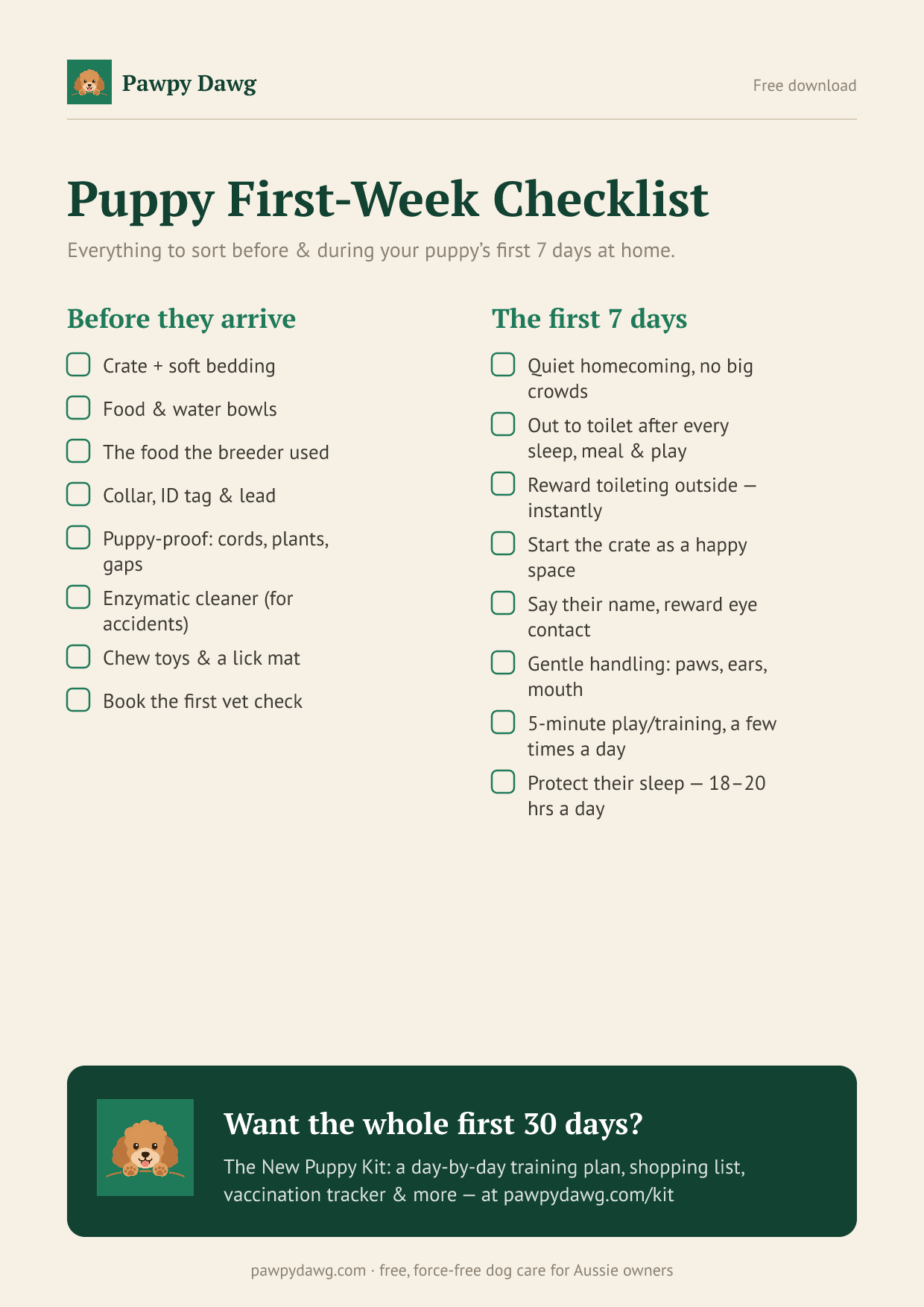
Free: the Puppy First-Week Checklist
Everything to sort before and during your puppy's first 7 days home — a printable one-pager. Plus the occasional genuinely useful dog tip. No spam, unsubscribe anytime.
Related guides
How to Stop a Cavoodle Pulling on the Lead (Step-by-Step)
Is your Cavoodle pulling on the lead? Follow this step-by-step positive reinforcement plan with realistic timelines, common mistakes, and pro tips.
Read the guide →
How to Stop a Cavoodle Barking at Strangers (Step-by-Step)
Cavoodle barking at strangers? This step-by-step positive-reinforcement plan covers desensitisation, threshold training, common mistakes, and realistic timelines.
Read the guide →
Cavoodle Separation Anxiety: A Step-by-Step Fix
Cavoodle separation anxiety is common but fixable. Follow this step-by-step positive reinforcement plan with realistic timelines and expert advice.
Read the guide →