
How to Stop a Cavoodle Biting and Mouthing (Step-by-Step)
Cavoodle biting and mouthing driving you mad? Follow this step-by-step positive-reinforcement plan to stop it fast — with realistic timelines and expert tips.

Written by Bradley Brown
Founder & editor · Reviewed 2026-06-30

Cavoodles are gentle, sociable dogs, but every puppy — regardless of breed — is born with a mouth they use constantly. Mouthing and biting are completely normal canine behaviours, but they need to be redirected early. Left unchecked, what feels like harmless nibbling at eight weeks becomes genuinely painful (and embarrassing) by five months. The good news: Cavoodles are eager to please and highly food-motivated, which makes them excellent candidates for positive-reinforcement training.
Here is a practical, step-by-step plan that actually works.
Why Cavoodles Bite and Mouth in the First Place
Understanding the why makes training far more effective.
- Teething — Puppies teeth from around 3–7 months. Chewing relieves discomfort.
- Play behaviour — Littermates teach bite inhibition through play; when a pup leaves the litter, humans have to continue that education.
- Attention-seeking — If mouthing has ever got a reaction (even a yelp or a laugh), the behaviour is reinforced.
- Overstimulation — A tired or overstimulated Cavoodle loses impulse control quickly.
- Lack of outlets — Insufficient enrichment means pent-up energy comes out through the mouth.
Step-by-Step Plan to Stop Cavoodle Biting and Mouthing
Step 1 — Teach Bite Inhibition First (Weeks 1–3)
Before you try to eliminate mouthing entirely, teach your Cavoodle how hard is too hard. This is called bite inhibition, and it is considered a critical safety skill by veterinary behaviourists.
How to do it:
- Let your puppy mouth your hand during calm play.
- The moment you feel any pressure above a gentle touch, let out a clear, sharp "Ouch!" and immediately go still and boring — no eye contact, no further engagement for 10–20 seconds.
- Resume play calmly. Repeat every single time pressure exceeds your threshold.
- Over 1–2 weeks, gradually lower the threshold so even light pressure earns the same response.
This mirrors what a littermate would do. The message is: teeth = game over.
Step 2 — Redirect to an Appropriate Outlet (Every Single Time)
Never just punish the behaviour — always show your Cavoodle what is acceptable to chew.
Redirection toolkit:
- Keep a tuggy toy or rope toy on your person during play sessions.
- The instant mouthing starts, produce the toy, wiggle it enticingly, and praise enthusiastically when your dog takes it.
- For teething relief: freeze a wet washcloth, a Kong stuffed with wet food, or purpose-made rubber teething rings.
- Rotate three to four toys to keep novelty high — Cavoodles get bored quickly.
Consistency is everything. Every family member must redirect every time. One person tolerating mouthing undoes weeks of work.
Step 3 — Use Time-Outs for Persistent Nipping
If your Cavoodle ignores your "Ouch!" and redirection, calmly remove yourself or the dog from the space.
Time-out protocol:
- Say a neutral cue word — "Too bad" works well.
- Gently place the puppy behind a baby gate or in a small, safe pen for 30–60 seconds. No drama, no long lectures.
- Return, greet calmly, and try again.
- Three or more time-outs in one session? The puppy is likely overtired — end the session with calm settle time.
Avoid scruffing, pin-downs, or "alpha rolls." These are outdated techniques that increase anxiety and can worsen biting in sensitive breeds like Cavoodles.
Step 4 — Reinforce Four Paws on the Floor and a Calm Mouth
Actively reward what you want to see, not just punish what you don't.
- Capture calmness: Whenever your Cavoodle is near you with a closed, quiet mouth, deliver a small treat and quiet praise.
- Teach "Leave it": This cue gives your dog a job to do instead of mouthing. Hold a treat in a closed fist; when the dog stops nosing and backs off, mark with "Yes!" and reward from your other hand.
- Reward four paws down: If jumping and mouthing go together (common in Cavoodles), ignore the jump entirely and reward the second all four paws hit the floor.
Step 5 — Manage Energy and Enrichment
A tired Cavoodle with a busy brain bites far less. Structure your dog's day deliberately.
| Need | Recommended daily amount | Ideas |
|---|---|---|
| Physical exercise | 20–30 min (puppy) / 30–45 min (adult) | Leash walks, backyard play, recall games |
| Mental enrichment | 10–15 min | Sniff mats, Kongs, puzzle feeders |
| Social interaction | Short sessions, multiple times daily | Training, gentle play, grooming |
| Rest | 16–18 hrs (puppy) | Crate or pen downtime between sessions |
Puppies who skip naps become the canine equivalent of an overtired toddler — mouthy, frantic, and impossible to reason with.
Common Mistakes That Make Cavoodle Biting Worse
- Rough play with hands — Never let a puppy treat your hands as toys, even when tiny. It teaches that skin is fair game.
- Inconsistency across the household — Grandma thinks it's cute; the kids are terrified. Mixed messages stall progress.
- Shouting or physical punishment — Raises arousal and fear, both of which increase biting.
- Giving attention after biting — Even negative attention (pushing the dog away, yelling "No!") can reinforce a dog that is seeking any response.
- Expecting overnight results — Bite inhibition is a skill that takes repetition, not a switch you flip.
Realistic Timeline
| Week | What to expect |
|---|---|
| 1–2 | Puppy starts to pause after your "Ouch!" — bite pressure may reduce slightly |
| 3–4 | Redirects to toys reliably during calm play; mouthing during excited play still common |
| 6–8 | Mouthing noticeably less frequent; puppy seeks toys spontaneously |
| 3–4 months of consistent training | Mouthing largely replaced by appropriate play and chewing behaviours |
Teething puppies (3–7 months) may temporarily regress — this is normal. Stick to the plan.
When to Get Professional Help
Most Cavoodle mouthing resolves with consistent training. Seek help from a qualified, force-free trainer or veterinary behaviourist if you notice:
- Growling, stiffening, or hard staring before or during biting (this is not normal puppy play)
- Biting that draws blood regularly despite weeks of consistent training
- Biting that escalates in intensity rather than decreasing
- A dog over 12 months who is still mouthing at the same level as a puppy
Look for trainers certified through the Pet Professional Guild Australia or the Delta Institute. A single private session (typically $120–$200 AUD) can identify specific triggers you may be missing.
Quick-Reference Checklist
Use this daily until mouthing is reliably under control:
- Every family member using the same response to mouthing
- Tuggy or chew toy within reach during all play sessions
- Calm mouth being actively rewarded with treats and praise
- Puppy getting adequate sleep between sessions
- Enrichment provided daily (sniff mat, Kong, puzzle feeder)
- Time-outs used calmly, not angrily
- Rough hand play avoided entirely
As an Amazon Associate we earn from qualifying purchases.
Frequently asked questions
At what age do Cavoodles stop biting and mouthing?
Most Cavoodles significantly reduce mouthing between 4 and 6 months of age as teething eases and training takes hold. With consistent positive-reinforcement training, the majority of puppies have largely stopped mouthing by 6–8 months. Persistence past this point usually signals a training gap rather than a breed trait.
Is it normal for a Cavoodle puppy to bite hard enough to break skin?
Occasional skin-breaking nips can happen in young puppies who haven't yet learned bite inhibition, but it should be infrequent and decreasing over time. If biting is drawing blood regularly, is accompanied by growling or stiff body language, or isn't improving after several weeks of consistent training, consult a qualified force-free trainer or veterinary behaviourist.
Should I yelp like a dog to stop my Cavoodle biting?
A sharp, clear "Ouch!" followed by immediately going still and withdrawing attention works well for many puppies and mirrors how littermates communicate. However, some Cavoodles become more excited by the yelp — if that happens with your dog, switch to silent withdrawal and a time-out instead.
Why does my Cavoodle only bite certain people in the household?
This almost always comes down to inconsistency. The people being bitten are likely inadvertently rewarding the behaviour — through laughter, rough play, or continuing to engage after being mouthed. Get everyone in the household onto the same response plan: same cue word, same time-out, same redirection to toys.
Can I use a spray bottle or say 'No!' firmly to stop my Cavoodle biting?
Punishment-based techniques like spray bottles, loud "No!" commands, or scruffing tend to increase anxiety and arousal in sensitive breeds like Cavoodles, which can actually worsen biting. Mainstream veterinary and behaviour guidance consistently recommends positive reinforcement — rewarding correct behaviour and withdrawing attention for unwanted behaviour — as both more effective and kinder.
How many training sessions per day should I do to stop my Cavoodle from mouthing?
Rather than formal sessions, biting and mouthing training happens in real time throughout the day — every interaction is an opportunity. Aim for several short (3–5 minute) dedicated training slots to practise "Leave it" and calm greetings, and apply your biting protocol consistently in every play and handling session. Little and often beats long infrequent sessions for puppies.
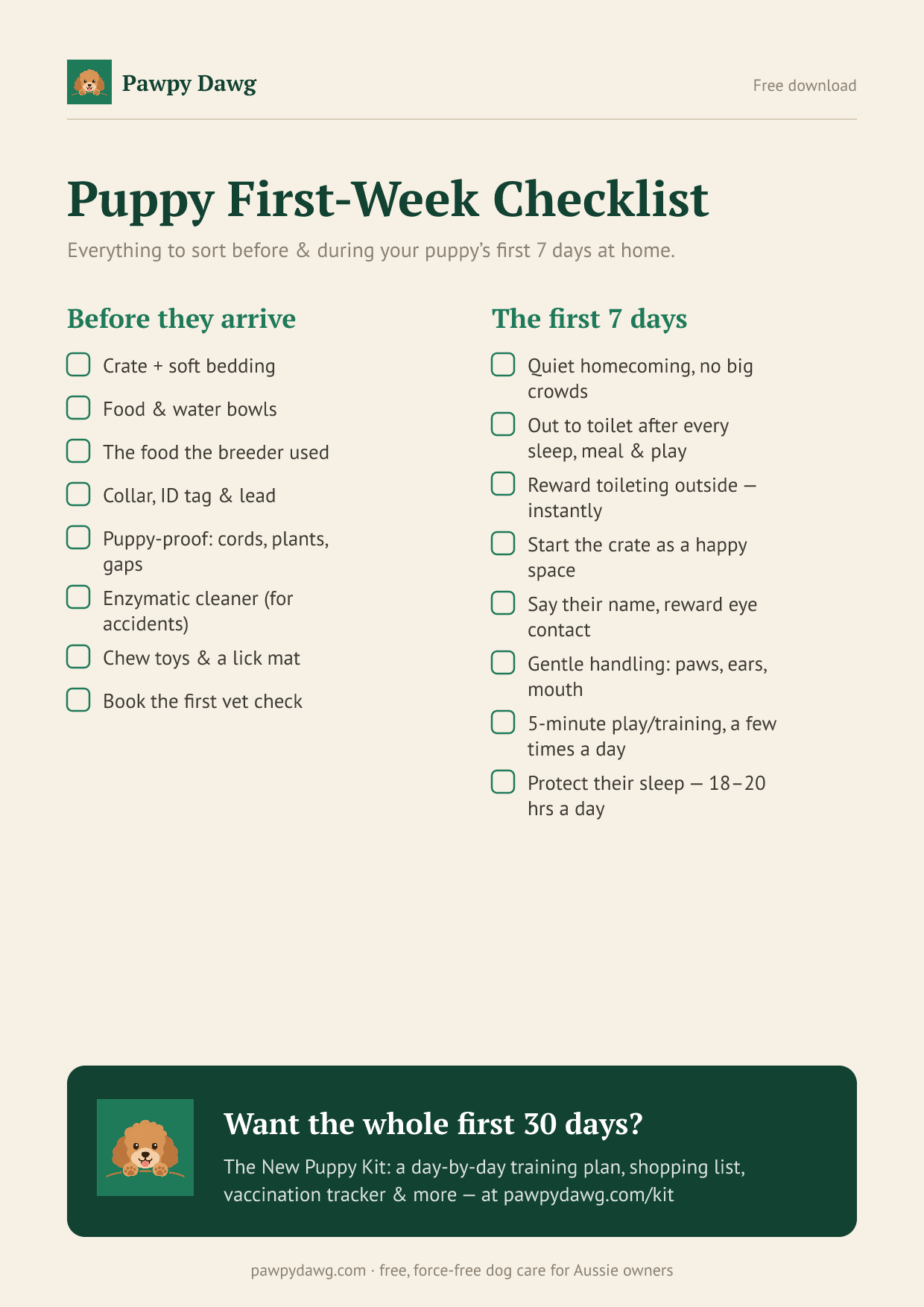
Free printable
Free: the Puppy First-Week Checklist
Everything to sort before and during your puppy's first 7 days home — a printable one-pager. Plus the occasional genuinely useful dog tip. No spam, unsubscribe anytime.
Related guides

How to Stop a Cavoodle Pulling on the Lead (Step-by-Step)
Is your Cavoodle pulling on the lead? Follow this step-by-step positive reinforcement plan with realistic timelines, common mistakes, and pro tips.
Read the guide →
How to Stop a Cavoodle Barking at Strangers (Step-by-Step)
Cavoodle barking at strangers? This step-by-step positive-reinforcement plan covers desensitisation, threshold training, common mistakes, and realistic timelines.
Read the guide →
Cavoodle Separation Anxiety: A Step-by-Step Fix
Cavoodle separation anxiety is common but fixable. Follow this step-by-step positive reinforcement plan with realistic timelines and expert advice.
Read the guide →