
Border Collie Separation Anxiety: A Step-by-Step Fix
Practical step-by-step plan to treat border collie separation anxiety using positive reinforcement. Realistic timelines, common mistakes & when to get vet help.

Written by Bradley Brown
Founder & editor · Reviewed 2026-06-30
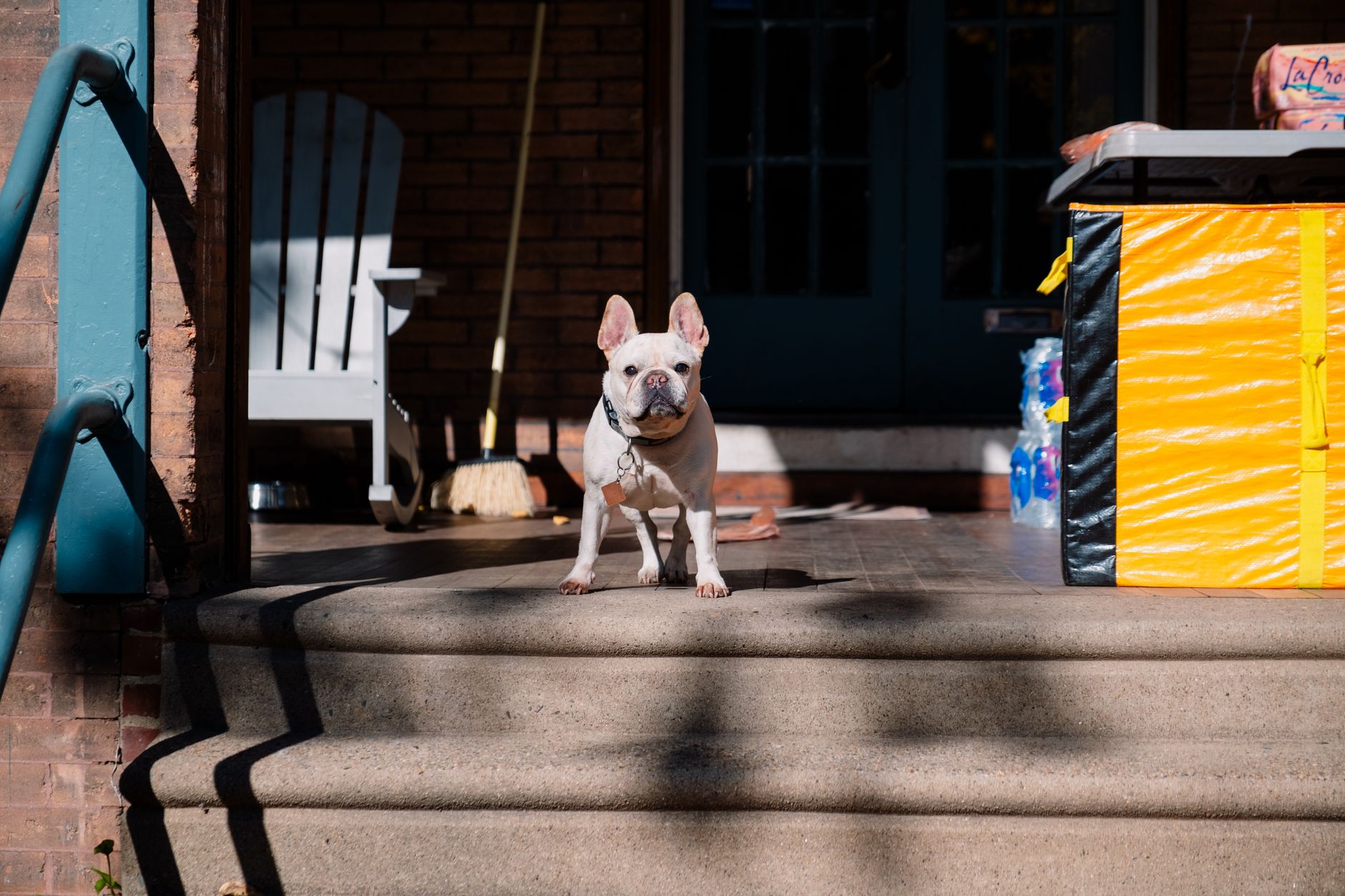
Border Collies are wired to work alongside people. That same intense focus that makes them brilliant at agility or mustering sheep also makes them prone to falling apart when left alone. Separation anxiety in Border Collies is not a personality flaw or a training failure — it's a genuine anxiety disorder, and it responds well to a structured, patient approach.
This guide walks you through exactly how to address it, from assessment through to long-term management.
First, Confirm It's Actually Separation Anxiety
Not every dog that barks or chews when alone has separation anxiety. Before you start treatment, you need to know what you're dealing with.
Signs that point to true separation anxiety:
- Destructive behaviour that only happens when alone
- Barking, howling, or whining that starts within minutes of you leaving
- Pacing, drooling, or trembling as you prepare to leave
- Toileting inside despite being house-trained
- Attempts to escape (scratched doors, chewed window frames)
- Frantic, prolonged greeting when you return
How to confirm it: Set up a cheap pet camera or use a phone propped on a shelf. Record your dog for the first 30–45 minutes after you leave. If the distress is immediate and intense, you're looking at separation anxiety. If the dog settles within 10–15 minutes and only misbehaves later, you may be dealing with boredom or under-stimulation instead — which has a different fix.
Step 1 — Meet the Physical Needs First
A Border Collie with separation anxiety who is also under-exercised is running two problems at once. Exercise won't cure anxiety, but trying to treat anxiety in an unexercised Border Collie is an uphill battle.
- Aim for 60–90 minutes of genuine physical and mental exercise before any alone-time training session
- "Mental" exercise matters as much as physical: scent work, trick training, and puzzle feeders all count
- Feed breakfast via a snuffle mat or Kong rather than a bowl — it takes longer and engages the brain
- Avoid high-arousal fetch marathons immediately before leaving; these can wind some dogs up rather than settling them
Step 2 — Desensitise Your Departure Cues
Border Collies are observant. They clock your departure routine — picking up keys, putting on shoes, grabbing a bag — and start panicking before you've even opened the door. Break the association.
How to do it:
- Pick up your keys and sit back down on the couch. Repeat 10–15 times across a day until your dog stops reacting.
- Put on your shoes and watch TV for five minutes. No departure. Repeat.
- Pick up your bag, walk to the door, touch the handle, come back. Repeat.
- Only once your dog is calm through these individual steps do you start combining them.
This phase can take one to two weeks for a mildly anxious dog, and several weeks for a severely anxious one. Don't rush it.
Step 3 — Build Alone Time from Seconds Upward
This is the core of separation anxiety treatment: systematic desensitisation paired with counter-conditioning. You increase the duration of absences so gradually that the dog never reaches a distress threshold.
The process:
- Ask your dog to go to their mat or bed. Reward with a high-value treat.
- Step out of sight for 3–5 seconds. Return calmly before any anxiety kicks in.
- Reward calm behaviour upon return — not excited greetings.
- Gradually increase: 10 seconds, 30 seconds, 1 minute, 3 minutes, 5 minutes.
- Progress is not linear. Some days you'll need to go back to shorter durations. That's normal.
Key rules:
- Never push past the point where your dog shows anxiety. If they start panting or whining, you've gone too long — go back to a duration they can handle.
- Use a frozen Kong or licki mat as a positive association with your absence, not as a distraction from distress.
- Keep your returns low-key. Calm re-entries teach the dog that departures are not dramatic events.
A realistic timeline for reaching 30 minutes of calm alone time: 4–12 weeks, depending on severity.
Step 4 — Avoid Common Mistakes That Set You Back
| Mistake | Why It Backfires |
|---|---|
| Punishing anxious behaviour | Adds fear to an already fearful state — makes anxiety worse |
| Using a crate without proper conditioning | Can turn the crate into a trap and escalate panic |
| Leaving for full work days before the dog is ready | Each overexposure event reinforces the anxiety response |
| "Flooding" — forcing long absences to make the dog cope | This does not work for anxiety and causes real psychological harm |
| Inconsistency between household members | The dog can't learn if rules and routines change constantly |
Step 5 — Build a Safe Space (Without Forcing It)
Some Border Collies do well with a designated calm zone — a crate with the door open, a pen, or a specific room. The key is that the dog chooses to use it.
- Feed meals near the space, then inside it
- Drop high-value treats in there randomly throughout the day
- Never use it as a punishment space
- If your dog avoids it, don't force it — work on making it more rewarding before introducing it to alone-time training
Step 6 — Manage the Environment While You Train
During the weeks or months of desensitisation, your dog still needs to be left alone sometimes. Management prevents practice of the anxiety response:
- Use a dog sitter, doggy daycare, or trusted neighbour for real absences
- Work from home where possible during the active training period
- Consider a dog walker for midday breaks if you must leave
- Doggy daycare costs roughly $35–$65 AUD per day in most Australian cities — worth factoring into your budget during this period
When to Get Professional Help
Some cases of Border Collie separation anxiety are beyond what owner-led desensitisation can fully resolve. See your vet or a veterinary behaviourist if:
- Your dog is injuring themselves trying to escape
- There's no improvement after 6–8 weeks of consistent training
- The anxiety is severe from the very first second of absence
- Your dog is showing aggression alongside anxiety
Your vet may recommend medication — typically fluoxetine or clomipramine — as a short-to-medium-term support alongside behaviour modification. Medication doesn't sedate; it lowers the anxiety baseline enough that training can actually take hold. It is not a shortcut, but it's a legitimate and often necessary tool.
A certified applied animal behaviourist (CAAB) or veterinary behaviourist is the gold standard for referral. Expect to pay $200–$450 AUD for an initial consultation, with follow-up sessions additional. It's an investment that pays off faster than months of spinning your wheels alone.
Realistic Expectations
Mild separation anxiety in a young Border Collie with a consistent owner can show meaningful improvement in 4–8 weeks. Moderate to severe cases — especially in dogs with a long history of distress — typically require 3–6 months of structured work, sometimes alongside medication.
The goal is not perfection. It's a dog who can be left alone for a normal working absence without suffering. Most Border Collies get there with the right approach and realistic patience.
As an Amazon Associate we earn from qualifying purchases.
Frequently asked questions
Can a Border Collie's separation anxiety be cured completely?
Many Border Collies reach a point where they can be left alone comfortably without showing distress, which is a functional resolution. However, anxiety-prone dogs may always need ongoing management — consistent routines, adequate exercise, and occasional refresher training. 'Cured' is less useful a goal than 'well-managed'.
How long does it take to treat separation anxiety in a Border Collie?
Mild cases can improve meaningfully within 4–8 weeks of consistent desensitisation work. Moderate to severe cases typically take 3–6 months, particularly if medication is needed to lower the anxiety baseline enough for training to work. Progress is rarely linear — expect some setbacks.
Should I get a second dog to help my Border Collie with separation anxiety?
Getting a second dog is not a reliable fix for separation anxiety and can backfire. True separation anxiety is about distress at being separated from the owner specifically, not just about being alone. A second dog may or may not help, and you risk ending up with two anxious dogs. Address the anxiety through training first.
Is it okay to use a crate for a Border Collie with separation anxiety?
A crate can help if the dog has been properly conditioned to see it as a safe, comfortable space — but it must never be forced. A Border Collie with severe separation anxiety can injure themselves trying to escape a crate, so always assess your individual dog's response on camera before relying on crating during absences.
What medications are used for dog separation anxiety in Australia?
Australian vets most commonly prescribe fluoxetine (an SSRI) or clomipramine (a tricyclic antidepressant) for separation anxiety. Both require a veterinary prescription and are used alongside behaviour modification, not instead of it. They typically take 4–6 weeks to reach full effect. Discuss suitability with your vet.
Does punishing a Border Collie for destructive behaviour when alone make separation anxiety worse?
Yes. Punishment applied after the fact — coming home to destruction and scolding the dog — does not work because dogs can't connect delayed punishment to a past behaviour. Worse, it adds anxiety to an already anxious dog, which typically escalates the problem. Focus entirely on positive reinforcement and management instead.
Free printable
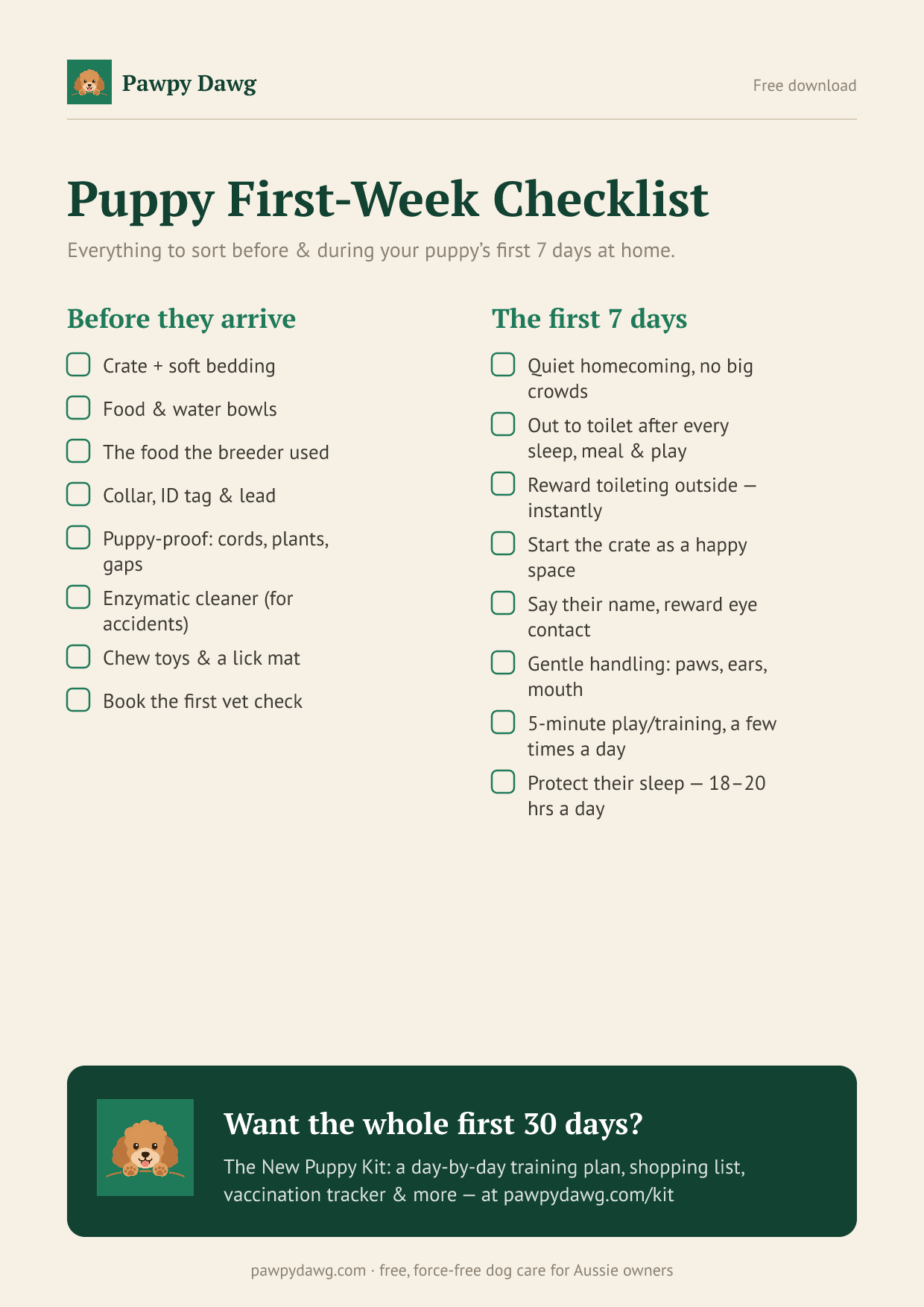
Free: the Puppy First-Week Checklist
Everything to sort before and during your puppy's first 7 days home — a printable one-pager. Plus the occasional genuinely useful dog tip. No spam, unsubscribe anytime.
Related guides

How to Stop a Border Collie Pulling on the Lead (Step-by-Step)
Stop your Border Collie pulling on the lead with this step-by-step positive reinforcement plan. Realistic timelines, common mistakes & when to get pro help.
Read the guide →
How to Stop a Border Collie Barking at Strangers (Step-by-Step)
Border collie barking at strangers? Follow this step-by-step positive-reinforcement plan with realistic timelines, common mistakes, and when to call a pro.
Read the guide →
How to Stop a Border Collie Jumping Up on People (Step-by-Step)
Stop your Border Collie jumping up on people with this step-by-step positive reinforcement plan. Realistic timelines, common mistakes, and when to call a pro.
Read the guide →