
How to Stop a Border Collie Barking at Strangers (Step-by-Step)
Border collie barking at strangers? Follow this step-by-step positive-reinforcement plan with realistic timelines, common mistakes, and when to call a pro.

Written by Bradley Brown
Founder & editor · Reviewed 2026-06-30
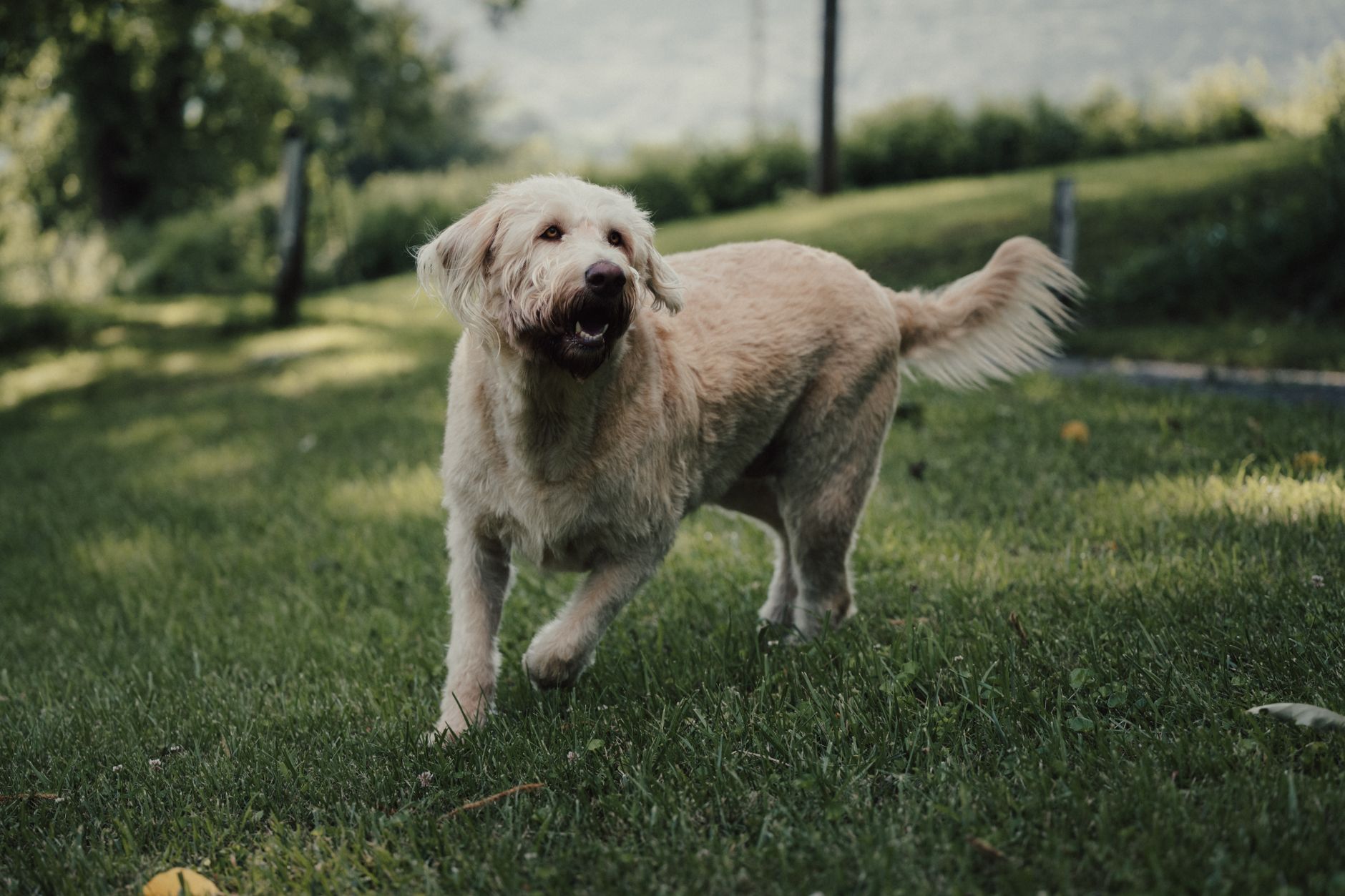
Border collies bark at strangers for a reason — usually a mix of herding instinct, heightened sensitivity to movement, and under-socialised reactivity. Understanding that the bark is communication, not defiance, is the first step to fixing it. This guide gives you a concrete, positive-reinforcement plan you can start today.
Why Border Collies Bark at Strangers More Than Other Breeds
Border collies were bred to monitor, respond, and act. Their nervous systems are genuinely more alert than most breeds. When a stranger approaches, a border collie isn't being difficult — it's doing its job as it understands it. Common triggers include:
- Movement at the edge of their visual field (joggers, cyclists, kids running)
- Unpredictable behaviour from strangers (sudden gestures, loud voices)
- Lack of early socialisation between 3–16 weeks of age
- Frustration when on-leash and unable to investigate or escape
- Rehearsed barking that has worked in the past (the stranger left, so the bark "worked")
The last point matters. Every time your dog barks and the stranger walks away, the behaviour is reinforced. You need to break that loop.
Before You Start: Set Yourself Up for Success
Get the basics right first. A border collie that isn't getting enough physical and mental exercise is running on a full tank of arousal all day. Aim for at least 60–90 minutes of varied activity daily — not just a walk on the same footpath. Puzzle feeders, scent work, and training sessions burn energy more efficiently than physical exercise alone.
Know your dog's threshold. Threshold is the distance at which your dog notices a stranger but hasn't yet reacted. It might be 20 metres, it might be 5. You'll do all your training below threshold (i.e., far enough away that your dog can still think). Working above threshold — where the dog is already barking — teaches nothing useful.
Gather your tools:
- High-value treats (cheese, cooked chicken, fritz) cut into pea-sized pieces
- A standard 1.8 m lead — not a retractable
- A treat pouch you can access in under two seconds
- Patience and a realistic timeframe (see below)
Step-by-Step Training Plan
Step 1: Teach a Solid "Look at Me" Cue at Home
Before you take the training outside, build a reliable attention cue in a low-distraction environment.
- Hold a treat near your eyes and say "watch me" (or "eyes" — whatever you'll remember).
- The moment your dog makes eye contact, mark with a clicker or a crisp "yes" and reward.
- Gradually increase duration to 3–5 seconds of sustained eye contact.
- Practise 20–30 repetitions across several short sessions (3–5 minutes each) before moving outdoors.
This cue becomes your interrupt — a way to redirect your dog's focus from the stranger back to you before the bark starts.
Step 2: Counter-Conditioning — Change the Emotional Response
Counter-conditioning means pairing the scary or triggering thing (stranger) with something great (high-value food) until the dog's gut reaction shifts from anxiety/alertness to anticipation.
- Find a spot where strangers pass at a distance your dog can handle without reacting — a park bench set back from a footpath works well.
- The moment your dog notices a stranger (head turns, ears prick, body stiffens slightly), feed a rapid stream of treats — one after another — until the stranger passes or moves out of sight.
- Stop treating when the stranger is gone. The stranger's presence predicts the treats, not your cue.
- Keep sessions to 10–15 minutes. Longer than that and the dog fatigues, which raises reactivity.
The rule: Stranger appears → treats rain down. Stranger gone → treats stop. Repeat.
Step 3: Desensitisation — Gradually Decrease Distance
Once your dog is consistently orienting toward you or looking relaxed when strangers appear at distance, begin reducing the gap — slowly.
- Move 1–2 metres closer per session only if the previous session was calm.
- If your dog barks at any point, you've moved too fast. Go back to the previous distance.
- Progress is not linear. Expect setbacks, especially with fast-moving strangers or children.
Step 4: Add the "Look at Me" Cue in Real Situations
Once counter-conditioning is working at your training distance, start using your attention cue before your dog reacts:
- You see a stranger approaching — cue "watch me."
- Dog looks at you — mark and reward.
- Repeat as the stranger passes.
- If the dog is already locked onto the stranger, you're too close. Increase distance and try again.
Step 5: Practise Greetings on Lead (When Ready)
Only introduce on-lead greetings once your dog is calm at 2–3 metres from passing strangers. Ask a helper (someone the dog doesn't know well) to:
- Approach from the side rather than head-on — direct frontal approaches are more confronting.
- Ignore the dog initially — no eye contact, no reaching out.
- Let the dog sniff and approach voluntarily, feeding treats as it does.
- Keep greetings short (15–20 seconds) and end on a calm note.
Never force a greeting. If the dog backs away or barks, give it space.
Realistic Timeframes
| Scenario | Expected Timeframe |
|---|---|
| Mild reactivity, good foundation skills | 4–8 weeks of consistent work |
| Moderate reactivity, sporadic training | 3–6 months |
| Long-rehearsed barking, high anxiety | 6–12 months, possibly with professional support |
Consistency matters more than intensity. Three 10-minute sessions per day beats one 45-minute session.
Common Mistakes That Stall Progress
- Punishing the bark. Suppressing the bark with a correction doesn't change the underlying emotion — it often makes the dog more anxious around strangers and can escalate to aggression.
- Over-threshold training. If your dog is barking, lunging, or won't take treats, you're too close. Distance is your friend.
- Inconsistency. Letting the dog rehearse barking on some walks undoes training done on others. Every interaction counts.
- Moving too fast. The impulse to test progress by getting closer is understandable but frequently sets things back by weeks.
- Using a retractable lead. It gives the dog too much freedom to rush forward and removes your ability to create distance quickly.
When to Get Professional Help
Call a qualified trainer or veterinary behaviourist if:
- Your dog has snapped, lunged with intent, or made contact with a person
- Barking is accompanied by sustained growling or prolonged piloerection (hackles up)
- There's been no measurable improvement after 8–10 weeks of consistent training
- You feel unsafe handling your dog around strangers
Look for trainers who use force-free or least-aversive methods and hold credentials from the Delta Society Australia, the Pet Professional Guild Australia, or equivalent bodies. A one-on-one consultation typically costs $150–$300 AUD and is worth every cent compared to months of guesswork.
In some cases — particularly where anxiety is severe — a vet referral for behaviour medication alongside training produces significantly faster results. Medication doesn't sedate; it reduces baseline anxiety so the dog can actually learn.
As an Amazon Associate we earn from qualifying purchases.
Frequently asked questions
Why does my border collie only bark at strangers on walks, not at home?
On-lead walks remove your dog's ability to flee, which increases frustration and anxiety — a phenomenon called barrier frustration or leash reactivity. At home, your dog likely has more control over its environment and can choose to retreat. The reactivity isn't absent at home; it's just not triggered in the same way.
Will my border collie grow out of barking at strangers?
Unlikely without intervention. Reactivity tends to worsen with age as the behaviour gets rehearsed and reinforced. Puppies and adolescents can sometimes improve with thorough socialisation alone, but adult dogs with established patterns almost always need structured counter-conditioning and desensitisation work.
Is a bark collar a good solution for border collie barking at strangers?
No — bark collars (citronella, vibration, or shock) suppress the bark but don't address the anxiety driving it. Research and mainstream veterinary guidance consistently show that punishment-based tools can increase stress and, in some cases, escalate reactive dogs toward aggression. Positive-reinforcement methods are both more effective and safer long-term.
How do I stop my border collie barking at strangers through the fence?
Fence running and barking is a self-reinforcing behaviour — the stranger always leaves eventually, rewarding the bark. Management is your first tool: block visual access with shade cloth or bamboo screening so the trigger is removed. Simultaneously, teach a strong recall and 'go to your place' cue so you can redirect your dog away from the fence before it escalates.
My border collie barks at strangers but wags its tail — is it still a problem?
Yes. A wagging tail indicates arousal, not necessarily friendliness. A dog can be excited and over-threshold at the same time, and high arousal barking can easily tip into snapping if a stranger approaches too quickly. Treat the barking as the issue regardless of tail position, and work on lowering overall arousal around strangers.
How many training sessions per week do I need to see results?
Daily short sessions produce the best results — aim for two to three 10-minute sessions per day rather than long infrequent ones. Border collies learn quickly but also need repetition in varied environments to generalise a new behaviour. Progress made in a quiet park needs to be rebuilt in a busy street, so expose your dog to multiple locations as you advance.
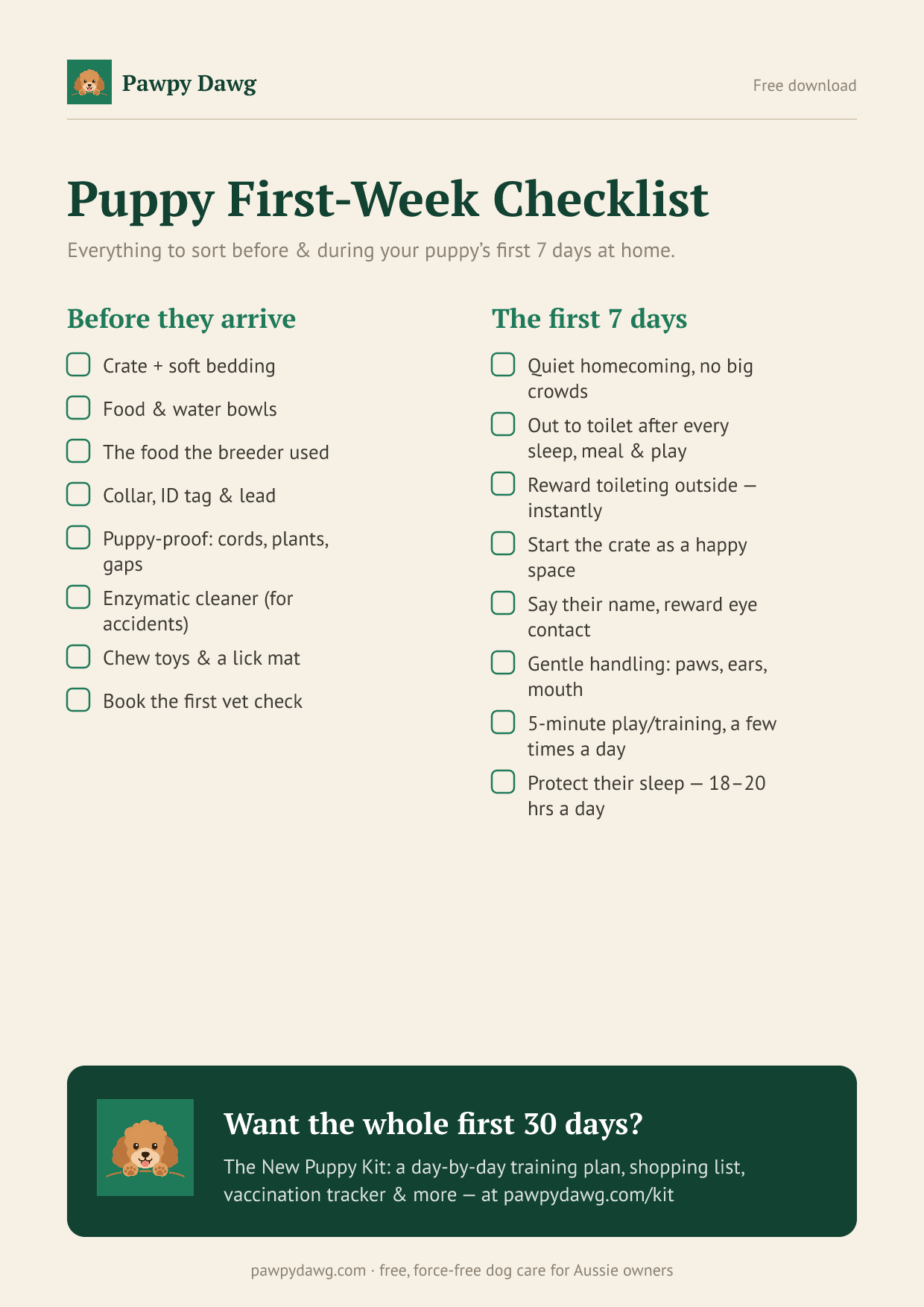
Free printable
Free: the Puppy First-Week Checklist
Everything to sort before and during your puppy's first 7 days home — a printable one-pager. Plus the occasional genuinely useful dog tip. No spam, unsubscribe anytime.
Related guides

How to Stop a Border Collie Pulling on the Lead (Step-by-Step)
Stop your Border Collie pulling on the lead with this step-by-step positive reinforcement plan. Realistic timelines, common mistakes & when to get pro help.
Read the guide →
Border Collie Separation Anxiety: A Step-by-Step Fix
Practical step-by-step plan to treat border collie separation anxiety using positive reinforcement. Realistic timelines, common mistakes & when to get vet help.
Read the guide →
How to Stop a Border Collie Jumping Up on People (Step-by-Step)
Stop your Border Collie jumping up on people with this step-by-step positive reinforcement plan. Realistic timelines, common mistakes, and when to call a pro.
Read the guide →