
How to Stop a Border Collie Jumping Up on People (Step-by-Step)
Stop your Border Collie jumping up on people with this step-by-step positive reinforcement plan. Realistic timelines, common mistakes, and when to call a pro.

Written by Bradley Brown
Founder & editor · Reviewed 2026-06-30
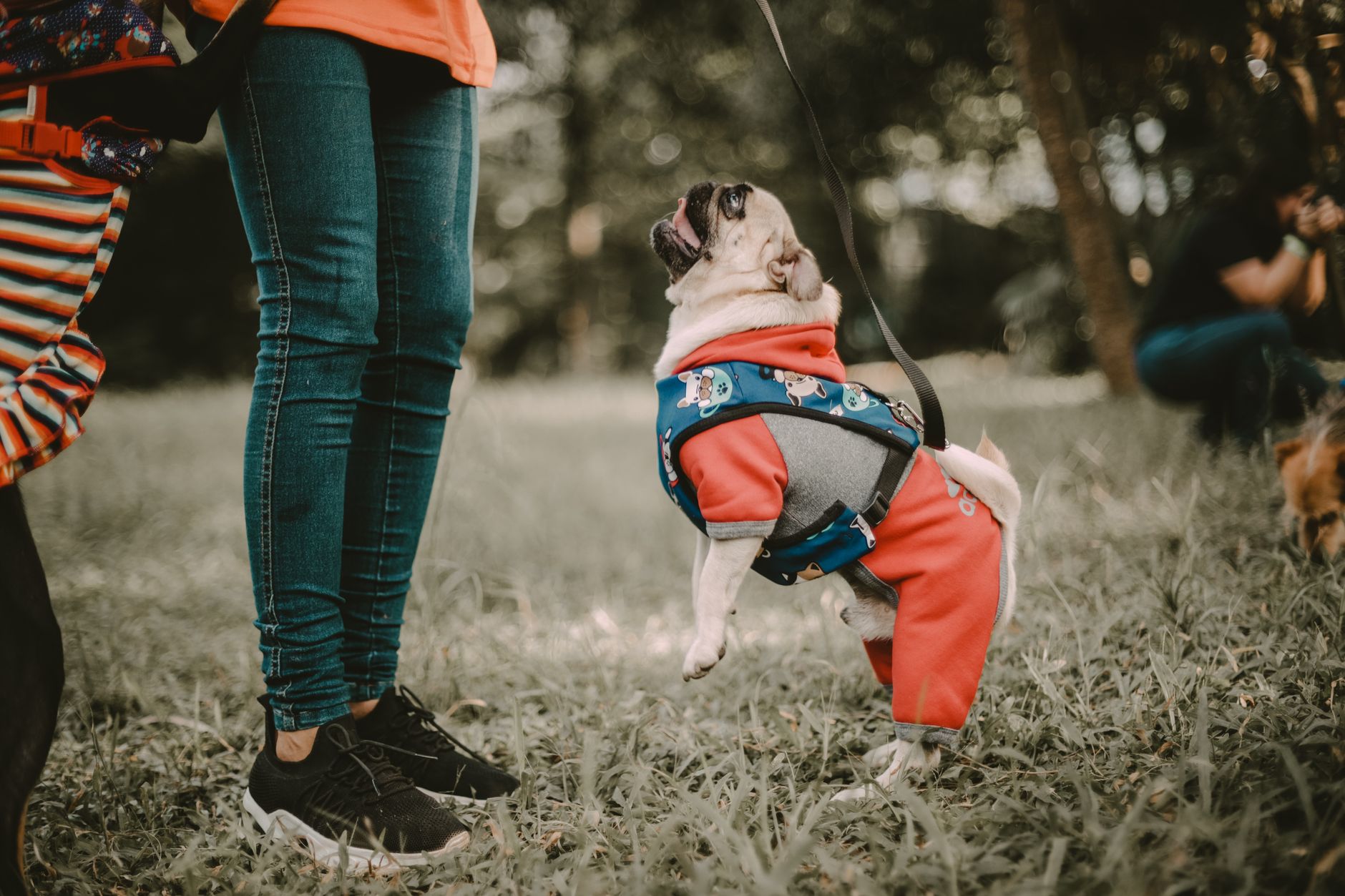
Border Collies jump up for a straightforward reason: it has worked. Someone squealed, patted them, or even pushed them away — and the dog learned that launching themselves at people generates a reaction. Add in the breed's intensity and hair-trigger responsiveness, and you've got a dog that can knock over a child or leave muddy paw prints on every visitor you've ever had.
The good news is that jumping up is one of the more fixable problems in dog training, provided you're consistent and you understand what's actually driving the behaviour.
Why Border Collies Are Particularly Prone to This
This isn't just generic "excitable dog" behaviour. Border Collies are hardwired to work closely with humans, read body language obsessively, and respond to any social signal at high speed. Greetings trigger a spike of arousal that, without clear guidance, comes out as jumping. They're also sensitive enough that harsh corrections tend to backfire — you'll create anxiety without solving the problem.
Positive reinforcement works well with this breed precisely because they're so attuned to feedback. The flip side: inconsistency confuses them quickly and stalls progress.
The Core Principle: Remove the Reward, Reward the Alternative
Jumping up persists because it gets reinforced — even negative attention (a shove, a sharp "no") can be enough. Your job is to make jumping completely unrewarding while making four paws on the floor the most reliable way your dog gets what they want.
This requires two things working together:
- Extinction — jumping produces nothing, every single time
- Positive reinforcement — calm greetings produce attention, treats, or play
Step-by-Step Training Plan
Step 1: Get Everyone on the Same Page
Before you do a single repetition, brief every person your dog interacts with. One family member letting the dog jump "just this once" resets the whole process. This is the most common reason Border Collie owners stall out.
- Agree on the exact cue you'll use ("sit" or "four on the floor" — pick one)
- Decide on a consistent non-response to jumping (turn away, cross arms, no eye contact)
- If visitors can't be briefed, manage the situation with a lead until training is solid
Step 2: Teach a Rock-Solid Sit (or Default Four on the Floor)
You can't just remove jumping — you need to replace it with something. Most trainers recommend a sit as the default greeting behaviour, though some prefer simply rewarding any position where all four feet are on the ground.
To build a reliable sit:
- Lure with a treat to the nose, move it slowly back over the head — reward the moment the bottom hits the floor
- Practise 10–15 short repetitions daily in low-distraction environments first
- Gradually add distractions before you expect it at the front door
A Border Collie with good food or toy motivation can nail this within a few sessions. The challenge is getting it to generalise to greetings.
Step 3: Practise Controlled Greetings
This is where most training actually happens. You need to set up repetitions — not just wait for the behaviour to occur and react.
Drill the door routine:
- Put your dog on lead before opening the door
- Ask for a sit before any guest enters
- Guest enters calmly — no squealing, no rushing toward the dog
- If the dog holds the sit, the guest delivers a calm pat and a treat
- If the dog jumps, the guest immediately turns away and withdraws all attention
- Wait for four paws on the floor, reset, and try again
Keep early sessions to 3–5 repetitions. Border Collies can become over-stimulated and frustration can spike arousal further.
Step 4: Manage Before You've Trained
Management is not failure — it's preventing rehearsal of the wrong behaviour while training is underway.
- Use a baby gate so your dog can see and smell visitors before full access
- Keep a lead near the door for the training period
- Crate or settle your dog briefly when guests arrive if arousal is very high, then bring them out once things are calmer
- Consider a front-clip harness for walks to reduce the physical impact of jumping while you're training
Step 5: Fade Treats, Proof the Behaviour
Once your dog is offering a sit or standing calmly at greetings reliably (most sessions, most contexts), begin to vary the reward schedule and introduce more distracting scenarios.
- Practise with strangers, children, people in hats, people who move erratically
- Practise after a run when arousal is higher
- Practise at the park, not just at home
- Gradually reduce treat frequency but keep verbal praise and occasional jackpots
Realistic Timeline
| Stage | Approximate Timeframe |
|---|---|
| Consistent sit in calm settings | 3–7 days |
| Sit holds during calm door greetings | 2–4 weeks |
| Reliable behaviour with excited visitors | 4–8 weeks |
| Generalised across most contexts | 2–4 months |
These timeframes assume daily practice and full household consistency. A dog that has been jumping up for two years will take longer than a puppy you're training from scratch.
Common Mistakes That Slow Progress
- Kneeing the dog — can cause injury, increases arousal, and often gets interpreted as play
- Saying "no" or "down" repeatedly — verbal attention is still attention; silence and body withdrawal are more effective
- Rewarding the sit with over-excited praise — this can re-trigger jumping; keep greetings calm and measured
- Inconsistency across contexts — if jumping is fine on weekends or in the backyard, your dog learns it's situationally acceptable
- Training only at home — Border Collies don't generalise automatically; you must proof the behaviour in multiple locations
- Stopping too early — the behaviour looks fixed after a few weeks but can resurface without continued reinforcement, especially in high-arousal situations
When to Get Professional Help
Most cases of jumping up resolve with consistent owner training. Consider engaging a qualified trainer or veterinary behaviourist if:
- The jumping is accompanied by mouthing, growling, or other signs of over-arousal or anxiety
- A family member (particularly a child or elderly person) has been knocked over and injured
- You've been training consistently for 8–10 weeks with no improvement
- The dog's arousal at greetings is so intense it can't settle enough to respond to cues at all
In Australia, look for trainers accredited through the Delta Society Australia or the Pet Professional Guild Australia, and check that they use force-free methods. A single session with an experienced trainer can cost $80–$150 AUD but can shortcut weeks of frustration.
A vet check is worthwhile if the jumping is recent and out of character — pain, thyroid issues, and neurological conditions can occasionally present as increased restlessness or agitation.
As an Amazon Associate we earn from qualifying purchases.
Frequently asked questions
How long does it take to stop a Border Collie jumping up on people?
Most dogs show clear improvement within 2–4 weeks of consistent training, but reliable behaviour across all contexts — excited visitors, the park, strangers — typically takes 2–4 months. Dogs that have been jumping for years may take longer, and progress will stall if any household members are inconsistent.
Should I knee my Border Collie in the chest to stop them jumping?
No. Kneeing is not recommended by modern trainers or veterinary behaviourists. It can cause physical injury, often increases arousal and is interpreted as rough play, and does nothing to teach the dog what to do instead. Turning away and withdrawing attention is safer and more effective.
My Border Collie only jumps on some people — why?
Dogs are very good at reading which people will react with attention and which won't. If some family members or visitors have reinforced jumping in the past — even through pushing or excited voices — your dog has learned those individuals are worth launching at. Everyone the dog interacts with needs to apply the same response.
Is it normal for Border Collies to jump more than other breeds?
Border Collies aren't necessarily more prone to jumping than other high-energy breeds, but their intensity and sensitivity to human body language can make their greetings more exuberant. Their arousal spikes quickly, which means the behaviour can look more dramatic than it does in calmer breeds.
Can I use a spray bottle or shake can to stop the jumping?
These are aversive tools and are not recommended for Border Collies. This breed is sensitive to sudden startling stimuli and punishment-based methods risk creating anxiety, fear of visitors, or redirected reactivity. Positive reinforcement — rewarding calm behaviour — is more effective and doesn't carry those risks.
At what age should I start training my Border Collie not to jump up?
From the moment the puppy comes home, ideally. Even small puppies jumping up should not be rewarded with attention or play, because the habit becomes much harder to break as the dog grows stronger and more practised at it. Eight-week-old puppies can begin learning a sit as an alternative greeting behaviour.
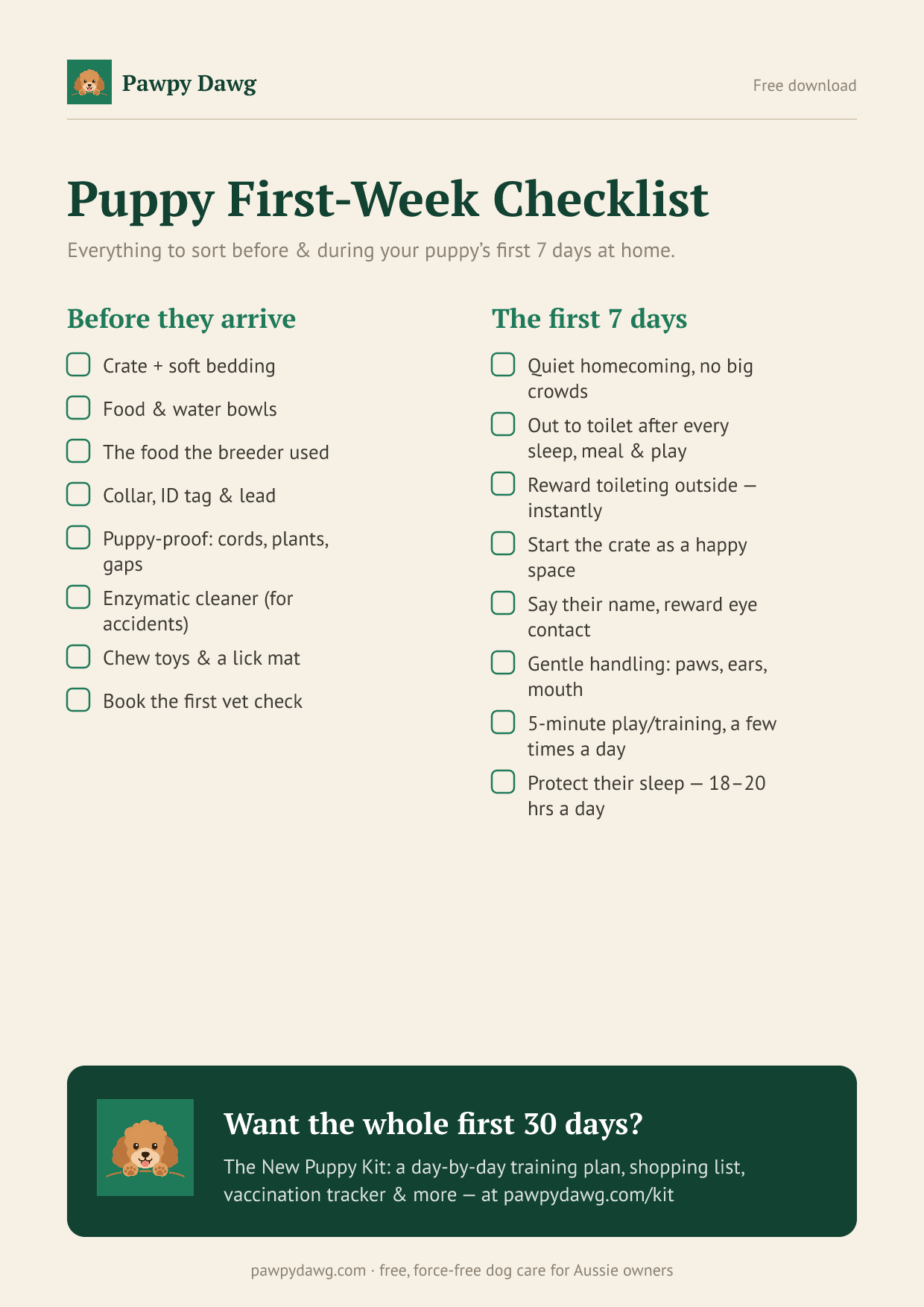
Free printable
Free: the Puppy First-Week Checklist
Everything to sort before and during your puppy's first 7 days home — a printable one-pager. Plus the occasional genuinely useful dog tip. No spam, unsubscribe anytime.
Related guides
How to Stop a Border Collie Pulling on the Lead (Step-by-Step)
Stop your Border Collie pulling on the lead with this step-by-step positive reinforcement plan. Realistic timelines, common mistakes & when to get pro help.
Read the guide →
How to Stop a Border Collie Barking at Strangers (Step-by-Step)
Border collie barking at strangers? Follow this step-by-step positive-reinforcement plan with realistic timelines, common mistakes, and when to call a pro.
Read the guide →
Border Collie Separation Anxiety: A Step-by-Step Fix
Practical step-by-step plan to treat border collie separation anxiety using positive reinforcement. Realistic timelines, common mistakes & when to get vet help.
Read the guide →