
How to Stop a Border Collie Pulling on the Lead (Step-by-Step)
Stop your Border Collie pulling on the lead with this step-by-step positive reinforcement plan. Realistic timelines, common mistakes & when to get pro help.

Written by Bradley Brown
Founder & editor · Reviewed 2026-06-30
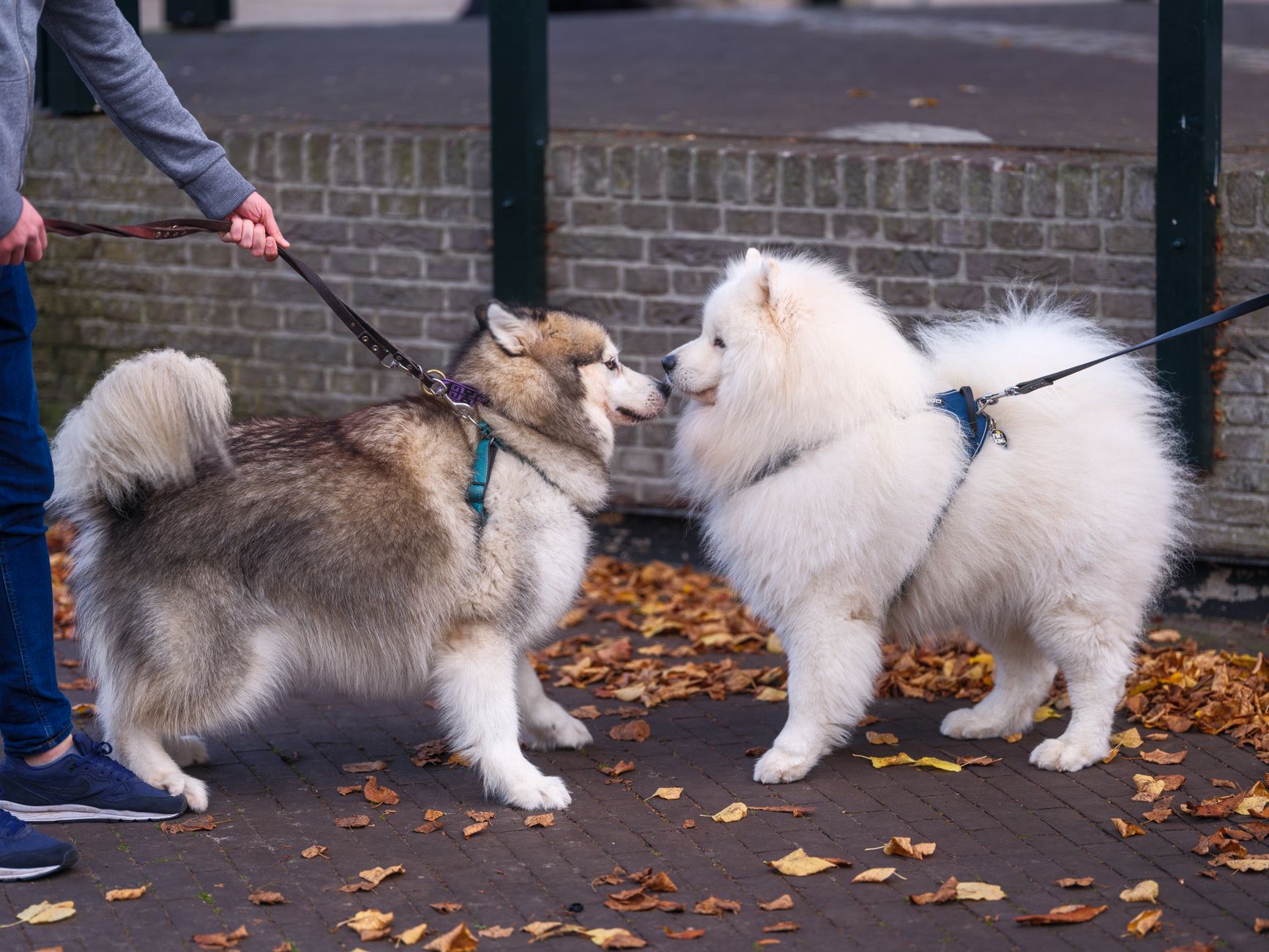
Border Collies pull on the lead for a simple reason: it works. The dog pulls, the walk continues, and the behaviour gets reinforced thousands of times before most owners decide something has to change. The good news is that lead pulling is a trained behaviour — which means it can be untrained. The bad news is that it takes consistency, patience, and a realistic understanding of what you're working with: one of the most driven, intelligent, and environmentally reactive breeds on the planet.
This guide gives you a practical, step-by-step plan built on positive reinforcement. No choke chains, no prong collars, no e-collars — just mechanics that actually hold up over time.
Before You Start: Equipment and Mindset
The right equipment won't fix pulling on its own, but the wrong equipment can make training harder or cause injury.
What to use:
- Flat collar or properly fitted harness — a standard starting point
- Front-clip harness (e.g., Ruffwear Front Range, PetSafe Easy Walk) — redirects the dog toward you when they pull, buying you a moment to reward
- 2-metre training lead — gives you room to work without excess slack you can't manage
- High-value treats — cooked chicken, cheese, fritz. Not dry kibble. Border Collies are smart enough to know when you're being cheap with the rewards.
What to avoid at this stage:
- Retractable leads — they physically teach dogs to pull by rewarding pressure with length
- Flexi-leads on busy paths — a safety hazard and a training nightmare
Mindset check: Border Collies have been selectively bred for sustained, intense focus on moving targets. The outside world is genuinely thrilling for them. You're not fighting stubbornness — you're competing with instinct. Lower your expectations for early sessions and celebrate small wins.
Step 1: Teach the Behaviour at Home First
Trying to train loose-lead walking on a busy footpath is like learning to drive in peak-hour traffic. Start somewhere boring.
- Clip the lead on inside your house or in a quiet backyard.
- Stand still. The moment your dog comes to your side (left or right — pick one and stay consistent), mark with a clicker or a clear word like "yes" and deliver a treat at your hip.
- Take one step. If the lead stays loose, mark and reward. If it tightens, stop immediately — say nothing, do nothing, just become a statue.
- Wait for slack. When your dog backs up or turns to check on you, mark and reward enthusiastically.
- Build duration gradually — two steps, then three, then five before rewarding.
Practise this for 5–10 minutes, two or three times a day. Most Border Collies will grasp the mechanics within a week of consistent indoor work.
Step 2: The Core Walking Method — Stop-Start
This is the foundational technique for loose-lead walking and it's straightforward to explain, less straightforward to execute consistently.
The rule: Forward movement is the reward. Pulling makes movement stop.
- The instant you feel tension on the lead, stop walking.
- Wait silently. Do not repeat commands. Do not yank back.
- The moment tension releases — even slightly — take a step forward and reward.
- If your dog immediately surges ahead again, stop again.
In the early stages, a 20-minute walk might cover 50 metres. That's normal. Stick with it.
Reward placement matters: Deliver treats at your hip or slightly behind it. If you reach forward to deliver the treat, you're accidentally training your dog to forge ahead.
Step 3: Add the 'Let's Go' Cue
Once your dog is reliably walking with a loose lead for 10–15 steps in a quiet environment, start pairing movement with a cue.
- Say "let's go" in a calm, neutral tone.
- Step off.
- Mark and reward at regular intervals while the lead stays loose.
This gives you a verbal anchor you can use to re-engage attention when your dog gets distracted.
Step 4: Proof It in Real Environments
This is where most owners stall — they nail it at home and fall apart at the park. Proofing means deliberately practising in progressively harder environments.
Distraction ladder (easiest to hardest):
- Quiet backyard
- Quiet street, early morning
- Local footpath, low traffic
- Park with distant dogs
- Park with nearby dogs and people
- Off-lead area perimeter
Drop back a level any time your dog is struggling. A Border Collie that's over-threshold — fixated on a cyclist, another dog, or a bird — cannot learn. They're not being defiant; their arousal level has bypassed the thinking brain.
Tip: If you know a trigger is coming (a dog approaching), increase your rate of reinforcement before you reach it — treat frequently to keep your dog's attention on you rather than waiting for them to fixate and then trying to recover.
Common Mistakes That Slow Progress
| Mistake | Why It Backfires |
|---|---|
| Inconsistent rules | Even occasional pulling that results in forward movement resets the learning |
| Using the lead as a correction tool | Yanking teaches the dog to tolerate leash pressure, not to avoid it |
| Sessions that are too long | Mental fatigue leads to frustration for both parties |
| Rewarding too infrequently outdoors | High-distraction environments need a higher rate of reinforcement |
| Expecting off-lead energy from an on-lead dog | An under-exercised Border Collie will always pull — ensure they're getting adequate physical and mental outlets |
Realistic Timelines
Border Collies are fast learners, which is both an advantage and a trap — they also learn bad habits quickly. With daily, consistent training:
- Weeks 1–2: Dog understands the stop-start game in low-distraction environments
- Weeks 3–6: Reliable loose-lead walking in familiar, quiet locations
- Months 2–4: Solid performance in moderately distracting environments
- 6+ months: Reliable walking in high-distraction settings
These timelines assume daily practice. Sporadic training stretches everything out significantly.
When to Get Professional Help
Some situations genuinely warrant input from a professional — specifically a certified trainer (look for PPGA or Delta Society accreditation in Australia) or a veterinary behaviourist.
Seek help if:
- Your dog is lunging and barking at triggers (this is reactivity, not just pulling, and needs a different protocol)
- You have an injury or physical limitation that makes the stop-start method unsafe
- Your dog has been pulling for years and previous training attempts haven't made a dent
- You're seeing anxiety signals alongside the pulling (panting, whale eye, inability to take treats outdoors)
A good trainer will run a group class for somewhere between $25–$60 AUD per session, or private sessions from $100–$200 AUD. It's money well spent if you've been struggling for months.
A Quick Checklist Before Each Walk
- Treats loaded and accessible (treat pouch on your hip, not in a bag you have to dig through)
- Front-clip harness fitted correctly — two-finger rule under straps
- Walk scheduled for a calm time of day if your dog is easily over-stimulated
- Realistic expectations set — progress, not perfection
- Phone in your pocket, not in your hand — you need to be watching your dog
Border collie pulling on the lead is genuinely one of the more demanding problems to work through because of the breed's drive and sensitivity. But it responds well to clear, consistent positive reinforcement. Put in the repetitions, keep sessions short, and don't skip the foundational work indoors — that groundwork is what makes everything else stick.
As an Amazon Associate we earn from qualifying purchases.
Frequently asked questions
How long does it take to stop a Border Collie pulling on the lead?
Most Border Collies show noticeable improvement within 2–4 weeks of daily training in low-distraction environments. Reliable loose-lead walking in busy or high-distraction settings typically takes 3–6 months of consistent work. Dogs that have been pulling for years will generally take longer to retrain than younger dogs.
Should I use a head halter or harness to stop my Border Collie pulling?
A front-clip harness is a practical management tool that reduces pulling while you train, and is generally well tolerated by Border Collies. Head halters (like the Halti or Gentle Leader) can be effective but require a careful desensitisation process, as many dogs find them aversive initially. Neither tool replaces training — they simply make the process safer and more manageable.
My Border Collie only pulls when they see other dogs. Is that still a lead-pulling problem?
If your dog lunges, barks, or becomes fixated when they see other dogs, that's likely reactivity rather than simple lead pulling, and it needs a different approach. Reactivity work focuses on changing your dog's emotional response to the trigger, not just the physical behaviour of pulling. A trainer experienced in reactive dogs or a veterinary behaviourist is worth consulting.
Is it too late to train an adult Border Collie to stop pulling?
No — adult Border Collies can absolutely learn to walk on a loose lead. They may take longer than puppies because the pulling behaviour is more deeply ingrained, and you'll need to be especially consistent. The same positive reinforcement methods apply regardless of age.
Are prong collars or choke chains effective for stopping Border Collies pulling?
While aversive tools can suppress pulling in the short term, mainstream veterinary and animal behaviour guidance advises against them due to risks of physical injury (to the throat, neck, and trachea) and behavioural fallout, including increased anxiety and aggression. Positive reinforcement approaches produce more durable results without those risks.
Could my Border Collie be pulling because they're not getting enough exercise?
Absolutely — an under-exercised Border Collie is a frustrated Border Collie, and that frustration often expresses itself as pulling. Adult Border Collies typically need 1–2 hours of physical activity daily, plus mental stimulation like trick training, puzzle feeders, or scent work. Addressing exercise needs won't eliminate pulling on its own, but it makes training significantly easier.
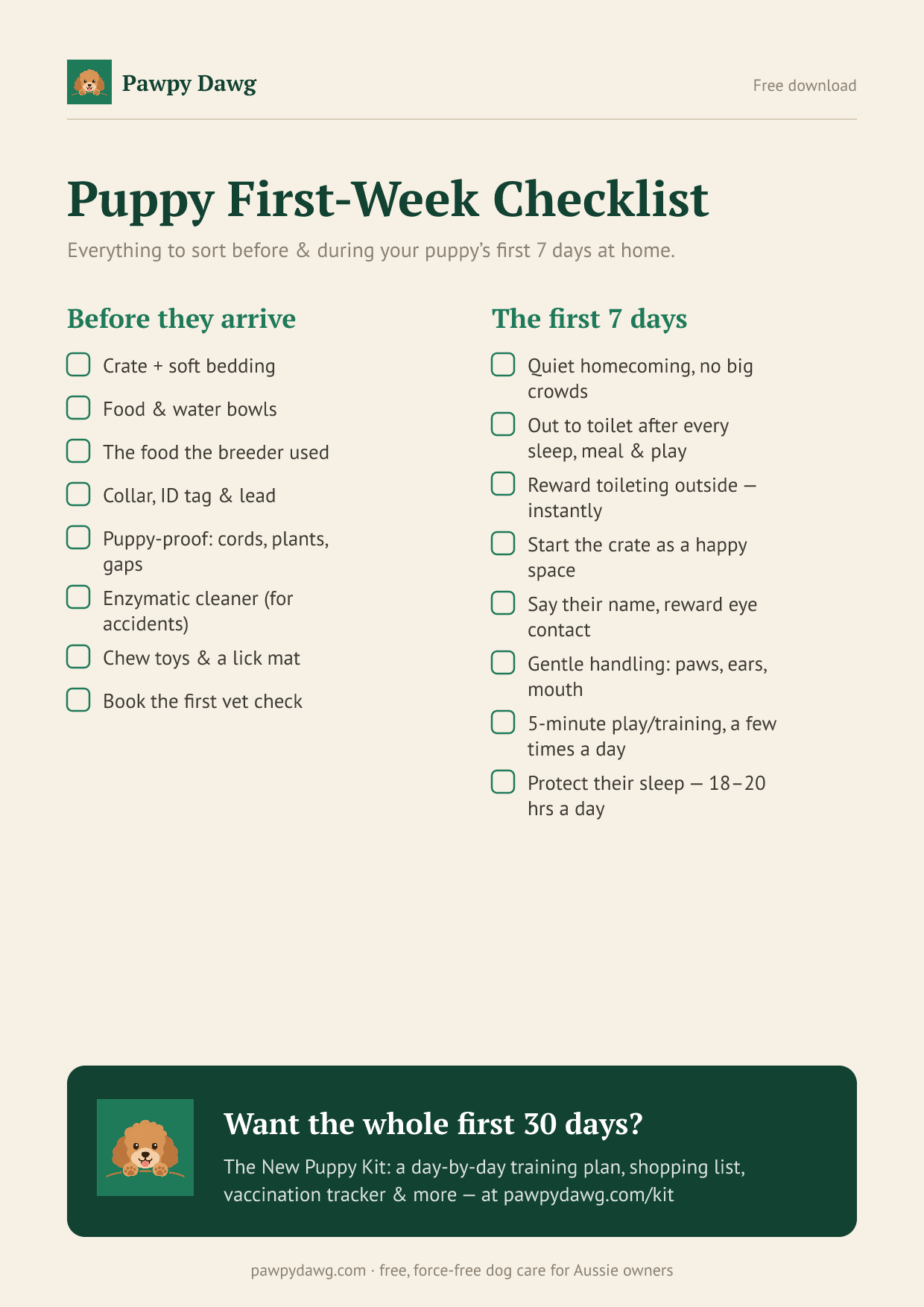
Free printable
Free: the Puppy First-Week Checklist
Everything to sort before and during your puppy's first 7 days home — a printable one-pager. Plus the occasional genuinely useful dog tip. No spam, unsubscribe anytime.
Related guides
How to Stop a Border Collie Barking at Strangers (Step-by-Step)
Border collie barking at strangers? Follow this step-by-step positive-reinforcement plan with realistic timelines, common mistakes, and when to call a pro.
Read the guide →
Border Collie Separation Anxiety: A Step-by-Step Fix
Practical step-by-step plan to treat border collie separation anxiety using positive reinforcement. Realistic timelines, common mistakes & when to get vet help.
Read the guide →
How to Stop a Border Collie Jumping Up on People (Step-by-Step)
Stop your Border Collie jumping up on people with this step-by-step positive reinforcement plan. Realistic timelines, common mistakes, and when to call a pro.
Read the guide →