
How to Fix Resource Guarding in Your Border Collie
Border collie resource guarding got you worried? This step-by-step positive reinforcement plan covers causes, training fixes, timelines & when to call a pro.

Written by Bradley Brown
Founder & editor · Reviewed 2026-06-30
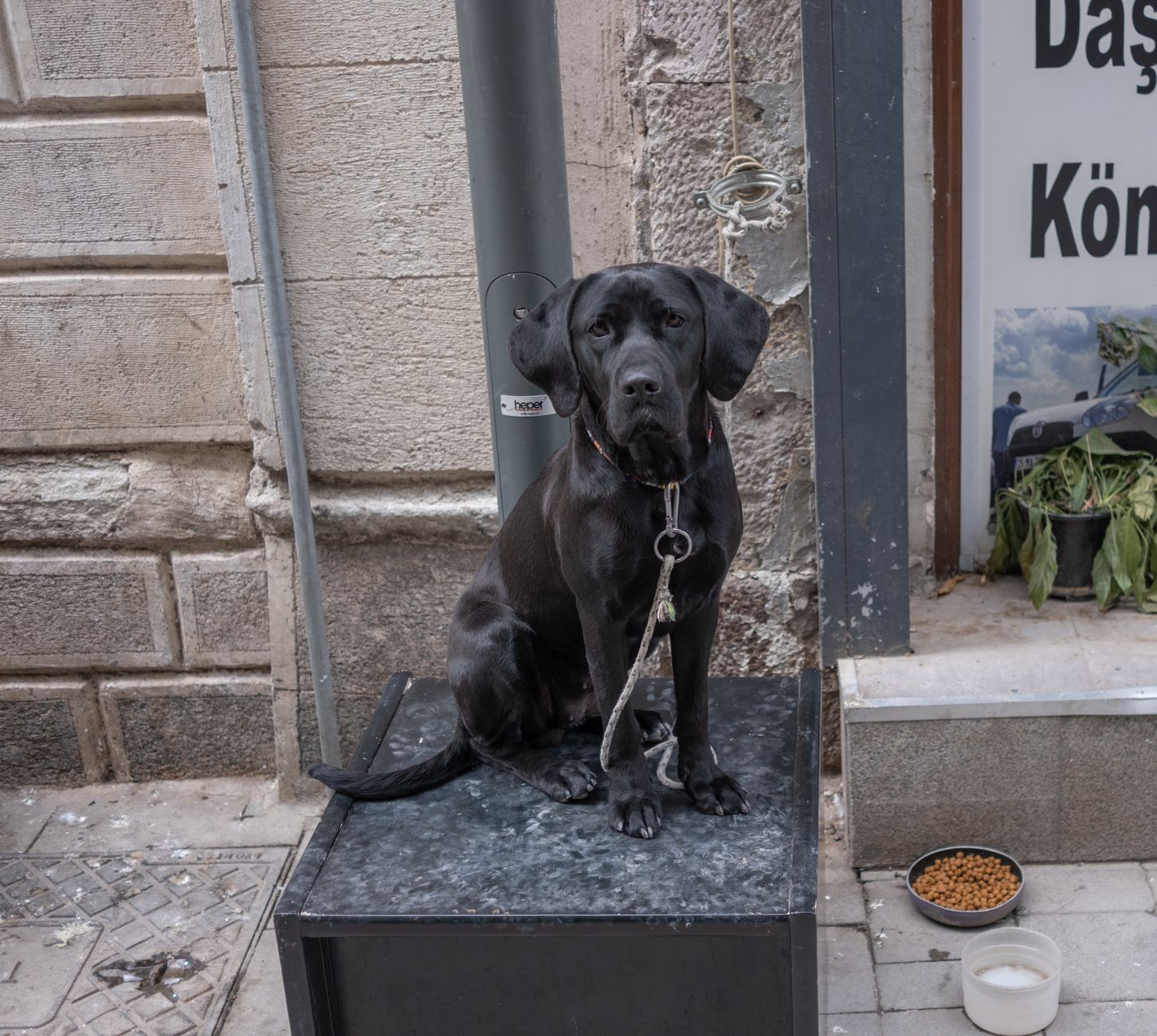
Border collies are wired to control things — livestock, balls, their owner's attention. That same intensity that makes them brilliant working dogs can tip into resource guarding: growling, snapping, or freezing over food bowls, toys, or resting spots. It's one of the more common behaviour complaints from collie owners, and it's also one of the more fixable ones when you approach it correctly.
The approach matters enormously here. Punishing a growl doesn't remove the anxiety driving it — it just removes the warning signal, which is genuinely dangerous. The goal is to change how your dog feels about someone approaching their valued resource, not just to suppress the outward behaviour.
Understanding Why Border Collies Guard
Resource guarding is a normal canine survival behaviour. Dogs guard things they perceive as valuable and scarce. Border collies can be more prone to intense guarding because:
- Their herding instinct includes a strong sense of ownership over space and objects
- They're highly sensitive to environmental changes and perceived threats
- Undersocialisation, past food competition (e.g., large litters or shelter backgrounds), or inconsistent feeding routines can raise baseline anxiety
- High arousal states — common in collies — can lower the threshold for a guarding response
Guarding exists on a spectrum. A dog who stiffens slightly when you walk past their bowl is very different from one who lunges. Knowing where your dog sits on that spectrum shapes how quickly and carefully you progress.
Step-by-Step Training Plan
Step 1: Stop Triggering the Behaviour
Before you fix anything, stop repeatedly setting your dog up to guard. Every guarding incident rehearses the behaviour and raises stress.
- Feed your dog in a low-traffic area where they won't feel the need to defend their bowl
- Don't take food or toys away for no reason — humans often do this to "show the dog who's boss", which backfires badly
- If children or other pets are triggering the guarding, manage the environment with gates or separate feeding zones immediately
This isn't surrendering to the dog. It's reducing rehearsal while you work on the actual fix.
Step 2: Identify the Trigger Hierarchy
Make a list of what your dog guards and how intensely. Rate each situation:
| Resource | Trigger Distance | Response Severity |
|---|---|---|
| Food bowl (eating) | Under 2 metres | Hard stare, stiffening |
| High-value chew | Under 1 metre | Growl |
| Favourite toy | Direct reach | Snap |
| Resting spot | Approach | None currently |
Start training at the lowest intensity trigger with the greatest distance. Never start where the dog is already reacting.
Step 3: Trade Up — The Foundation Exercise
This is the core of resource guarding rehabilitation. The principle: your approach predicts something better, not a loss.
For food bowl guarding:
- While your dog eats from their bowl, approach to 2–3 metres and toss a high-value treat (cooked chicken, cheese) near the bowl without stopping or making a big deal of it. Walk away.
- Repeat 8–10 times per meal for 1–2 weeks.
- Gradually decrease the distance you toss from — 1.5 metres, 1 metre, 0.5 metres — only when the dog shows relaxed body language (eating without pausing, no freezing).
- Eventually, walk up, drop the treat directly into the bowl, and walk away.
- Only once the dog is totally relaxed should you begin briefly picking up the bowl, adding something better, and returning it immediately.
Key rule: You are not taking things away. You are adding value and leaving. Every approach = good things happen.
Step 4: Build a Reliable "Drop It" and "Leave It"
These cues give you a safe, cooperative way to manage resources without confrontation.
Teaching Drop It:
- Offer your dog a low-value toy. When they hold it, present a high-value treat at their nose.
- The moment they drop the toy to sniff the treat, say "drop it" and give the treat.
- Then give the toy back. This is critical — the dog learns dropping something doesn't mean losing it permanently.
- Practise daily with progressively more valued items.
A dog with a solid Drop It gives you a way out of a sticky situation without anyone getting hurt.
Step 5: Generalise Across People and Contexts
Once your dog is reliably relaxed with you approaching, bring in other family members using the same protocol — starting back at the greater distance. Children should only be involved under direct adult supervision and only once the dog is well along in the process.
Context matters too. A dog who's fine with food bowl guarding in the kitchen may still guard a chew on the couch. Work each resource separately.
Common Mistakes That Slow Progress
- Alpha rolling or scruff shaking: Physically dominating a guarding dog increases aggression risk significantly. Don't do it.
- Practicing "nothing in life is free" too harshly: Making a resource-guarding dog work for every resource can heighten anxiety rather than reduce it.
- Going too fast: Jumping to touching the bowl before the dog is relaxed at 2 metres is a common rush. The dog's body language — not a calendar — sets the pace.
- Inconsistency: If one family member does the trade-up protocol and another grabs resources randomly, the dog never learns to relax.
- Stopping too soon: If the dog improves, owners often stop practising. The behaviour can return without maintenance. Keep doing brief trade-up sessions weekly, even after the problem seems resolved.
Realistic Timelines
Mild guarding with a cooperative dog: noticeable improvement in 2–4 weeks of consistent daily work.
Moderate guarding (growling, freezing): expect 6–12 weeks before you can confidently manage the situation, longer to fully generalise.
Severe guarding (snapping, biting history): this is professional territory. Don't attempt to resolve it alone.
When to Call a Professional
Get help from a qualified behaviourist or a trainer with demonstrated experience in behaviour modification (look for a Certified Applied Animal Behaviourist or a trainer credentialed through the Pet Professional Guild Australia or IAABC) if:
- Your dog has already made contact (bitten skin, even lightly)
- The guarding is escalating despite consistent work
- Children or elderly people are in the household
- You're feeling unsafe or anxious around the dog — your stress communicates itself
- The dog guards multiple resources intensely and the behaviour appeared suddenly (sudden onset aggression warrants a vet check to rule out pain or neurological causes)
A behaviour consultation in Australia typically runs $150–$350 AUD for an initial session. It's money well spent compared to managing a serious bite incident.
Maintaining Progress Long-Term
Resource guarding doesn't fully disappear from a dog's behavioural repertoire — but it can be reliably managed. Once your collie is comfortable with approach and trade-up, keep the association positive with occasional unprompted treat drops near their bowl or during chewing. The goal is a dog who looks up hopefully when you approach, not one who braces.
Frequently asked questions
Is resource guarding in Border Collies a dominance problem?
No. Resource guarding is driven by anxiety about losing something valued, not by a desire to dominate humans. Treating it as a dominance issue and responding with punishment or physical corrections tends to make the behaviour worse and increases bite risk. Positive reinforcement-based desensitisation is the evidence-backed approach.
My Border Collie only guards from other dogs, not from people. Do I still need to train this?
Inter-dog resource guarding is worth addressing, especially in multi-dog households where fights can result in serious injury. The safest immediate step is to feed dogs separately and remove high-value items when dogs are together. A trainer experienced in multi-dog dynamics can help you work toward a more relaxed household arrangement.
Should I punish my Border Collie for growling when they're guarding?
No. Growling is a warning signal — it's your dog communicating that they're uncomfortable before escalating to a snap or bite. Punishing the growl suppresses the warning but not the underlying anxiety, which means you may get a dog who bites without warning. Instead, manage the environment to prevent guarding scenarios while you work on the underlying association.
How do I stop my Border Collie from guarding the couch or bed?
The trade-up principle applies here too — approach the dog, toss a treat, and leave without removing them from the spot. If the guarding is severe, temporarily restrict couch access using a physical barrier while you work on the behaviour. Teaching a reliable "off" cue using positive reinforcement (treat appears on the floor the moment they leave the couch) gives you a safe, cooperative way to move them when needed.
At what age does resource guarding usually start in Border Collies?
Guarding can appear as early as 8–12 weeks in puppies, particularly around food. In Border Collies, it sometimes intensifies around social maturity at 18–24 months. Early intervention is far easier than rehabilitating an established adult guarder, so address any stiffening or growling over resources in puppies immediately using gentle trade-up exercises.
Can resource guarding in Border Collies be fully cured?
"Cured" isn't quite the right word — the predisposition can remain, but the behaviour can be reduced to a level where it's no longer a practical problem for most households. With consistent positive reinforcement work, most dogs reach a point where they're relaxed and even pleased when people approach their resources. Ongoing low-level maintenance (occasional treat drops near food bowls, practising trade-ups) helps keep the positive association strong.
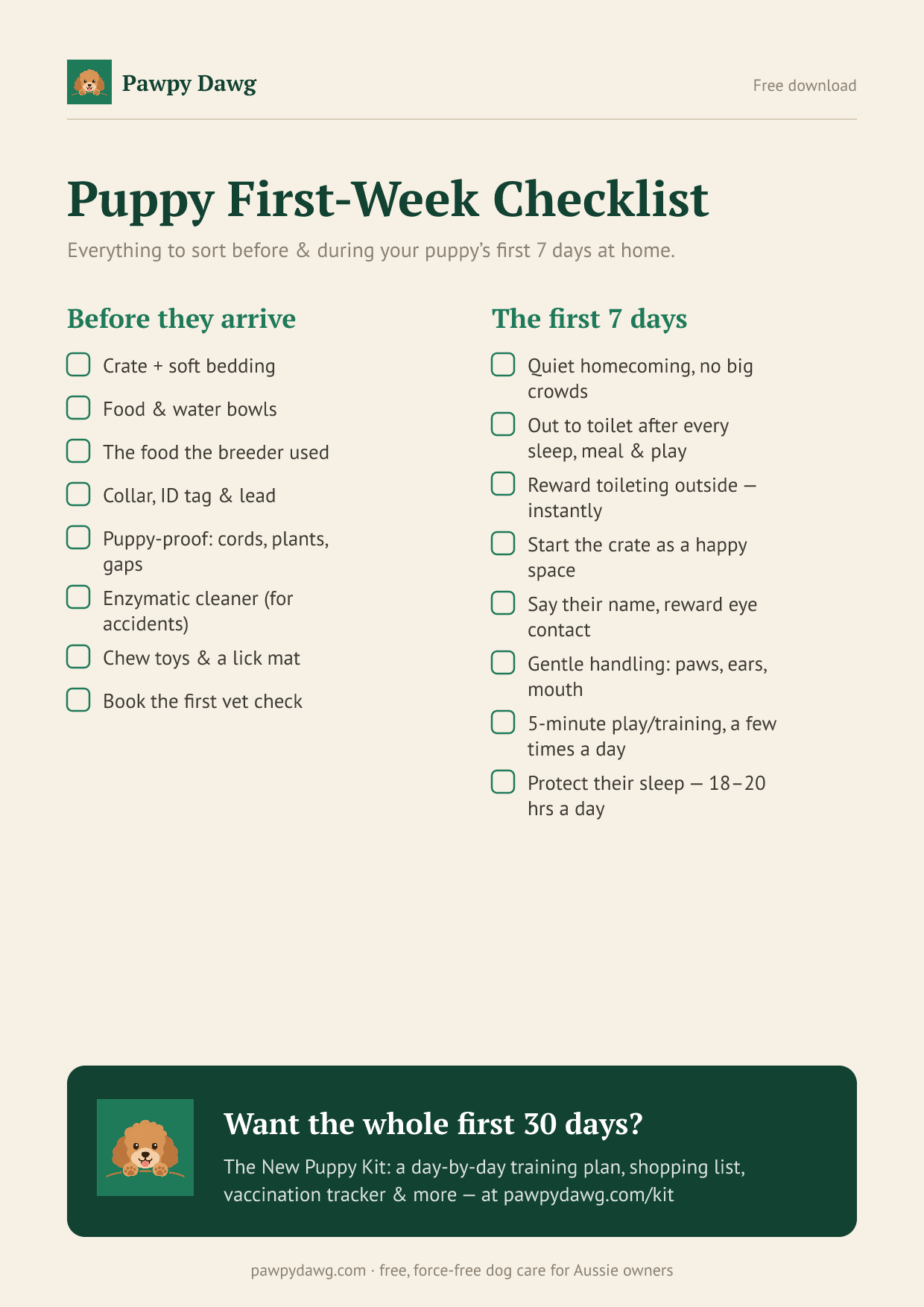
Free printable
Free: the Puppy First-Week Checklist
Everything to sort before and during your puppy's first 7 days home — a printable one-pager. Plus the occasional genuinely useful dog tip. No spam, unsubscribe anytime.
Related guides
How to Stop a Border Collie Pulling on the Lead (Step-by-Step)
Stop your Border Collie pulling on the lead with this step-by-step positive reinforcement plan. Realistic timelines, common mistakes & when to get pro help.
Read the guide →
How to Stop a Border Collie Barking at Strangers (Step-by-Step)
Border collie barking at strangers? Follow this step-by-step positive-reinforcement plan with realistic timelines, common mistakes, and when to call a pro.
Read the guide →
Border Collie Separation Anxiety: A Step-by-Step Fix
Practical step-by-step plan to treat border collie separation anxiety using positive reinforcement. Realistic timelines, common mistakes & when to get vet help.
Read the guide →