
Border Collie Not Coming When Called? A Step-by-Step Recall Fix
Border collie not coming when called? This step-by-step positive-reinforcement plan covers training stages, common mistakes, and realistic timelines for Australian owners.

Written by Bradley Brown
Founder & editor · Reviewed 2026-06-30
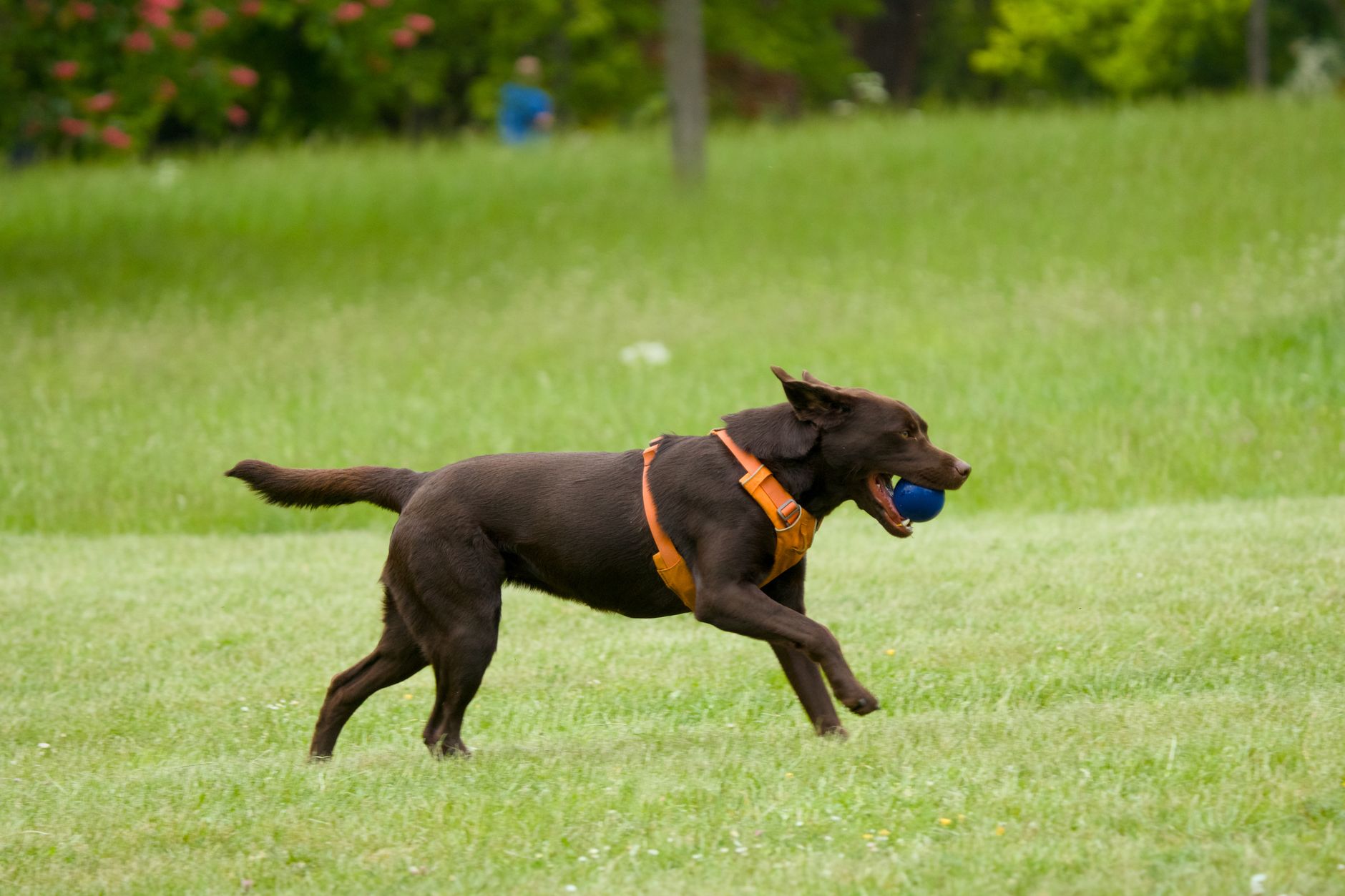
A Border Collie ignoring your recall cue is one of the most frustrating — and genuinely dangerous — problems an owner can face. These dogs are wired to work independently, make fast decisions, and follow movement rather than voices. That combination means a poorly trained recall can unravel quickly, especially near livestock, traffic, or wildlife.
The good news: Border Collies are exceptionally trainable. The same intelligence that makes them stubborn about recall makes them fast learners when the training is set up correctly. Here is a step-by-step plan that works.
Why Border Collies Blow Off Recall
Before fixing the problem, it helps to understand it. Border Collies are not being defiant — they are being Border Collies.
- Arousal overrides hearing. When a BC locks onto a moving target (a ball, a bike, another dog, a sheep), their arousal level climbs rapidly. At a certain threshold, they genuinely stop processing verbal cues.
- The recall cue has been poisoned. If "come" has ever predicted the end of fun, a leash clip, or a scolding, the dog has learned to avoid it.
- Reinforcement history is weak. Many owners call their dog reliably indoors but rarely practise outside, where distractions are high and the training investment is low.
- Self-rewarding behaviours compete. Chasing a rabbit pays immediately and heavily. Coming to you has to beat that reward, which takes deliberate work.
Step-by-Step Recall Training Plan
Step 1: Pick One Cue and Protect It
Choose a single recall word — "come", "here", or a whistle pattern — and commit to it. Never use this word unless you can enforce it or guarantee success in the current environment. If your dog is already mid-chase and you know they will not return, do not call them. Calling and failing teaches the dog that the cue is optional.
If your current recall word is already poisoned (your dog turns away or slows down when they hear it), retire it entirely and start fresh with a new word.
Step 2: Build Value on a Long Line (Week 1–2)
Buy a 10–15 metre long line from any pet store or online — budget around $20–$40 AUD for a decent biothane or nylon option. This is not a punishment tool; it is a safety net that prevents failure while value is being built.
How to run the sessions:
- Let your dog wander to the end of the line and get mildly interested in the environment.
- Call your cue once, in a happy, neutral tone — not repeated, not shouted.
- The moment they turn toward you, mark with "yes" or a clicker.
- Back up quickly (movement triggers chase instinct — use it).
- When they reach you, deliver several high-value treats in a row, or a short game of tug. Do not be stingy here. This needs to be the best thing that happened all day.
- Release them back to sniffing with "go play" or similar. Recall should not always mean the end of freedom.
Aim for 10–15 short repetitions per session, 2–3 sessions per day. Keep sessions under five minutes.
Step 3: Add the Three Ds (Week 2–4)
Once your dog is flying back to you on the long line in a low-distraction area, systematically raise criteria using Distance, Duration, and Distraction — but only one at a time.
| Variable | How to progress |
|---|---|
| Distance | Start at 3 m, build to the full length of the long line |
| Distraction | Start in your backyard, move to a quiet park, then busier areas |
| Duration | Gradually increase the time between letting them go and calling them back |
If your dog fails twice in a row, you have moved too fast. Go back one step.
Step 4: The Premack Principle — Use Their Obsessions
Border Collies are often ball or frisbee obsessed. Use that. Call your dog, reward with treats when they arrive, then immediately throw the ball. The chase becomes the reward for the recall. Over time, the recall cue itself predicts access to the thing they want most.
This flips the script entirely. Coming to you is now the gateway to fun, not the end of it.
Step 5: Proof Recall Around Livestock and High-Drive Triggers
For dogs on farms or near stock, do not assume park training transfers. Livestock trigger a qualitatively different arousal state in Border Collies. Practise recall on a long line specifically around sheep or cattle at a distance where your dog can notice them but still respond to you. Gradually close the gap over weeks, not days.
This is also where a dog trainer with livestock experience is worth the investment — expect to pay $80–$150 AUD per session for a private trainer in most Australian metro areas.
Step 6: Off-Lead Transition
Only drop the long line once your dog is recalling reliably (9 out of 10 attempts) across multiple real-world locations with genuine distractions. Do this in a securely fenced area first. Drop the line but leave it trailing so you can step on it if needed. Gradually phase it out over several weeks.
Common Mistakes That Set Training Back
- Calling repeatedly. "Rover, come. Rover! ROVER, COME!" trains the dog to wait for the third or fourth call.
- Punishing the dog when they eventually arrive. Even if it took four minutes, arriving must always be rewarded.
- Using recall only to end sessions. Dogs learn patterns fast. If recall always means going home, they will start avoiding it.
- Skipping the long line phase. Off-lead freedom before the cue is solid guarantees practise failures that erode the behaviour.
- Inconsistent rewards. A dry kibble treat when the dog has been running for ten minutes is not competitive. Match the distraction level with the reward value.
Realistic Timelines
There is no universal answer, but a realistic guide for most Border Collies:
- Basic recall in low-distraction environments: 1–3 weeks of daily practice
- Reliable recall in a busy park: 6–12 weeks
- Reliable recall around livestock or high-drive triggers: 3–6 months, sometimes longer
Consistency matters more than session length. Five minutes every day beats one hour on weekends.
When to Get Professional Help
Consider booking a trainer if:
- Your dog has a strong chase history and has already run onto roads or into stock
- Your dog shuts down completely (freezes, herds, or bolts) in high-arousal situations
- You have been working on this for more than eight weeks without meaningful progress
- There is any aggression associated with being approached or caught
Look for trainers who use force-free or positive-reinforcement methods and who have specific experience with herding breeds. The Delta Institute (now the Pet Professional Guild Australia) and the NDTF are useful starting points for finding qualified practitioners in Australia.
As an Amazon Associate we earn from qualifying purchases.
Frequently asked questions
Why does my Border Collie come when called at home but not at the park?
The reinforcement history at home is strong and distractions are low. At the park, competing rewards like smells, other dogs, and movement far outweigh the value your dog currently places on the recall cue in that environment. You need to build the same reinforcement history in high-distraction locations from scratch, using a long line to prevent failure while you do it.
Is it too late to train recall in an adult Border Collie?
No. Adult dogs are fully capable of learning reliable recall, and in some ways easier to train than puppies because they have better focus. The main challenge with adults is that bad habits are more ingrained, so expect to spend extra time on the foundation stages. A new recall cue word helps if the old one has a negative association.
Should I use an e-collar or shock collar to train recall in my Border Collie?
The mainstream veterinary and applied animal behaviour consensus is that e-collars carry a meaningful risk of increasing anxiety and fear-based reactivity, particularly in sensitive breeds like Border Collies. Positive-reinforcement recall training achieves reliable results without that risk. Australia's RSPCA and most veterinary behaviour specialists recommend against their use for recall training.
How long should recall training sessions be for a Border Collie?
Keep sessions to three to five minutes each, repeated two to three times per day. Border Collies are intense workers but short sessions prevent frustration and maintain high motivation. Always end on a successful repetition so the last thing reinforced is correct behaviour.
My Border Collie chases cars and bikes — will recall training fix this?
Recall training reduces the risk by giving you a reliable interrupt cue, but a strong chase drive toward fast-moving objects also warrants specific desensitisation and counter-conditioning work. This is worth doing with a qualified force-free trainer, as the safety stakes are high and mistakes during the process can make the behaviour worse.
What treats work best for recall training a Border Collie?
Use something your dog does not get at any other time — small pieces of cooked chicken, cheese, fritz, or commercial high-value treats like Ziwi Peak or Hypro Premium work well for most dogs. In high-distraction environments, also consider using a short game of tug or a ball throw as the reward, especially for dogs with strong toy drive.
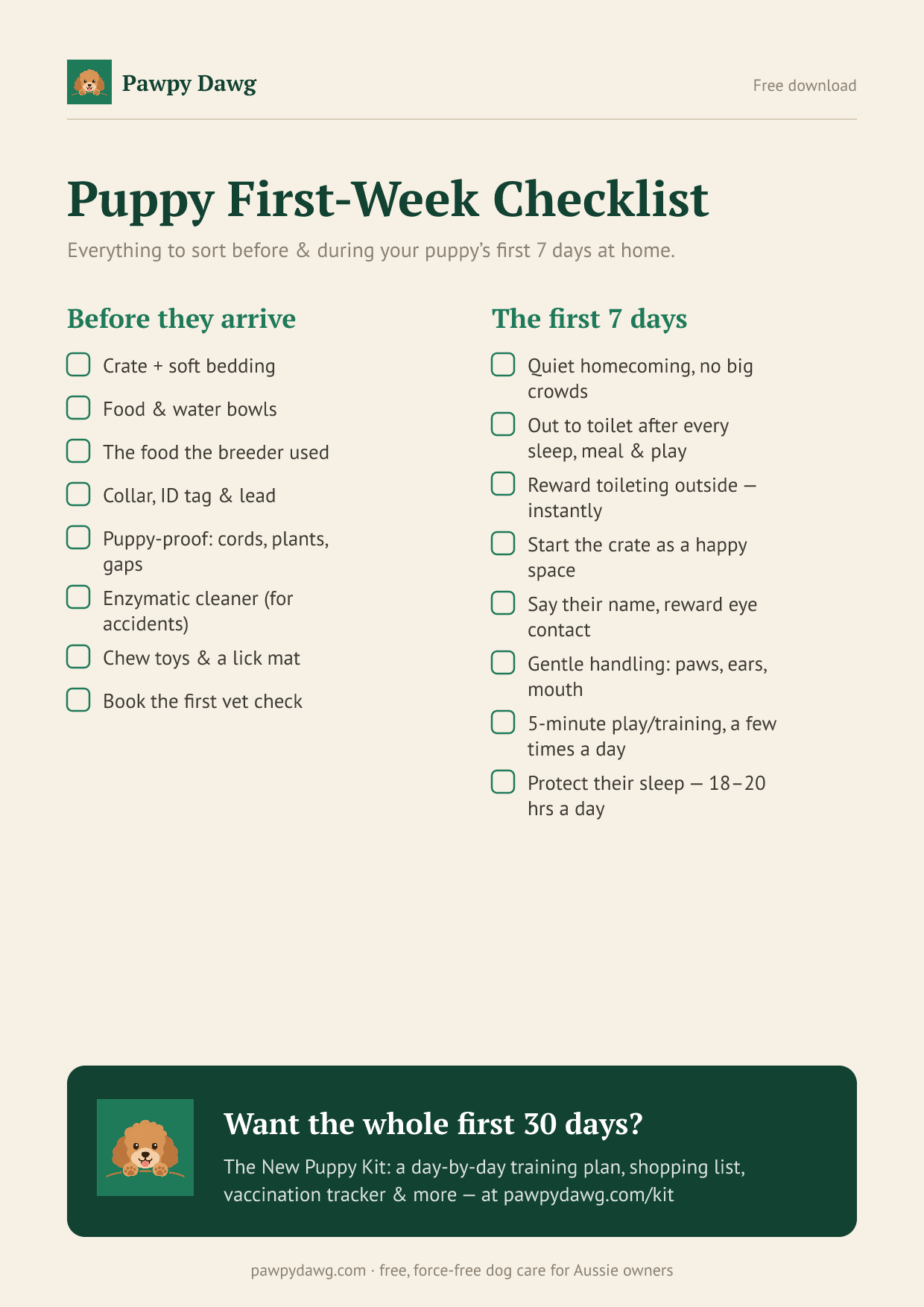
Free printable
Free: the Puppy First-Week Checklist
Everything to sort before and during your puppy's first 7 days home — a printable one-pager. Plus the occasional genuinely useful dog tip. No spam, unsubscribe anytime.
Related guides
How to Stop a Border Collie Pulling on the Lead (Step-by-Step)
Stop your Border Collie pulling on the lead with this step-by-step positive reinforcement plan. Realistic timelines, common mistakes & when to get pro help.
Read the guide →
How to Stop a Border Collie Barking at Strangers (Step-by-Step)
Border collie barking at strangers? Follow this step-by-step positive-reinforcement plan with realistic timelines, common mistakes, and when to call a pro.
Read the guide →
Border Collie Separation Anxiety: A Step-by-Step Fix
Practical step-by-step plan to treat border collie separation anxiety using positive reinforcement. Realistic timelines, common mistakes & when to get vet help.
Read the guide →