
How to Stop a Border Collie Biting and Mouthing (Step-by-Step)
Struggling with border collie biting and mouthing? Use this step-by-step positive-reinforcement plan with realistic timelines and trainer-backed tips.

Written by Bradley Brown
Founder & editor · Reviewed 2026-06-30

Border Collies bite and mouth for the same reasons most dogs do — they're young, they're overstimulated, or nobody has taught them yet that teeth on skin isn't acceptable. The difference with this breed is intensity. Border Collies are wired to work, they fixate hard, and when that drive has nowhere to go, mouthing can escalate fast. The good news: the same intelligence that makes them a handful makes them exceptionally trainable.
This plan works for puppies and adolescent Border Collies up to about 18 months. If you have an adult dog with a bite history, skip to the section on getting professional help.
Why Border Collies Bite and Mouth More Than Average
Before you fix the behaviour, it helps to understand it.
- Herding instinct. Border Collies are selectively bred to control moving things with their mouth and eye. Running children, joggers, and flapping hands trigger that prey-chase circuit almost automatically.
- Teething discomfort. Puppies between 3–6 months chew and mouth because it relieves gum pain, not to be difficult.
- Arousal and overstimulation. A Border Collie that hasn't had adequate physical and mental exercise tips into frenetic, bitey behaviour quickly.
- Accidental reinforcement. Shrieking, pulling your hand away, or rough play can actually reward and intensify mouthing rather than stop it.
Step-by-Step Plan to Stop the Biting
Step 1 — Manage the environment first (Week 1)
Training alone won't work if the dog keeps practising the behaviour. Reduce opportunities:
- Use a house lead (a light 1–2 metre lead dragging indoors) so you can calmly redirect without grabbing the collar, which often triggers more mouthing.
- Gate off high-traffic areas during peak arousal times like after meals and first thing in the morning.
- Put the dog behind a baby gate or in a pen when small children are running around. This is not punishment — it's preventing a habit from forming.
Step 2 — Teach bite inhibition with a clear marker (Weeks 1–2)
Bite inhibition means the dog learns to control the pressure of its mouth. This is a non-negotiable foundation skill.
- Let your dog mouth your hand during calm interaction.
- The moment pressure goes above a firm but painless threshold, say "Ouch" or "Too bad" in a flat, neutral tone — not a yelp (yelping can excite some Border Collies further).
- Immediately withdraw all attention: stand up, turn away, cross your arms, and ignore the dog for 10–15 seconds.
- Return and resume calm interaction. Repeat.
- Over 1–2 weeks, lower the threshold. First no hard bites, then no moderate pressure, then no teeth on skin at all.
Common mistake: Inconsistency between family members. One person allowing mouthing while another corrects it will stall progress entirely. Everyone in the household must follow the same protocol.
Step 3 — Redirect to appropriate outlets (Weeks 1–3)
Withdrawing attention teaches what NOT to do. You also need to teach what TO do instead.
- Keep a tug toy or chew in your pocket or nearby at all times during the early weeks.
- The moment the dog targets your hand, redirect to the toy before the bite happens where possible. If you're already mid-bite, do Step 2 first, then offer the toy once the dog has calmed slightly.
- Rotate chews (bully sticks, raw meaty bones appropriate for age, rubber Kongs stuffed and frozen) to keep novelty high.
- Tug is not bad. Structured tug — where the dog drops on cue — is actually an excellent outlet for herding drive and builds impulse control at the same time.
Step 4 — Build a reliable "Off" or "Leave It" cue (Weeks 2–4)
A dog that understands "off" gives you a verbal tool to use in real situations.
- Hold a treat in a closed fist. Let the dog sniff, lick, and paw.
- The moment the dog pulls back even slightly, mark (click or say "Yes") and reward from your other hand.
- Add the cue "Off" just before you present the fist once the dog is reliably backing away.
- Generalise to your clothing, your arms, guests' hands.
Step 5 — Increase exercise and mental enrichment (Ongoing)
This step is non-negotiable for Border Collies. A tired dog mouths less.
- Physical: At least 45–60 minutes of genuine aerobic exercise daily for dogs over 6 months. Sniffy on-lead walks don't count as aerobic. Fetch, swimming, and off-lead running are more effective.
- Mental: Training sessions (2–3 × 5-minute sessions daily), puzzle feeders, scent games, and trick training burn energy without physical wear and tear on growing joints.
- Calm-settling practice: Teach a "settle" on a mat so the dog has a known default behaviour when arousal climbs.
Realistic Timelines
| Dog Age | Typical Progress |
|---|---|
| 8–12 weeks | Mouthing is very normal; begin bite inhibition immediately |
| 3–5 months | With consistency, hard bites should reduce within 2–3 weeks |
| 6–12 months | Adolescent surge may temporarily worsen behaviour; stay consistent |
| 12–18 months | Most Border Collies reliably mouth-free with a consistent plan |
If you've been consistent for 4–6 weeks and see no improvement, something in the approach needs adjusting — that's when a trainer earns their fee.
Common Mistakes That Make It Worse
- Physical punishment (scruffing, alpha rolls, tapping the nose). These methods increase anxiety and can trigger defensive biting in a dog that was previously only play-mouthing. Current veterinary and behavioural consensus strongly advises against them.
- Rough wrestling and hand play. Teaching a puppy that hands are toys makes it very hard to explain later that hands are off-limits.
- Responding to demand mouthing. If the dog mouths you and gets a treat or attention to stop it, you've just trained the dog to mouth for rewards.
- Inconsistent rules. "Sometimes" is the same as "yes" to a dog.
When to Get Professional Help
Seek a qualified trainer or veterinary behaviourist if:
- The biting leaves marks, breaks skin, or is directed at the face
- There is growling, stiff body posture, or hard staring before or during the bite (this is no longer play)
- The behaviour isn't improving after 4–6 weeks of consistent work
- The dog is over 18 months and the behaviour is entrenched
- Children or vulnerable adults are in the household
Look for trainers who use positive reinforcement methods and hold qualifications through the Delta Society Australia, the PPGA (Pet Professional Guild Australia), or hold a Certificate IV in Companion Animal Services. A single behaviour consultation typically costs $150–$350 AUD and can save months of frustration.
Border Collie biting and mouthing is genuinely one of the more manageable problems in dog training — it just requires consistency, adequate exercise, and patience through the adolescent phase. Most owners who stick to the plan above see real, lasting change within 6–8 weeks.
As an Amazon Associate we earn from qualifying purchases.
Frequently asked questions
Is it normal for Border Collie puppies to bite a lot?
Yes, mouthing and nipping is normal puppy behaviour, but Border Collies often mouth more persistently than other breeds due to their herding drive. It's not aggression — it's instinct and exploration. The key is starting bite inhibition training from the day you bring the puppy home, around 8 weeks of age.
At what age do Border Collies stop mouthing?
With consistent training, most Border Collies have reliable mouth manners by 12–18 months. Teething tapers off around 6 months, which often reduces chewing-driven mouthing, but herding-driven nipping can persist into adolescence without deliberate training. Don't wait it out — address it actively.
Why does my Border Collie nip at my heels and ankles?
Heel and ankle nipping is classic herding behaviour — your dog is doing genetically what it was bred to do to livestock. It's triggered by movement, so it often intensifies when you walk away or run. Redirection to a tug toy, combined with stopping all movement the moment nipping starts, is the most effective response.
Should I yelp to stop my Border Collie from biting?
The yelp method works well for some breeds, but Border Collies can actually become more aroused by a high-pitched yelp, making the biting worse. A calm, flat verbal marker like "Ouch" or "Too bad" followed by withdrawing attention is generally more effective for this breed.
Can I use a spray bottle or tap my Border Collie's nose to stop biting?
These approaches are not recommended by current veterinary or animal behaviour bodies. Physical corrections and aversive sprays can increase anxiety and may escalate biting from play-mouthing into defensive behaviour over time. Positive-reinforcement methods are more effective and don't carry those risks.
How much exercise does a Border Collie need to reduce problem biting?
Adult Border Collies generally need 45–60 minutes of genuine aerobic exercise daily, plus mental stimulation through training and enrichment. Under-exercised Border Collies redirect their energy into mouthing, barking, and destructive behaviour. For puppies under 6 months, keep sessions shorter to protect developing joints — multiple short play and training sessions work better than one long run.
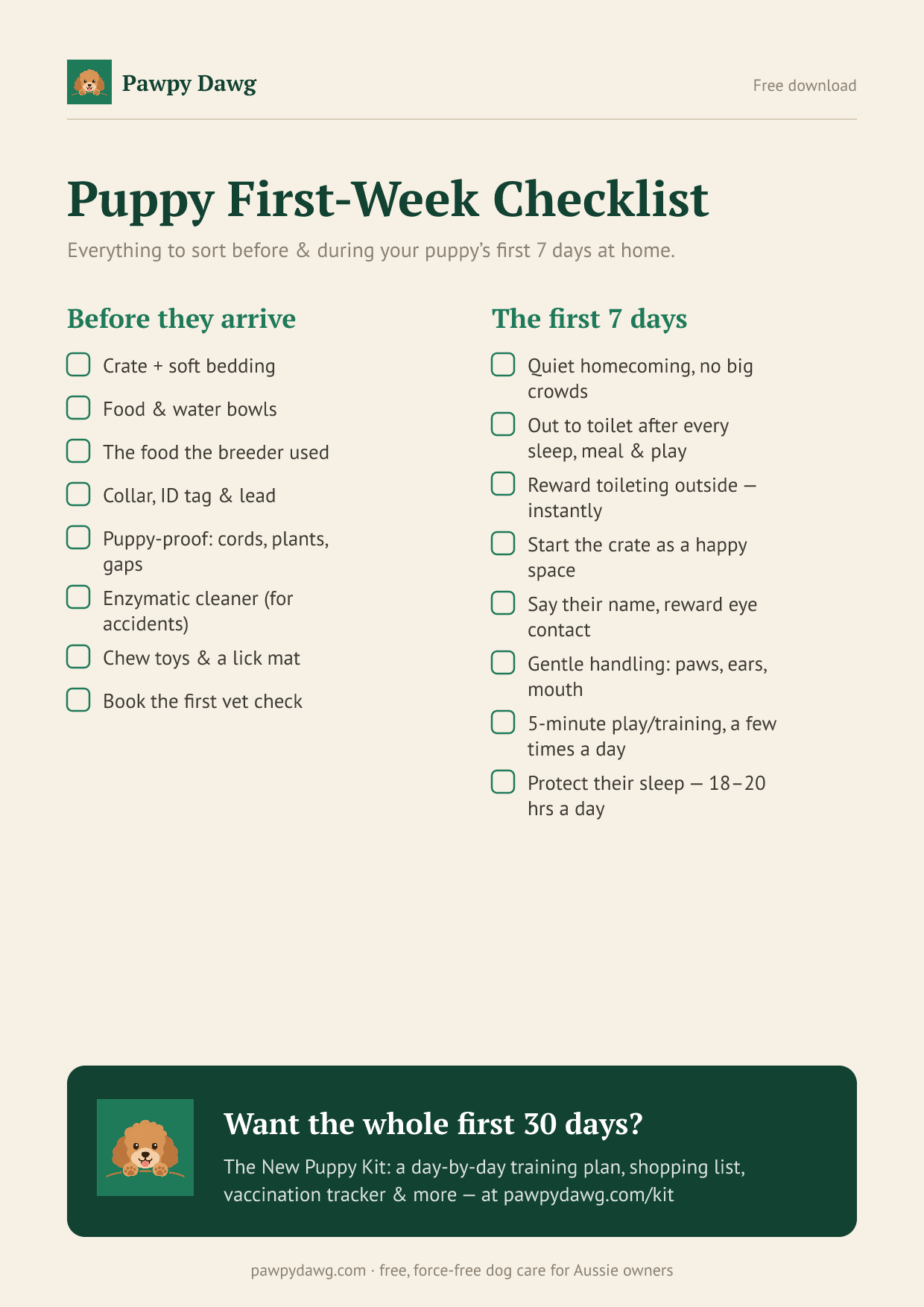
Free printable
Free: the Puppy First-Week Checklist
Everything to sort before and during your puppy's first 7 days home — a printable one-pager. Plus the occasional genuinely useful dog tip. No spam, unsubscribe anytime.
Related guides

How to Stop a Border Collie Pulling on the Lead (Step-by-Step)
Stop your Border Collie pulling on the lead with this step-by-step positive reinforcement plan. Realistic timelines, common mistakes & when to get pro help.
Read the guide →
How to Stop a Border Collie Barking at Strangers (Step-by-Step)
Border collie barking at strangers? Follow this step-by-step positive-reinforcement plan with realistic timelines, common mistakes, and when to call a pro.
Read the guide →
Border Collie Separation Anxiety: A Step-by-Step Fix
Practical step-by-step plan to treat border collie separation anxiety using positive reinforcement. Realistic timelines, common mistakes & when to get vet help.
Read the guide →