
Help — My Jack Russell Terrier Still Isn't Toilet Trained!
Struggling with jack russell terrier toilet training? Get a realistic, positive-reinforcement plan, common mistakes to avoid, and timelines that actually work.

Written by Bradley Brown
Founder & editor · Reviewed 2026-07-15
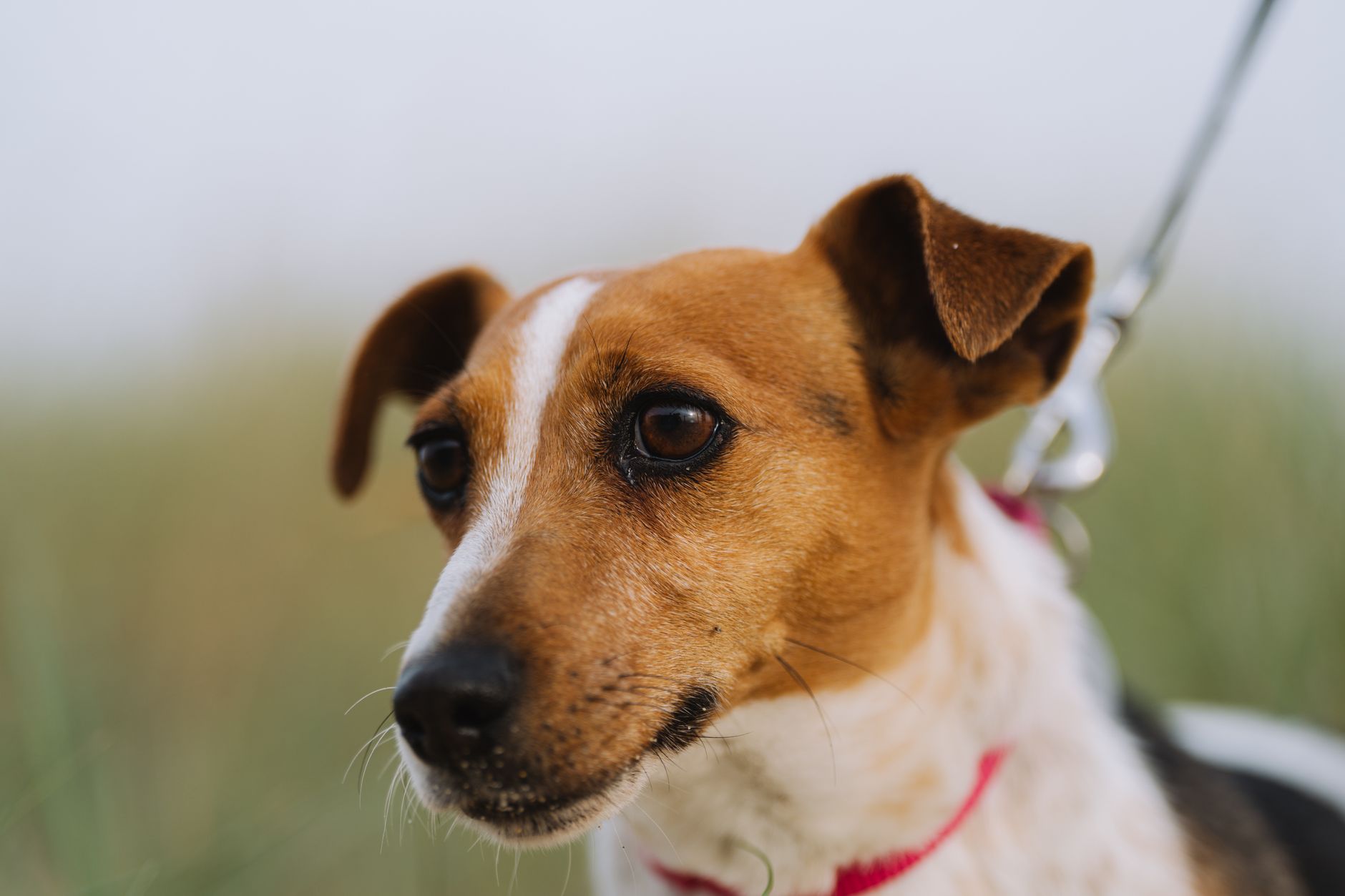
Jack Russells are sharp, wilful, and built to make their own decisions — which is exactly why toilet training them can feel like a negotiation you keep losing. The good news: stubbornness and intelligence are two sides of the same coin, and once a Jack Russell understands what you want, they're remarkably consistent.
Why does my Jack Russell seem to "get it" and then backslide?
This is the single most common complaint, and it's almost never a sign that your dog is broken or that you've failed. Jack Russells are terriers — they were bred to work independently, follow their nose, and act fast. That means they're easily distracted mid-toilet-trip, and they associate location very strongly. If your dog went inside once and nothing terrible happened, that spot now smells like a legitimate toilet to them.
Backsliding also happens predictably at a few life stages: puppies between 12 and 16 weeks hit a confidence spike and start testing limits; adolescent dogs (roughly 6 to 18 months) do the same. Illness, a change in schedule, a new person in the house, or even a different brand of puppy pad can reset the behaviour. It's not spite. Dogs don't think that way.
The fix is always the same: go back to basics, tighten your supervision, and rebuild the habit from scratch. A week of stricter management almost always gets things back on track.
What does a realistic toilet-training routine actually look like for a Jack Russell?
Keep it simple and time-boxed — you do not need to restructure your life. Aim for 5–10 minutes of active effort spread across the day.
The core routine is predict, take out, reward:
- Predict the moments — puppies and undertrained adults almost always need to toilet within 10–15 minutes of waking up, after every meal, after play, and before bed. Those are your non-negotiable trip times.
- Take them to one consistent spot — same patch of grass, every time. The scent builds up and actually cues the dog to go.
- Use a cue word — say "toilet" (or whatever word you pick) once, calmly, as they're sniffing and circling. Over time this becomes a command they'll respond to on rainy mornings when you just want them to get on with it.
- Reward the instant they finish — not when they come back inside, not with a pat on the head. A small, high-value treat delivered within two seconds of them finishing is what creates the association. Cheese, chicken, or a commercial training treat all work well.
- No reward for coming back in, only for toileting outside — this is a subtle but important distinction many owners miss.
For puppies under 16 weeks, expect trips every 1.5 to 2 hours during the day. That sounds relentless, but it typically only needs to continue strictly for 2–4 weeks before the dog starts signalling.
Which mistakes are accidentally undoing the training?
Most toilet-training problems can be traced back to one or more of the following:
| Mistake | Why it stalls progress | What to do instead |
|---|---|---|
| Punishing accidents after the fact | Dogs can't link a scolding to something that happened minutes ago | Clean up quietly and say nothing |
| Letting them roam unsupervised too soon | More freedom = more chances to practise the wrong behaviour | Keep them in one room or on a long lead indoors until reliable |
| Using ammonia-based cleaners on accident spots | Ammonia smells like urine and re-marks the spot | Use an enzymatic cleaner (e.g. Biozet, Nature's Miracle) |
| Rewarding too late | A 10-second delay means the reward attaches to sniffing the garden, not toileting | Treat within 2 seconds of them finishing |
| Inconsistent access to outside | If the dog can't always get out when they need to, accidents become habit | Set fixed trip times rather than waiting for signals early on |
| Expecting signals before they exist | Many dogs don't learn to signal (bark, scratch, sit at door) until after they're already reliable | Train toileting first; signals often develop naturally |
The punishment issue deserves extra emphasis. Rubbing a dog's nose in it or shouting at them teaches them to hide where they toilet — usually behind the couch — not to stop doing it inside.
How long does Jack Russell terrier toilet training actually take?
Honest answer: it varies more than most guides admit. A puppy started at 8 weeks with consistent management is often reliable indoors by 12–16 weeks, though accidents can still occur until 6 months or so. A rescue Jack Russell with established indoor habits may take 4–8 weeks of strict retraining even as an adult.
What "reliable" means matters here. A dog who hasn't had an accident in two weeks is not the same as a dog who's been clean for three months. Most trainers and vets consider a dog genuinely trained after 8–12 weeks without an accident — and that clock restarts after each backslide.
Factors that slow things down:
- Inconsistent routine (weekdays structured, weekends free-for-all)
- A previous history of indoor toileting that was accidentally reinforced
- A yard that's hard to access quickly (think three flights of stairs in an apartment)
- Medical issues (see below)
Could there be a medical reason my Jack Russell keeps having accidents?
Yes, and it's worth ruling out before you commit to a retraining programme. Urinary tract infections are very common in small dogs and cause urgency that no amount of training will fix. Signs include frequent small amounts of urine, straining, blood-tinged urine, or excessive licking of the genitals. A UTI is easily treated with antibiotics once diagnosed.
Other conditions to discuss with your vet if training isn't progressing:
- Bladder stones — more common in Jack Russells than in many breeds
- Incontinence — particularly in desexed females, caused by low oestrogen affecting sphincter tone; responds well to medication
- Cognitive dysfunction — in older dogs, can look like "forgetting" training
- Intestinal parasites — can cause urgency and loose stools that make control difficult
If your dog was clean and has recently started having accidents, a vet check should be the first step, not a training overhaul.
When is it worth calling in a professional trainer?
If you've run a consistent routine for 4–6 weeks and seen no improvement, a professional can usually identify what's going wrong in a single session. Look for a trainer who uses force-free, positive-reinforcement methods — this matters especially with terriers, who tend to shut down or become more defiant under pressure-based methods.
In Australia, look for trainers affiliated with the Pet Professional Guild Australia or Delta Society Australia (now part of the NDTF network). Expect to pay roughly $100–$200 AUD for an in-home consultation. Many offer follow-up via video call, which suits busy schedules well.
A trainer is particularly useful if:
- The dog is toileting in one specific spot compulsively (may need an environmental management solution)
- There's anxiety involved — dogs with separation anxiety often toilet inside when alone, which is a welfare issue, not a training failure
- You've adopted an adult dog with an unknown history and nothing seems to be working
One session with the right person can save months of frustration. It's not an admission of failure — it's the practical move.
Frequently asked questions
At what age should a Jack Russell be fully toilet trained?
Most Jack Russell puppies can reliably hold on and signal to go outside by around 4 to 6 months of age, provided training has been consistent. Some take a little longer, particularly if the routine has been inconsistent or they've been allowed to practise indoor accidents. Adult rescues can be retrained successfully at any age, though it typically takes 4–8 weeks of structured effort.
Why does my Jack Russell pee inside right after coming back from outside?
This usually means the dog got distracted outside and didn't actually toilet, then relieved themselves once the pressure of the new environment was gone. Try staying outside longer and waiting for the toilet to happen before coming back in — always reward immediately when it does. Using a consistent cue word can also help focus them on the job.
Is a Jack Russell harder to toilet train than other breeds?
Jack Russells aren't harder to train — they're just more independently minded than breeds that are highly motivated to please their owner at all times. They respond well to training once they understand there's something genuinely worth their while (a high-value treat, not just praise). Consistency and reward timing matter more with this breed than with most.
Should I use puppy pads or train straight to outside?
Training straight to an outdoor spot is generally faster and avoids the extra step of weaning off pads later. Puppy pads can be useful in apartments or for very young puppies who can't hold on long enough to reach outside, but they teach the dog that toileting indoors is acceptable, which can slow progress. If you do use pads, move them progressively closer to the door and then outside over a period of days.
How do I stop my Jack Russell from toileting in the same indoor spot repeatedly?
Thorough cleaning with an enzymatic cleaner (such as Biozet or a dedicated pet odour remover) is essential — standard household cleaners don't fully break down the urine proteins that keep drawing dogs back. After cleaning, try placing the dog's food bowl or bed over that spot temporarily, as dogs strongly avoid toileting near where they eat or sleep.
Can an older Jack Russell be toilet trained if they've always gone inside?
Yes, adult dogs can absolutely be toilet trained regardless of previous habits — the process simply requires more patience and stricter initial management than with a puppy. Treat it as training from scratch: high supervision, frequent outdoor trips, enzymatic cleaning of all previous spots, and consistent rewards. Most adult dogs show clear improvement within 2–4 weeks of a structured approach.
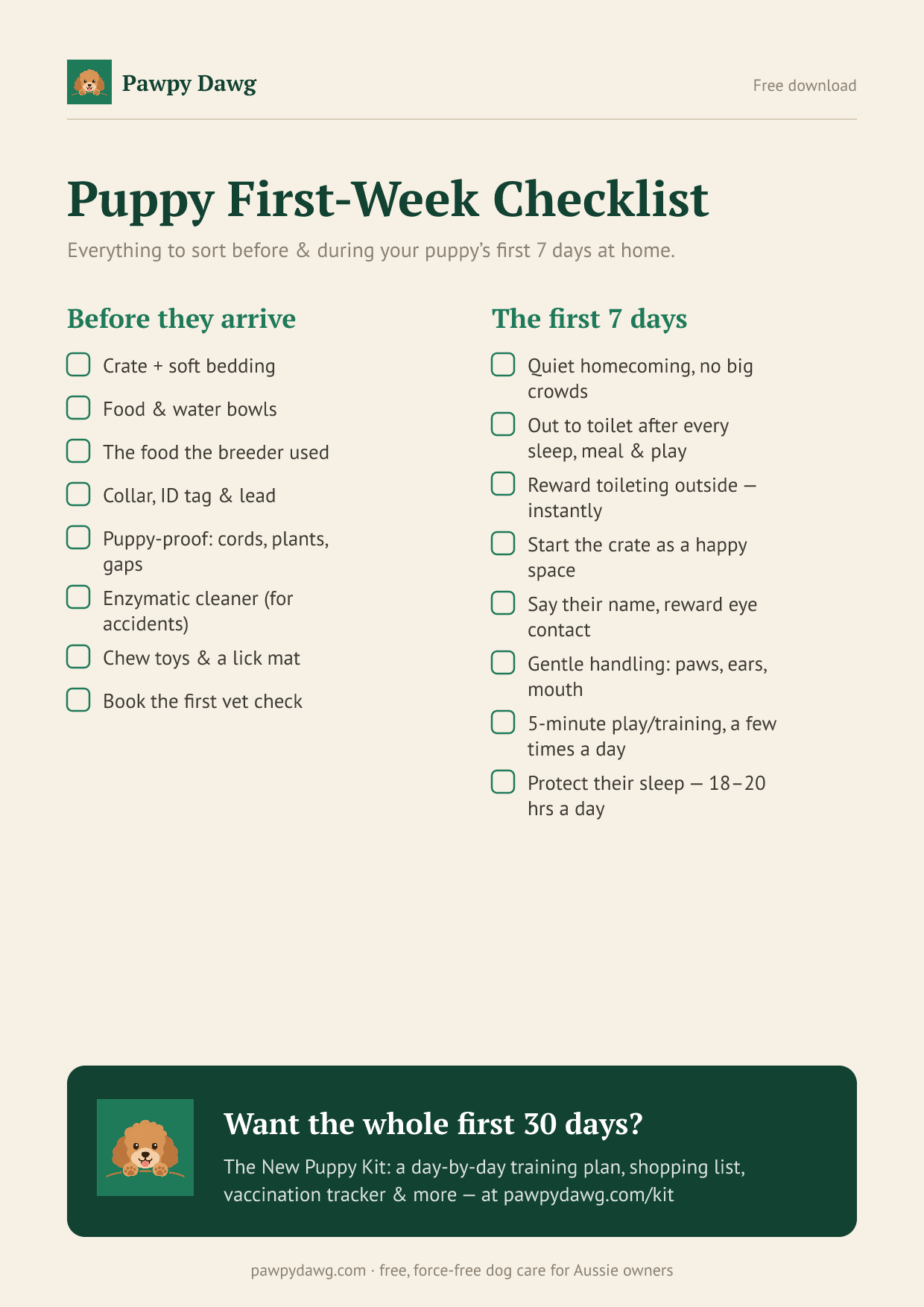
Free printable
Free: the Puppy First-Week Checklist
Everything to sort before and during your puppy's first 7 days home — a printable one-pager. Plus the occasional genuinely useful dog tip. No spam, unsubscribe anytime.
Related guides
How to Stop a Jack Russell Terrier Pulling on the Lead (Step-by-Step)
Tired of your Jack Russell terrier pulling on the lead? This step-by-step positive-reinforcement plan gets results in 5–10 min/day. Start today.
Read the guide →
How to Stop a Jack Russell Terrier Barking at Strangers (Step-by-Step)
Tired of your Jack Russell terrier barking at strangers? This step-by-step positive-reinforcement plan gets real results in 5–10 min daily sessions.
Read the guide →
Jack Russell Terrier Separation Anxiety: A Step-by-Step Fix
Struggling with Jack Russell terrier separation anxiety? Get a realistic, step-by-step positive-reinforcement plan — with a quick win you can try tonight.
Read the guide →