
French Bulldog Training Guide: A Realistic 8-Week Plan
A realistic 8-week French Bulldog training plan built around their stubborn-but-clever temperament. Short daily sessions, clear steps, no guilt.

Written by Bradley Brown
Founder & editor · Reviewed 2026-07-15
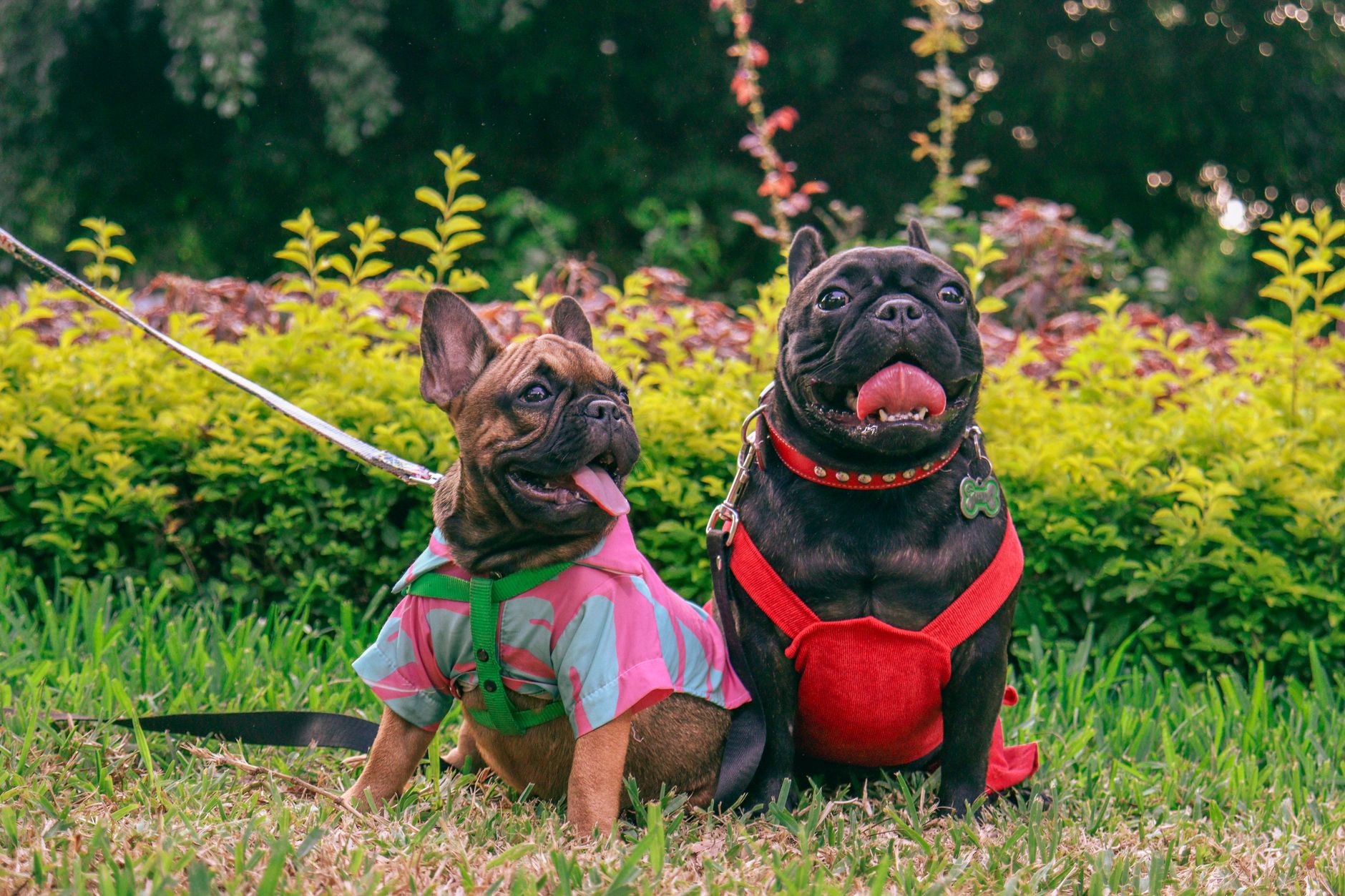
If your Frenchie just stared at you blankly during yet another "sit" attempt, you're not alone — and you haven't ruined anything. French Bulldogs are smart, but they operate on their own terms, and a training approach built for a Border Collie will frustrate both of you. The good news: five to ten minutes a day, the right reinforcement, and a plan matched to their wiring is genuinely enough.
Your Quick Win for Today
Before you read another word, grab ten small, soft treats (think tiny pieces of cheese or cooked chicken — something your dog doesn't get at dinner). Ask for nothing. Just let your Frenchie eat five treats from your hand, then walk away. You've just started building the currency you'll need for everything else. High-value food is the engine of French Bulldog training, and establishing that your hand predicts good things takes about ninety seconds.
What Makes Frenchies Different to Train
French Bulldogs are brachycephalic (flat-faced), which means they overheat quickly and can't sustain long activity bursts. They're also bred as companion dogs — closeness to you motivates them far more than a toy or a task. They respond poorly to repetition for its own sake; once they've "got" something, drilling it twenty more times switches them off.
Keep every session to 5–7 minutes maximum. End on a success, even if that means dropping back to something easy. Two short sessions a day beat one long one every time.
The 8-Week Plan
Weeks 1–2: Foundation Behaviours
Focus on just three things: sit, name recognition, and hand touch (nose to palm).
- Sit: Lure with a treat held above the nose, moving slowly back over the head. The moment the bottom hits the ground, mark with "yes!" and treat. Ten reps, done.
- Name recognition: Say the name once, the instant they look at you, mark and treat. Do this in quiet environments first.
- Hand touch: Present an open palm 10 cm from their nose. Most dogs sniff it out of curiosity — mark and treat the second contact is made. This becomes an invaluable reset cue later.
Aim for two 5-minute sessions daily, ideally before meals when motivation is highest.
Weeks 3–4: Adding Duration and Distance
Now you proof what they know. Can they hold a sit for three seconds? Five? Can they respond to their name from across the room?
- Introduce "stay" by adding one second of duration to sit before treating. Build slowly — three seconds this week, five by end of week four.
- Practice name recognition with mild distractions: TV on, another person in the room.
- Begin loose-lead walking in the backyard. Stop the moment the lead tightens. Wait. The second there's slack, move forward and treat. Frenchies pull hard for their size — consistency here pays off enormously by week eight.
Weeks 5–6: Real-World Manners
- Drop/leave it: Place a treat on the floor, cover with your foot. When they stop pawing and look up at you, mark and treat from your hand (not the floor treat). This takes patience but usually clicks within two or three sessions.
- Door manners: Ask for a sit before opening any door. Don't open the door until four paws are on the ground. Repeat every single time — this one is about habit, not cleverness.
- Take loose-lead practice to the footpath. Expect regression — new environments are genuinely harder. Drop your expectations 30% and rebuild.
Weeks 7–8: Putting It Together
- Practise "place" (going to a mat on cue). Lure onto the mat, mark, treat. This gives you a management tool for visitors, mealtimes, and moments you need the dog out from underfoot.
- Chain two behaviours: sit, then stay, then release with "ok" and a hand touch. Short chains build confidence.
- Do one five-minute session in a new location — a café, a friend's backyard, a quiet park. This is called generalisation, and it's where training becomes real life.
What to Expect Week by Week
| Week | Realistic Goal | Common Sticking Point |
|---|---|---|
| 1–2 | Responds to name 8/10 times; sits on cue | Short attention span; easily distracted |
| 3–4 | 5-second stay; loose lead in yard | Inconsistent stay duration |
| 5–6 | Ignores dropped food; sits at doors | Loose lead falls apart outdoors |
| 7–8 | Goes to mat on cue; walks politely on lead | Generalising to new environments |
The One Thing That Derails Frenchie Training
Inconsistency from the humans, not stubbornness from the dog. If the dog jumps at the door and sometimes gets let in anyway, the behaviour is on a variable reward schedule — which is actually the hardest schedule to extinguish. Every person in the household needs to follow the same rules, every time. That's it. That's the secret.
A professional reward-based trainer or group puppy class (typically $150–$300 AUD for a six-week course) is worth the investment if you hit a wall, but most owners find the foundation behaviours above are genuinely manageable at home with short, consistent effort.
Frequently asked questions
How long does it take to train a French Bulldog?
Most Frenchies can learn basic cues like sit, stay, and loose-lead walking within 6–8 weeks of consistent daily practice. 'Trained' isn't really a finish line — short refresher sessions help maintain reliability over the dog's lifetime, especially after changes in environment or routine.
Are French Bulldogs hard to train?
They're not hard — they're specific. Frenchies are intelligent but easily bored by repetition, and they don't respond well to harsh or prolonged correction. Short sessions, high-value food rewards, and a calm handler suit them far better than drill-based methods. Most owners see real progress within the first two weeks once they adjust their approach.
What age should I start training a French Bulldog puppy?
As early as eight weeks old. Puppies are absorbing information constantly at that age, and basic name recognition and sit can begin the day you bring them home. Early socialisation — calm exposure to different people, surfaces, and sounds — is just as important as formal cues during the first 16 weeks.
Why does my French Bulldog ignore me during training?
The most common reasons are treats that aren't motivating enough, sessions that run too long, or asking for behaviours in a distracting environment before the dog is ready. Try higher-value food (cooked chicken or cheese), cap sessions at five minutes, and train in a quieter spot. If your Frenchie is panting heavily, they're likely too warm to focus — wait until they've cooled down.
Can adult French Bulldogs be trained, or is it too late?
Absolutely — adult dogs learn new behaviours readily, and some trainers find them easier to work with than puppies because their attention span is longer. The same reward-based principles apply at any age. An adult rescue Frenchie may take a few extra weeks to build trust and understand the training 'game', but there's no age cutoff.
Is crate training recommended for French Bulldogs?
Yes, when introduced gradually and positively. A crate gives a Frenchie a safe, cool space to rest and helps with toilet training in puppies. Never use the crate as punishment. Introduce it with treats and meals inside the open crate before ever closing the door, and build duration slowly over several days.
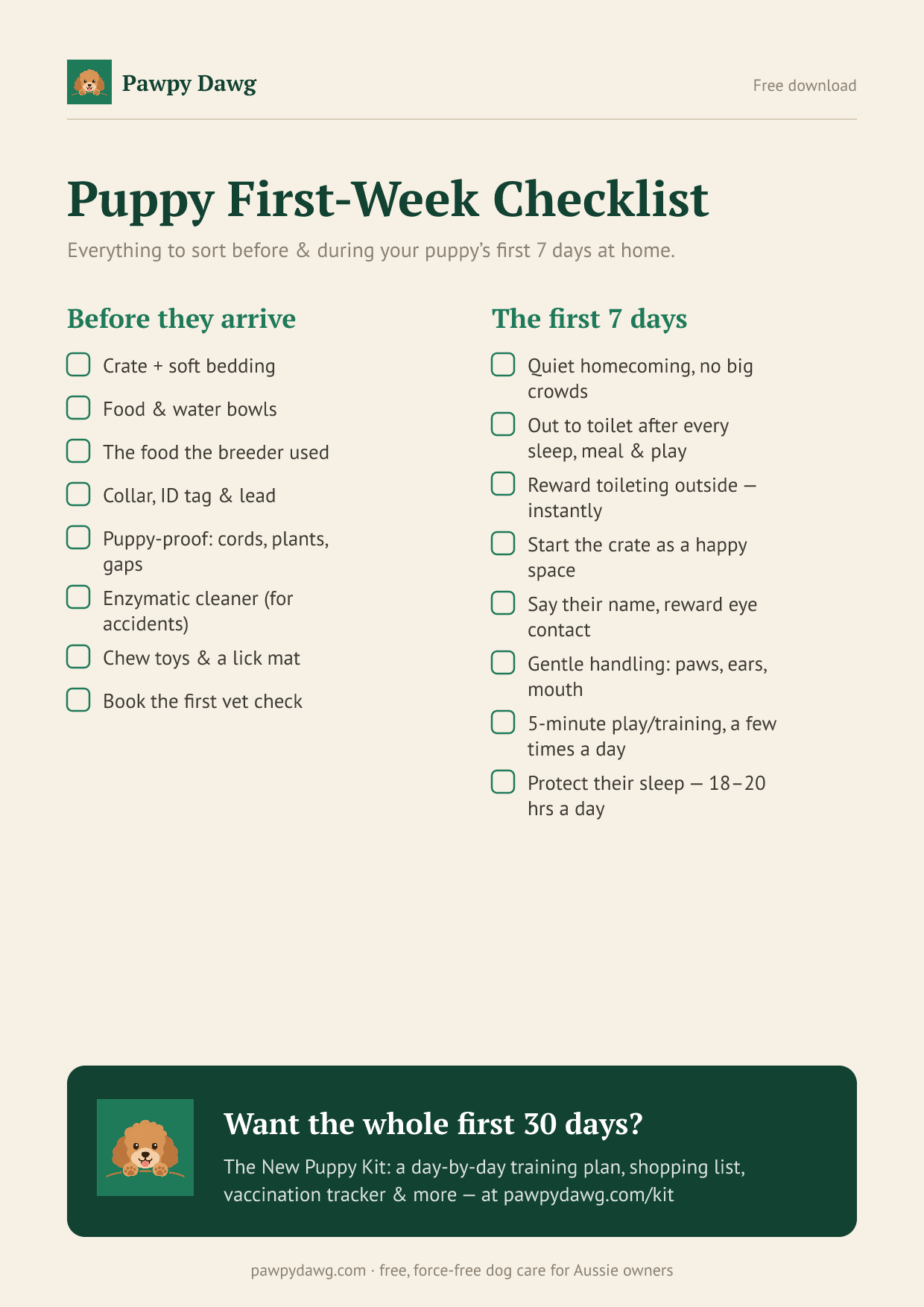
Free printable
Free: the Puppy First-Week Checklist
Everything to sort before and during your puppy's first 7 days home — a printable one-pager. Plus the occasional genuinely useful dog tip. No spam, unsubscribe anytime.
Related guides
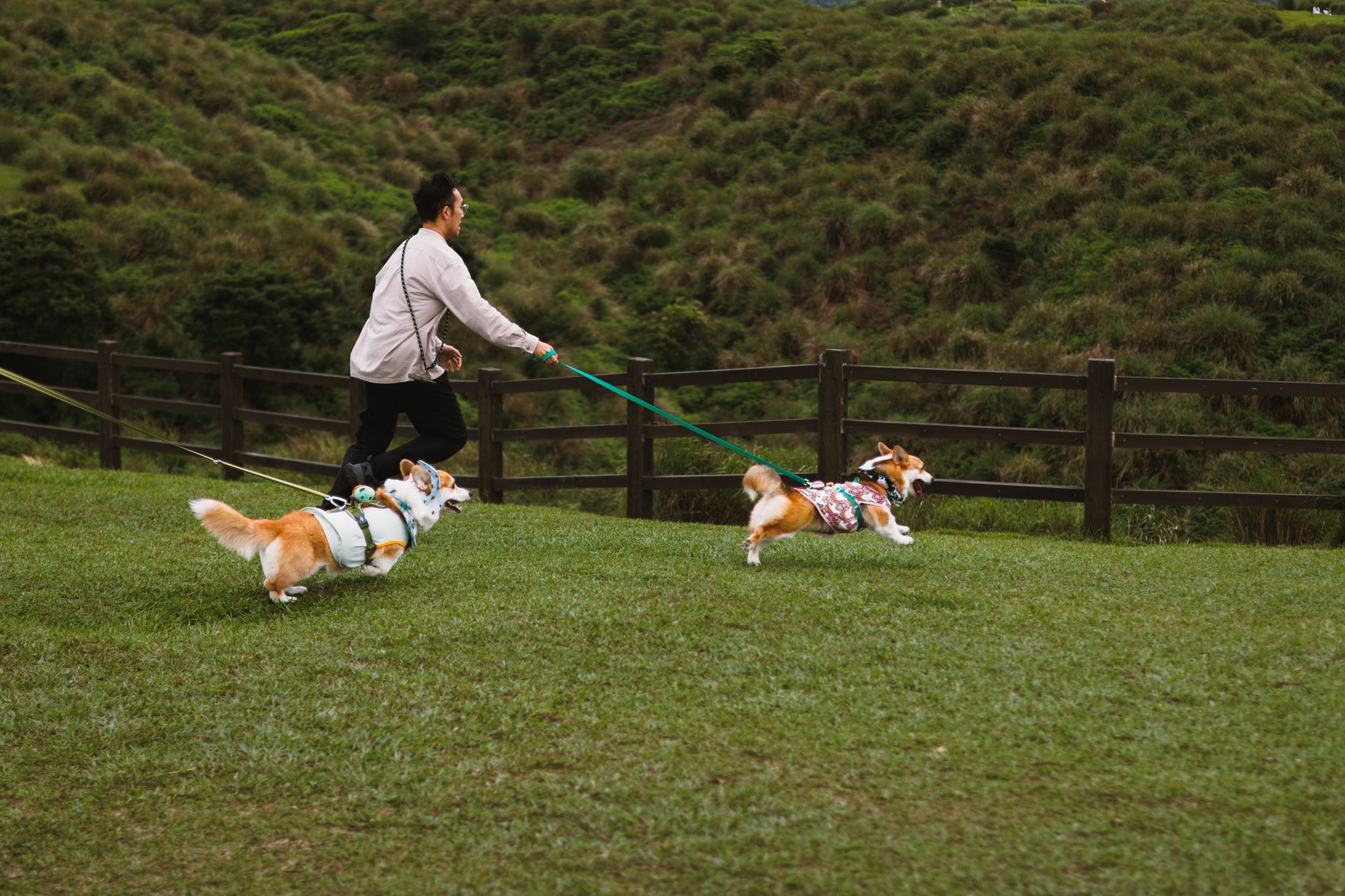
How to Stop a French Bulldog Pulling on the Lead (Step-by-Step)
Tired of your French Bulldog pulling on the lead? This step-by-step positive-reinforcement plan delivers real results in 5–10 min daily training sessions.
Read the guide →
How to Stop a French Bulldog Barking at Strangers (Step-by-Step)
Tired of your French Bulldog barking at strangers? This step-by-step positive-reinforcement plan gives you a quick win today and a realistic timeline to fix it.
Read the guide →
French Bulldog Separation Anxiety: A Step-by-Step Fix
Struggling with French Bulldog separation anxiety? This step-by-step, positive-reinforcement plan gives you real fixes, realistic timelines & when to get pro help.
Read the guide →