
Why Your Cocker Spaniel Won't Come When Called (and How to Turn It Around)
Struggling with your cocker spaniel not coming when called? Ditch the bad advice, bust the myths, and follow this positive-reinforcement plan to get reliable recall fast.

Written by Bradley Brown
Founder & editor · Reviewed 2026-07-18
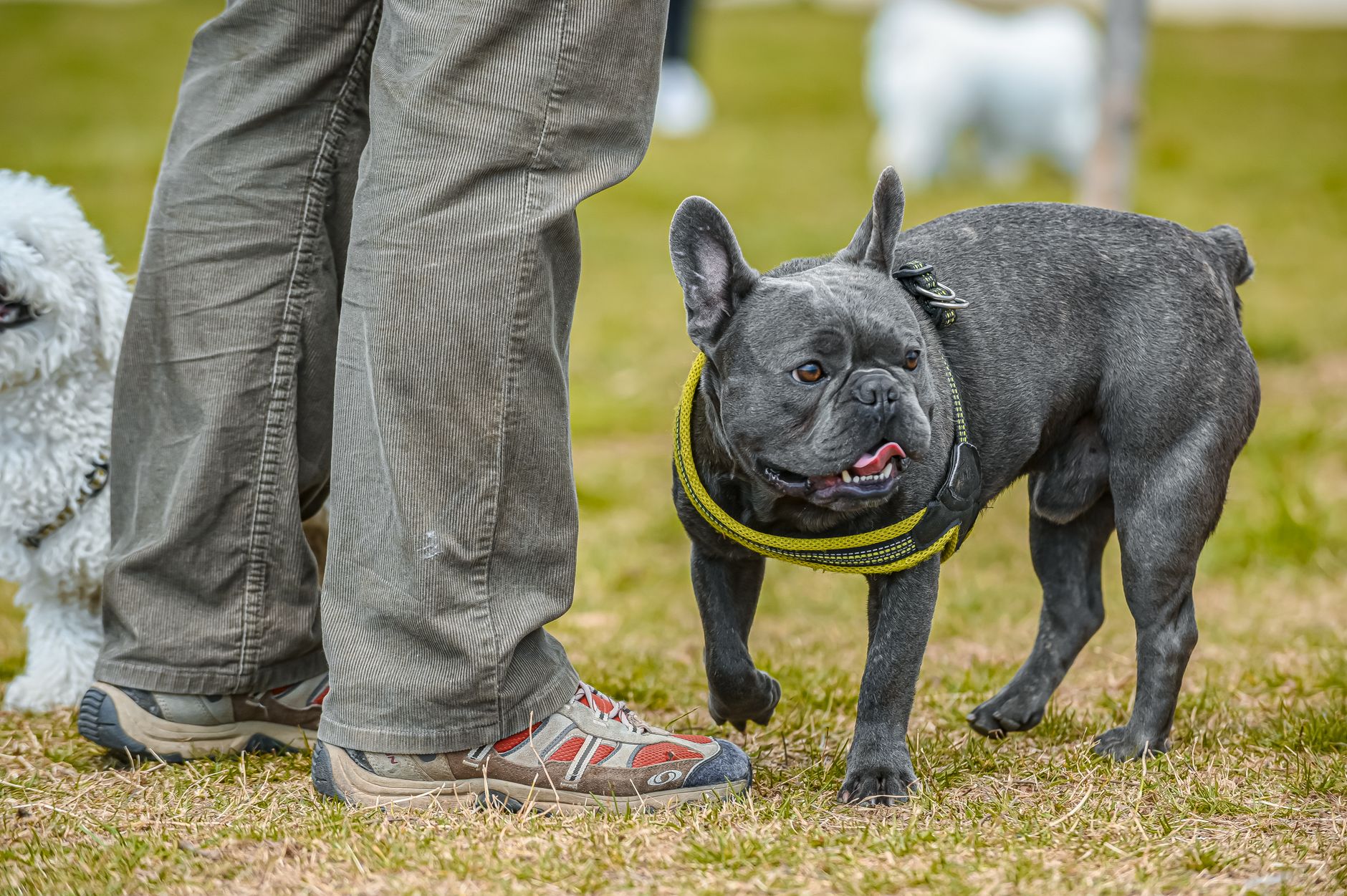
The most common piece of advice handed out at dog parks and in well-meaning Facebook groups goes something like this: "If your dog won't come, just ignore him. He'll come back when he's ready." It sounds sensible — you're not rewarding the bad behaviour, right? Wrong. Every second your Cocker Spaniel spends zooming happily around the oval without returning to you, he's practising ignoring you. That practice becomes habit, and habit becomes the reason you're reading this article.
Cocker Spaniels are not stubborn. They are scent-driven, stimulus-hungry dogs bred for hours of independent hunting work. When your dog locks onto a smell or spots a bird, his brain genuinely prioritises that signal over your voice. That's not a character flaw — it's centuries of selective breeding. The good news: recall is a trainable skill, and a Cocker's eagerness to please and food motivation make them excellent students once you stop working against their instincts.
"He knows 'come' — he's just being naughty"
This one does a lot of damage. The moment owners decide their dog is being defiant, they switch from training mode to punishment mode — and punishment is the fastest way to destroy a recall cue.
Here's the reality: if your Cocker doesn't come reliably in a distracting environment, he doesn't truly know the cue in that environment. A dog who sits beautifully in the kitchen has learned to sit in the kitchen. The park is a completely different classroom. Trainers call this a generalisation problem, and it's almost universal in dogs whose recall training stayed indoors.
What to do instead: Treat every outdoor recall practice as a brand-new lesson. Start close (two to three metres), in a low-distraction area, with something genuinely fantastic in your hand — a small piece of cooked chicken or cheese, not a dry biscuit. Mark the moment he reaches you with a cheerful "yes!" and deliver the treat immediately. Keep sessions to five minutes. Do this daily for two weeks before you even think about the off-lead park.
"Don't give treats every time or he'll only come for food"
This myth has a kernel of truth stretched into bad advice. Yes, you eventually want a dog who doesn't need a treat every single time. But you cannot fade the food reward before the behaviour is genuinely reliable — that's like pulling the scaffolding off a building that's still being constructed.
Cocker Spaniels not coming when called is almost always a reinforcement history problem. The dog has learned that "come" sometimes means fun ends, or that arriving earns a lukewarm pat while the scent trail earns ten minutes of pure joy. The maths doesn't add up in your favour.
What to do instead: For the first four to six weeks, pay every single recall with something your dog considers outstanding. Once he's flying back to you consistently — in the garden, on a long line, in a quiet park — you can shift to a variable schedule, where he gets a jackpot reward unpredictably (like a poker machine, but ethical). Always carry something good. A dog who never knows whether this return will earn chicken learns to come back just in case.
"Calling him repeatedly will eventually work"
If you've called "Rex, come! Rex! Come here! REX! HERE BOY!" across a paddock, you'll recognise this one. The problem is that repeating an unheeded cue teaches the dog that the word is background noise. Trainers call this "poisoning the cue" — the word loses its meaning entirely.
The same applies to chasing your dog when he doesn't respond. To a Cocker Spaniel, a person running toward them is either a threat or the beginning of a fantastic game of charades. Neither helps.
What to do instead: Say the cue once. If he doesn't respond within three seconds, make yourself more interesting — crouch down, turn and jog away, make a weird noise. Movement away from a dog triggers chase instinct, which you can use to your advantage. If your recall word is already poisoned, retire it completely and start fresh with a new word or whistle. A whistle carries further in wind, sounds consistent regardless of your mood, and Cocker Spaniels take to whistle recall particularly well given their gundog heritage.
"Let him off lead so he learns to come back"
Giving a dog with unreliable recall unlimited off-lead access is not a training strategy — it's a lottery. Every successful sprint-and-ignore episode reinforces the behaviour you're trying to eliminate. It also puts your dog in genuine danger near roads, livestock, or other dogs.
What to do instead: Use a long line (a 10–15 metre lightweight lead, available from pet stores for around $20–$40 AUD) clipped to a harness. The long line lets your dog experience the sensation of freedom and sniffing while giving you a safety net. Practice recalls on the long line until he's coming back eight or nine times out of ten across three separate sessions in genuinely distracting environments. That's the benchmark most trainers use before graduating to off-lead work in a safely enclosed area.
Building it into real life (without blocking out your whole afternoon)
Recall training doesn't need a formal session. Build it into your existing routine:
- Before meals: call once from another room, reward with the food bowl itself.
- In the garden: scatter a few treats, call him back to you, then release him with "go sniff" to continue exploring. This teaches him that coming to you doesn't mean fun ends.
- On walks: practice five recalls per walk on the long line. That's roughly one every two to three minutes — barely noticeable to you, enormously impactful for the dog.
Expect genuine, generalised recall to take eight to twelve weeks of consistent daily practice. That might sound long, but it's five to ten minutes a day — less time than you spend scrolling your phone over breakfast.
When to bring in a professional
If your Cocker Spaniel is bolting in a blind panic (running without orientation, not sniffing), shows anxiety or fear on walks, or if recall has completely broken down after a frightening incident, a qualified force-free trainer or veterinary behaviourist is worth every cent. Look for someone accredited through the Pet Professional Guild Australia or the Delta Society. Reactivity and fear-based flight are different problems to a reinforcement gap, and they need a different approach.
For most Cockers, though, the issue is simpler than it feels in the moment: the behaviour was never properly trained to the level of distraction the owner expected. That's not a failing — it's just where you start.
As an Amazon Associate we earn from qualifying purchases.
Frequently asked questions
How long does it take to train a Cocker Spaniel to come when called?
Most owners see meaningful improvement within two to four weeks of consistent daily practice, but genuinely reliable recall in high-distraction environments typically takes eight to twelve weeks. Short, frequent sessions of five to ten minutes a day produce better results than occasional long training blocks.
Why does my Cocker Spaniel ignore me when he's off lead but listen perfectly at home?
Dogs don't automatically generalise learned behaviours from one environment to another — a cue learned indoors needs to be specifically trained outdoors. Add in the scent stimulation and excitement of an open space, and the competition for your Cocker's attention becomes enormous. The fix is to rebuild recall gradually in progressively more distracting locations.
Is it too late to teach recall to an older Cocker Spaniel?
No. Adult and senior dogs learn recall just as well as puppies — sometimes better, because they have longer attention spans. The process is identical: start in low-distraction environments, use high-value rewards, and build up difficulty slowly. It may take a little longer if a bad habit is deeply ingrained, but it's absolutely achievable.
Should I punish my Cocker Spaniel for not coming when called?
No — punishing a dog when he finally returns, even calmly or subtly, teaches him that coming to you leads to something unpleasant. This makes future recalls worse, not better. Always greet your dog warmly when he reaches you, regardless of how long it took.
What treats work best for recall training with Cocker Spaniels?
Use small, soft, smelly treats your dog goes genuinely crazy for — cooked chicken, cheese, or commercial treats with a strong meat smell tend to work well. The treat needs to be more appealing than whatever your dog was doing, so save your very best rewards exclusively for recall practice rather than everyday training.
Can a whistle really help with a Cocker Spaniel not coming when called?
Yes, and it's particularly effective with Cocker Spaniels given their gundog heritage. A whistle produces a consistent sound regardless of your emotional state (unlike a voice that tightens when you're frustrated), carries well in wind, and can be conditioned from scratch without the baggage of a poisoned verbal cue. Pair a specific whistle pattern with high-value treats exactly as you would a verbal recall cue.
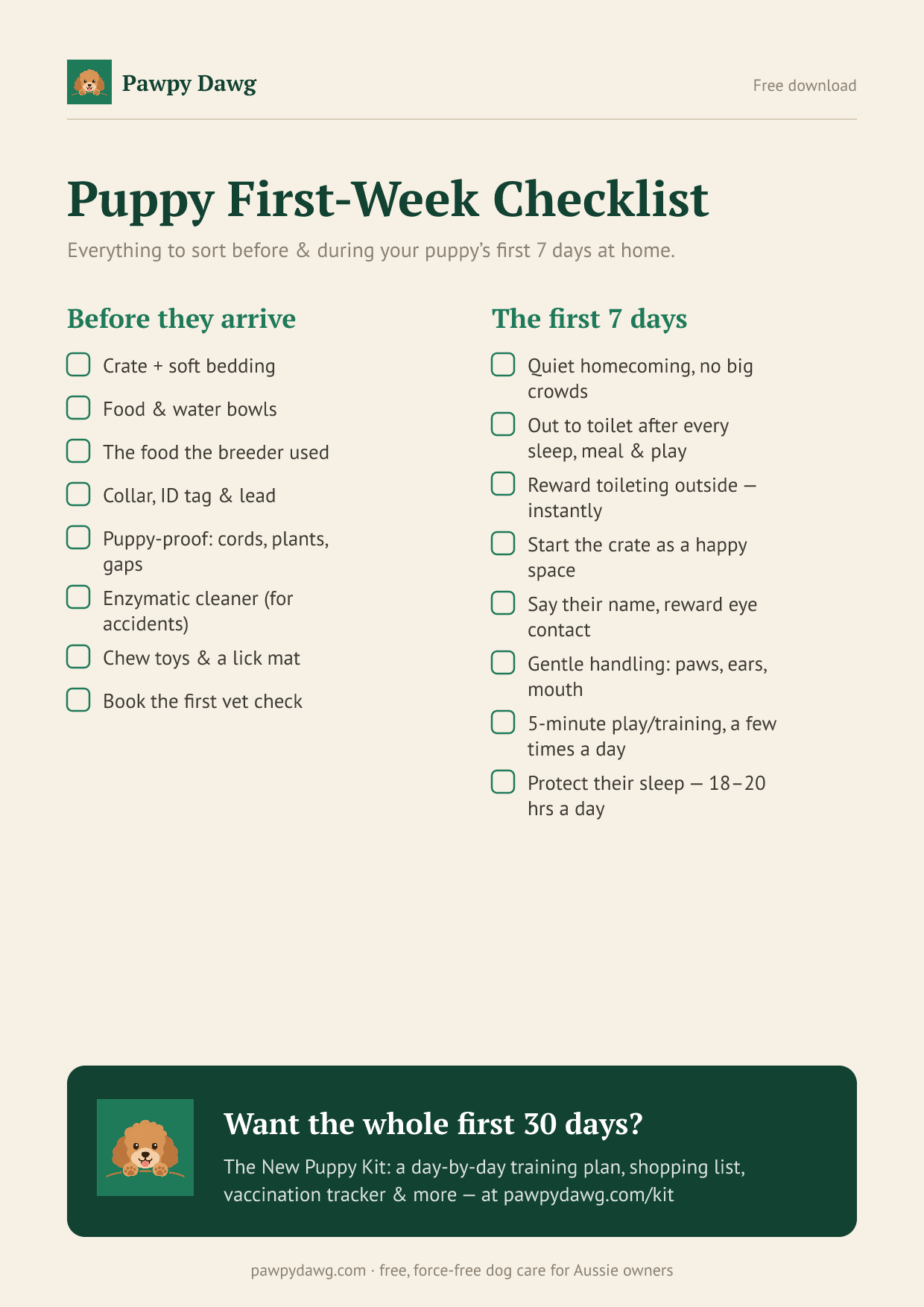
Free printable
Free: the Puppy First-Week Checklist
Everything to sort before and during your puppy's first 7 days home — a printable one-pager. Plus the occasional genuinely useful dog tip. No spam, unsubscribe anytime.
Related guides
Stop Your Cocker Spaniel Pulling on the Lead — the Calm, Force-Free Way
Tired of being dragged around the block? Fix cocker spaniel pulling on the lead with this calm, force-free plan — realistic timelines, common mistakes & pro tips.
Read the guide →
Why Your Cocker Spaniel Barks at Strangers (and How to Turn It Around)
Cocker spaniel barking at strangers? Discover why it happens and get a realistic, positive-reinforcement plan to fix it — in just 5–10 minutes a day.
Read the guide →