
Stop Your Cocker Spaniel Jumping Up on People — the Calm, Force-Free Way
Tired of your Cocker Spaniel jumping up on people? This force-free, positive-reinforcement guide gives you a realistic, step-by-step plan that actually works.

Written by Bradley Brown
Founder & editor · Reviewed 2026-07-17
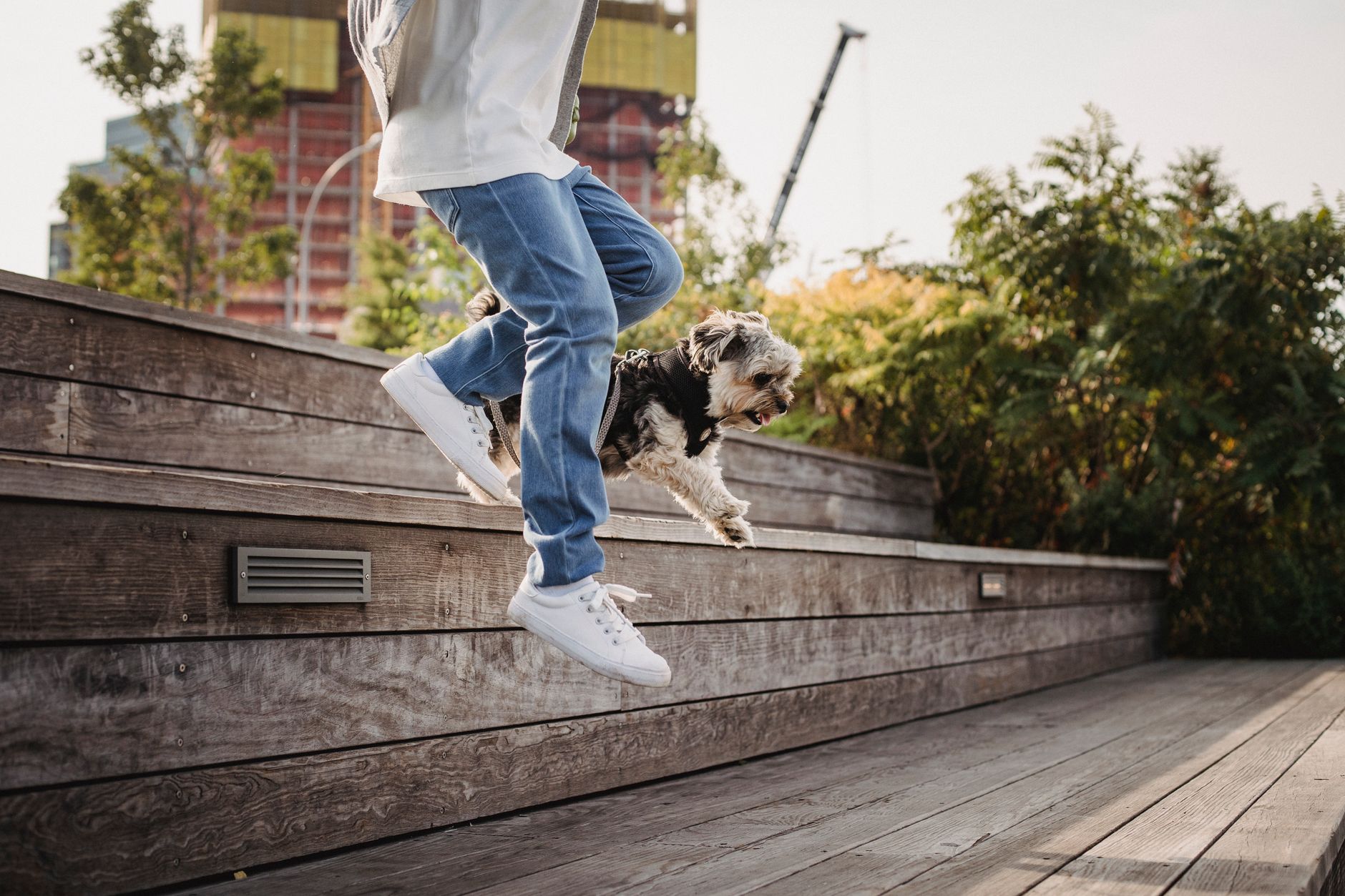
Cocker Spaniels are enthusiastic, social dogs — and that enthusiasm tends to launch itself at chest height the moment a visitor walks through the door. The good news is that jumping up is one of the most straightforward behaviours to change, provided you understand what's driving it and stay consistent.
Why does my Cocker Spaniel keep jumping up even after I've told him "no"?
Because "no" — on its own — doesn't teach a dog what to do instead. Jumping up is self-reinforcing: your dog gets eye contact, physical touch, or even a verbal reaction, and from his perspective, all of those count as social reward. Telling him off while making eye contact is, paradoxically, a reason to keep jumping.
Cocker Spaniels in particular are bred to work closely with people, which means they're hard-wired to seek human interaction. That's not a character flaw; it's the breed doing exactly what centuries of selection pressure shaped it to do. The frustration you're feeling right now doesn't mean you've raised a "bad" dog — it means you have a dog who genuinely loves people, and you just need to redirect that energy.
The fix isn't punishment. It's making jumping unrewarding and making four-on-the-floor (all four paws on the ground) wildly rewarding instead.
What's the most effective technique to stop the jumping?
The approach that holds up best across modern, evidence-based training is total removal of reward combined with consistent reinforcement of an incompatible behaviour. In plain terms: jumping gets nothing, calm gets everything.
Here's how to run it in your daily life:
- Turn away the moment paws leave the ground. Cross your arms, avert your gaze, and go completely still or take a step back. No eye contact, no "off", no pushing down with your hands — hands on the dog is still touch, which still counts as attention.
- Wait for four paws on the floor. The instant all four feet land, turn back, crouch to the dog's level, and deliver calm praise plus a treat. Keep your energy low — if you celebrate wildly, you'll wind the dog back up.
- Add a cued behaviour. Once your Spaniel is starting to offer "paws down" more reliably, add a cue like "sit" or "feet" the moment he lands. Now you're giving him a job to do when he greets someone, rather than just removing a bad option.
Practice this in short bursts — five to ten minutes a day is genuinely enough. Cocker Spaniels are quick learners; drilling for thirty minutes will just make both of you stale.
How do I stop him jumping on guests when I can't control what they do?
This is the hardest part, because you can train your dog brilliantly and then one well-meaning visitor undoes it in three seconds by letting him "just this once." Inconsistency is the single biggest reason jumping persists.
A few practical solutions:
- Brief guests before they come in. A simple "He's in training — please ignore him completely if he jumps, then pat him when he's calm" goes a long way. Most people are happy to help once they understand the logic.
- Use a lead at the door. Keep a short lead on your dog when guests arrive. It lets you gently guide him back to the floor without a physical struggle and keeps the greeting controlled while the habit is forming.
- Stage practice sessions. Ask a friend or family member to come over specifically to help you train. Do five repetitions — knock, dog jumps, friend turns away, dog lands, dog gets reward — then give everyone a break. Repeat. This deliberate repetition is far more effective than hoping real-life greetings go well.
If your dog is at the stage where he's knocking over children or elderly visitors, management (lead, baby gate, or keeping him in another room until he settles) is not a cop-out — it's responsible ownership while training catches up.
How long will it realistically take to see a difference?
Most owners notice a clear reduction in jumping within two to three weeks of consistent application — meaning every single person in the household responds the same way, every single time. If you have one person at home who still lets the dog jump on them "because he's just excited," progress will take longer, sometimes significantly so.
A complete, reliable recall to "four on the floor" in all situations, including high-excitement moments like the dog park or a stranger on the street, generally takes six to twelve weeks. That's not a failure timeline — it's a normal one for a behaviour that has probably been reinforced hundreds of times already.
Realistic milestones to watch for:
- Week 1–2: Dog still jumps but lands faster and looks to you more quickly after.
- Week 3–4: Jumping attempts reduce in frequency; dog offers a sit unprompted some of the time.
- Week 6–8: Jumping is the exception rather than the rule in familiar settings.
- Week 10–12: Reliable four-on-the-floor even with new people in novel environments.
Are there common mistakes that make this worse?
Several, and most owners make at least one of them — not because they're doing the wrong thing intentionally, but because they're following instinct.
Pushing the dog down. Hands on the dog is physical interaction. Many dogs interpret this as play and jump more. Use body language (turning away) rather than physical correction.
Inconsistent responses. Ignoring jumping on Mondays but engaging with it on weekends — perhaps when you're in casual clothes and less bothered — teaches your dog that jumping sometimes works, which actually makes the behaviour more persistent, not less. Variable reinforcement schedules are the reason poker machines are addictive; apply that principle here and you've accidentally made jumping extremely hard to extinguish.
Only training in one context. If you only practice at the front door, your dog will learn not to jump at the front door. Generalise the behaviour by practising in the backyard, at the park, and with different people.
Giving up during the "extinction burst." When a behaviour that used to work stops working, dogs (and people) initially try harder before they give up. Expect a brief spike in jumping intensity about a week in. This is a sign the training is working — not that it isn't. Hold the line.
When should I bring in a professional trainer?
If you've been consistent for six to eight weeks and the jumping is no better — or if the jumping is accompanied by mouthing, growling, or is intense enough to injure people — it's worth getting a professional set of eyes on it. Look for a trainer or behaviourist who uses positive-reinforcement methods and, ideally, holds certification from a recognised body such as the Pet Professional Guild Australia or the KCAI.
Expect to pay roughly $80–$180 AUD for a one-hour in-home session, which is almost always the most efficient format for a jumping problem because the trainer can see your home environment and coach your responses in real time. Group classes can also work well for Cocker Spaniels, who tend to enjoy the social aspect — just make sure the class has a good trainer-to-student ratio so your dog actually gets individualised feedback.
If your vet suspects the jumping and general over-arousal is linked to anxiety, they may refer you to a veterinary behaviourist. That's a specialist conversation worth having if basic training isn't moving the needle.
The bottom line: a Cocker Spaniel jumping up on people is a normal, trainable behaviour. It responds well to consistency, patience, and treating your dog as the intelligent, people-loving animal he is — not as a problem to be suppressed.
Frequently asked questions
Why does my Cocker Spaniel jump up on everyone he meets?
Cocker Spaniels are bred to work in close partnership with people, making them especially social and eager for human interaction. Jumping up is how dogs naturally greet each other face-to-face, and it tends to persist because it has historically earned them attention — even negative attention like being pushed away counts as a response. It's a breed-typical behaviour, not a sign of a badly raised dog.
Should I knee my dog in the chest to stop him jumping up?
No — this approach is outdated and carries a real risk of injuring your dog or escalating the situation. Modern, evidence-based training consistently shows that removing the reward (turning away and withdrawing attention) is more effective and far safer than physical corrections. Positive-reinforcement methods also preserve the trust between you and your dog.
My Cocker Spaniel only jumps on some people — why?
Dogs are very good at reading inconsistency. If certain people in your household or circle allow jumping while others don't, your dog quickly learns who the 'soft targets' are and adjusts accordingly. Getting everyone to respond the same way — turning away and withholding attention when paws leave the ground — is essential for reliable results.
Can I use a spray bottle or shake can to stop the jumping?
These aversive tools are generally not recommended for a jumping problem. They can cause anxiety and erode your dog's trust in you, and they don't teach the dog what to do instead of jumping. Reward-based methods — making four paws on the floor more valuable than jumping — produce longer-lasting results without unwanted side effects.
At what age should I start training my Cocker Spaniel not to jump?
As early as possible — ideally the day you bring your puppy home. A Cocker Spaniel puppy jumping up is easy to overlook because it's small and cute, but the behaviour is far harder to change once it's been rewarded for months or years. That said, adult dogs absolutely can learn — it just requires more repetitions and stricter consistency across everyone in the household.
How do I stop my Cocker Spaniel jumping up when I come home from work?
The homecoming greeting is one of the toughest moments to manage because your own excitement can inadvertently reward the jumping. Try coming in calmly, turning away if your dog jumps, and waiting for all four paws on the floor before you acknowledge him. Keeping a small treat pot near the door so you can reward a calm greeting immediately can accelerate the learning significantly.
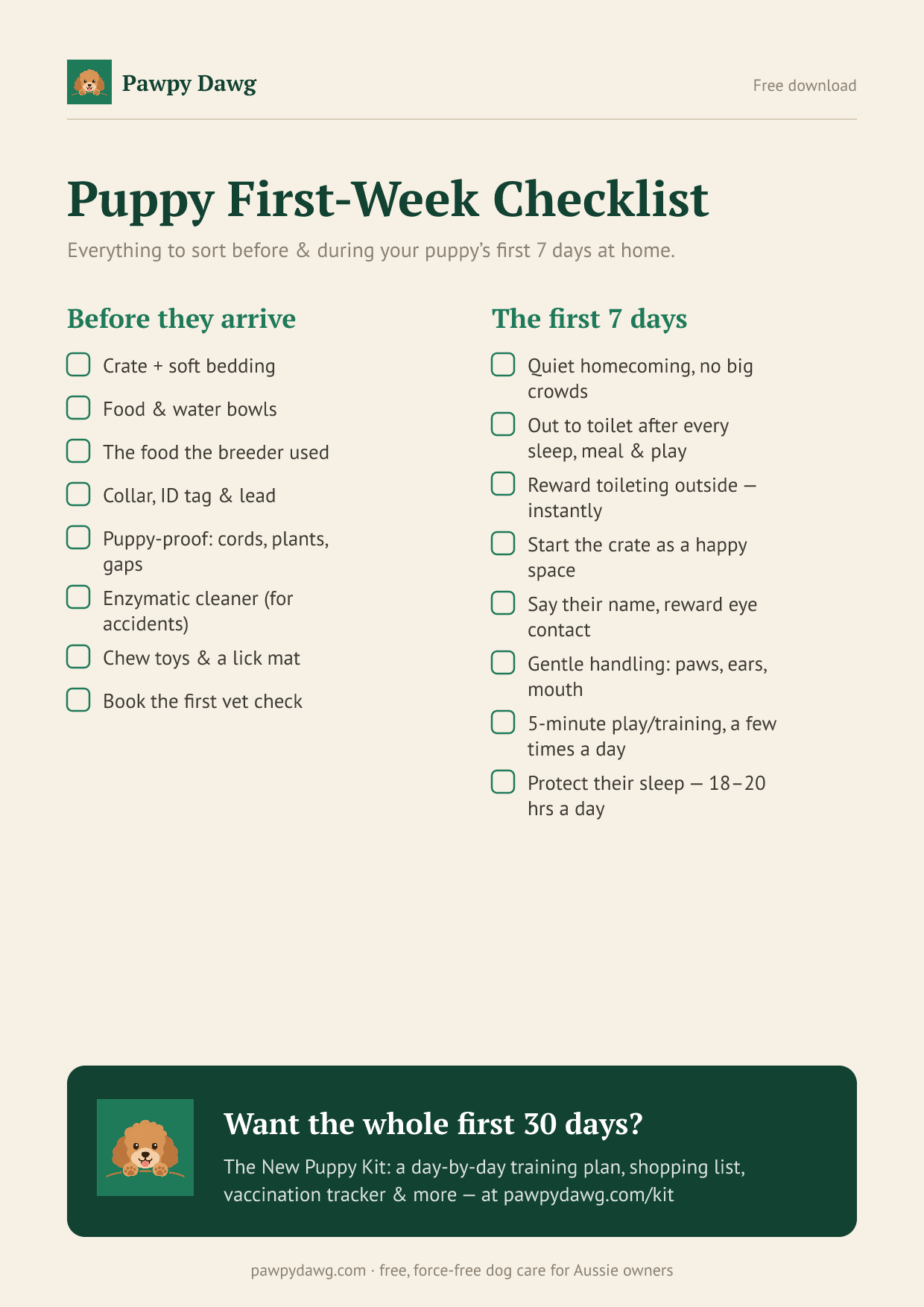
Free printable
Free: the Puppy First-Week Checklist
Everything to sort before and during your puppy's first 7 days home — a printable one-pager. Plus the occasional genuinely useful dog tip. No spam, unsubscribe anytime.
Related guides
Stop Your Cocker Spaniel Pulling on the Lead — the Calm, Force-Free Way
Tired of being dragged around the block? Fix cocker spaniel pulling on the lead with this calm, force-free plan — realistic timelines, common mistakes & pro tips.
Read the guide →
Why Your Cocker Spaniel Barks at Strangers (and How to Turn It Around)
Cocker spaniel barking at strangers? Discover why it happens and get a realistic, positive-reinforcement plan to fix it — in just 5–10 minutes a day.
Read the guide →