
Puppy Teething: Timeline, Chew Toys and How to Save Your Furniture
The complete puppy teething timeline: when teeth arrive, what's normal, which chews are safe, and how to stop your furniture becoming a casualty.

Written by Bradley Brown
Founder & editor · Reviewed 2026-11-14
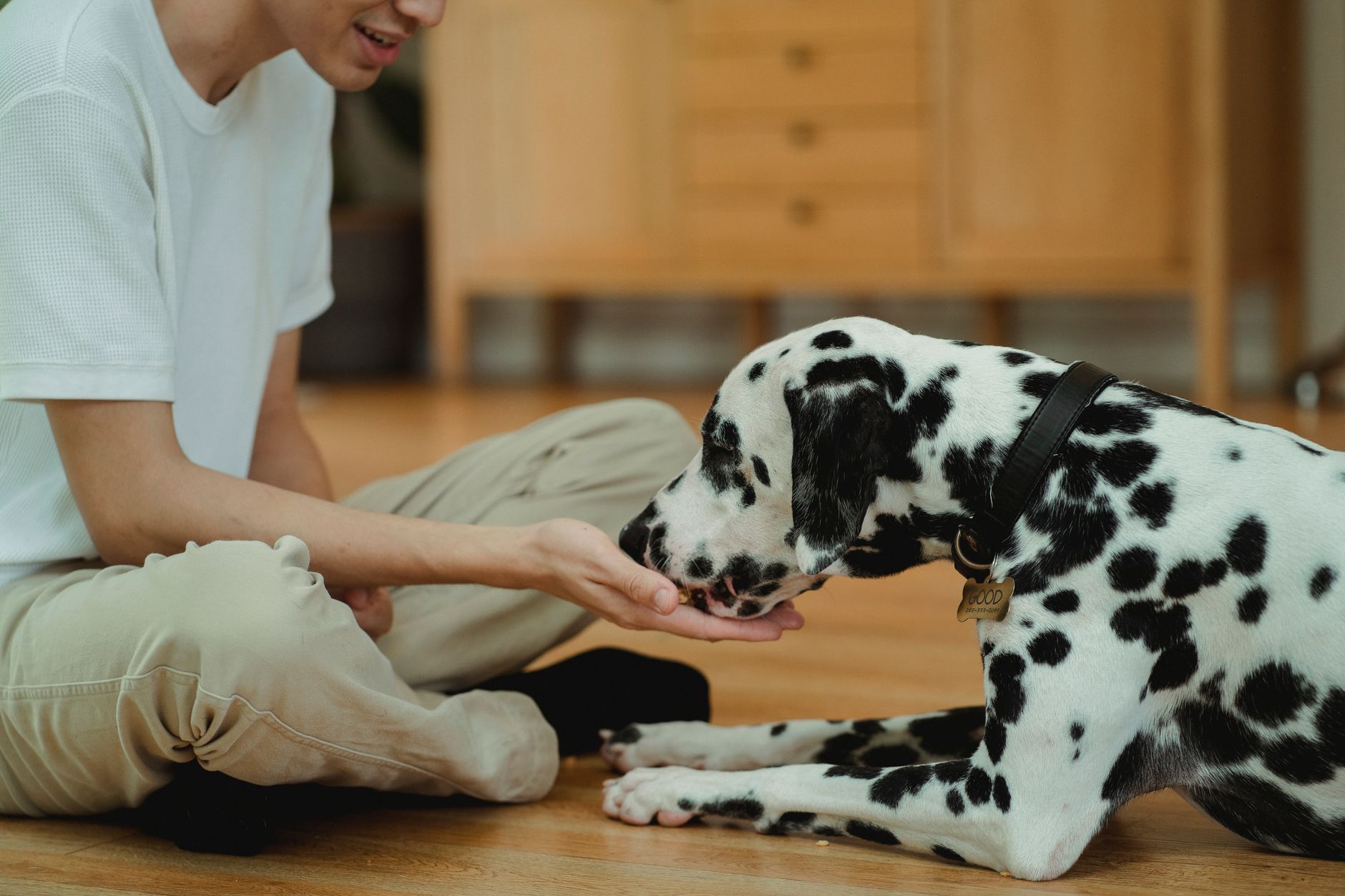
Puppies are born toothless. By the time they're terrorising your skirting boards, a lot has happened in their mouths — and a lot more is still coming. Knowing what's going on and when makes the difference between reacting with panic and responding with a plan.
Weeks 3–6: The baby teeth arrive (before they're even yours)
Most puppies are still with the breeder when their 28 deciduous teeth push through. These needle-sharp little daggers emerge gum-first from about three weeks of age and are fully in by six weeks. You probably won't see this phase, but it matters: a puppy who learns bite inhibition from littermates and their mum during this window arrives at your house with at least some understanding that teeth on skin causes consequences.
If you're picking up an eight-week-old, the baby teeth are already there. That mouth is fully loaded.
Weeks 8–12: The biting is intense and that's not your fault
This is the phase that makes owners Google "is my puppy broken." The biting feels relentless because, neurologically, it is. Puppies explore the world with their mouths, and at this age impulse control is essentially non-existent — the prefrontal cortex equivalent in dogs doesn't mature until well past six months.
What you'll notice: mouthing on hands, ankles, trouser hems, power cords, furniture legs. Everything is a target. The puppy isn't aggressive; it's just a puppy.
What to do this fortnight:
- Keep a chew toy in every room so redirection is instant, not a ten-second search
- When teeth touch skin, say "ouch" and withdraw attention for 20–30 seconds — not punishment, just information
- Offer a frozen carrot or a wet, frozen flannel; cold soothes gums that are already primed for the eruption ahead
- Puppy-proof what you can't supervise: cord protectors cost a few dollars, a chewed charger cable costs more and is a genuine hazard
Months 3–4: The adult teeth start pushing through
Around 12–16 weeks, the permanent teeth begin their arrival. The incisors (the tiny front teeth) usually come first. This is when you might notice a baby tooth sitting alongside a new adult tooth — normal, and usually self-resolving within a couple of weeks.
Chewing intensity often increases here because pressure on the gums brings relief. This is the period your furniture is most at risk, simply because the dog is bigger, stronger, and the mouth is actively uncomfortable.
What actually helps:
- Rubber Kongs and similar toys: stuff with wet food or peanut butter (xylitol-free — check every label) and freeze overnight. A frozen Kong buys 20–30 minutes of focused chewing.
- Bully sticks: long-lasting, digestible, and satisfying. Supervise, and discard the last few centimetres to avoid a gulping risk.
- Rope toys: fine for tug and supervised chewing, but pull them when the fibres start shredding — ingested rope strands can cause serious gut problems.
- Raw meaty bones: many vets support raw bones (never cooked — cooked bones splinter), but match the size to the dog. A labrador puppy and a toy breed are not interchangeable here.
Avoid compressed rawhide, hard nylon bones marketed as "indestructible," and actual sticks from the garden. Rawhide can swell and block; nylon and sticks can fracture baby teeth or adult teeth that haven't fully hardened yet.
Months 4–5: The canines and premolars, and the furniture becomes personal
The canines — the long, fang-like teeth — typically arrive around four months, followed by the premolars. These are bigger teeth moving through denser gum tissue, and some puppies are noticeably grumpy or off their food for a day or two. Drooling increases. You might find small teeth on the floor (they often swallow them, which is harmless).
This is also when dogs are physically capable of doing real damage. A five-month-old can strip the corner of a couch cushion in minutes.
Practical furniture defence:
- Bitter apple spray on timber legs and fabric edges — reapply every few days, because the deterrent fades
- Block access to rooms you can't supervise; a baby gate is cheaper than a reupholster
- If the dog keeps returning to one spot, give them an outlet immediately nearby — a frozen Kong on a mat next to the couch teaches them what to chew in that location
Redirection works. Yelling doesn't — it teaches the dog that chewing near you produces exciting reactions, which is reinforcing in its own way.
Month 6: The molars close out the set
The last permanent teeth to arrive are the molars, usually by around six months. By this point your puppy should have all 42 adult teeth. The worst of the chewing urgency typically eases once the molars are through — not because the dog has matured emotionally (that's still coming), but because the physical discomfort driving a lot of the behaviour has resolved.
This is a good time to run your finger along the gum line and count. You're looking for a full complement of adult teeth with no obvious gaps, no teeth sitting at odd angles, and no baby teeth still in place.
When a baby tooth doesn't fall out on its own
Retained deciduous teeth — most commonly the canines — are worth a vet visit if they're still present at six months. When a baby tooth and adult tooth share the same socket space, the adult tooth is pushed out of its correct position and tartar accumulates in the gap between them. It won't resolve without intervention. Your vet will almost certainly recommend extraction, often timed with desexing if that's already scheduled, to avoid a second round of anaesthesia.
Signs to look for: a double row of teeth (baby tooth sitting directly alongside or just behind the adult tooth), adult canines erupting inside rather than outside the baby canines, or any tooth that looks crowded out of its natural position.
The puppy teething timeline wraps up around six to seven months. After that, what looks like teething behaviour is usually just a young dog that hasn't learned what's appropriate to chew — which is a training question, not a dental one, and equally solvable.
As an Amazon Associate we earn from qualifying purchases.
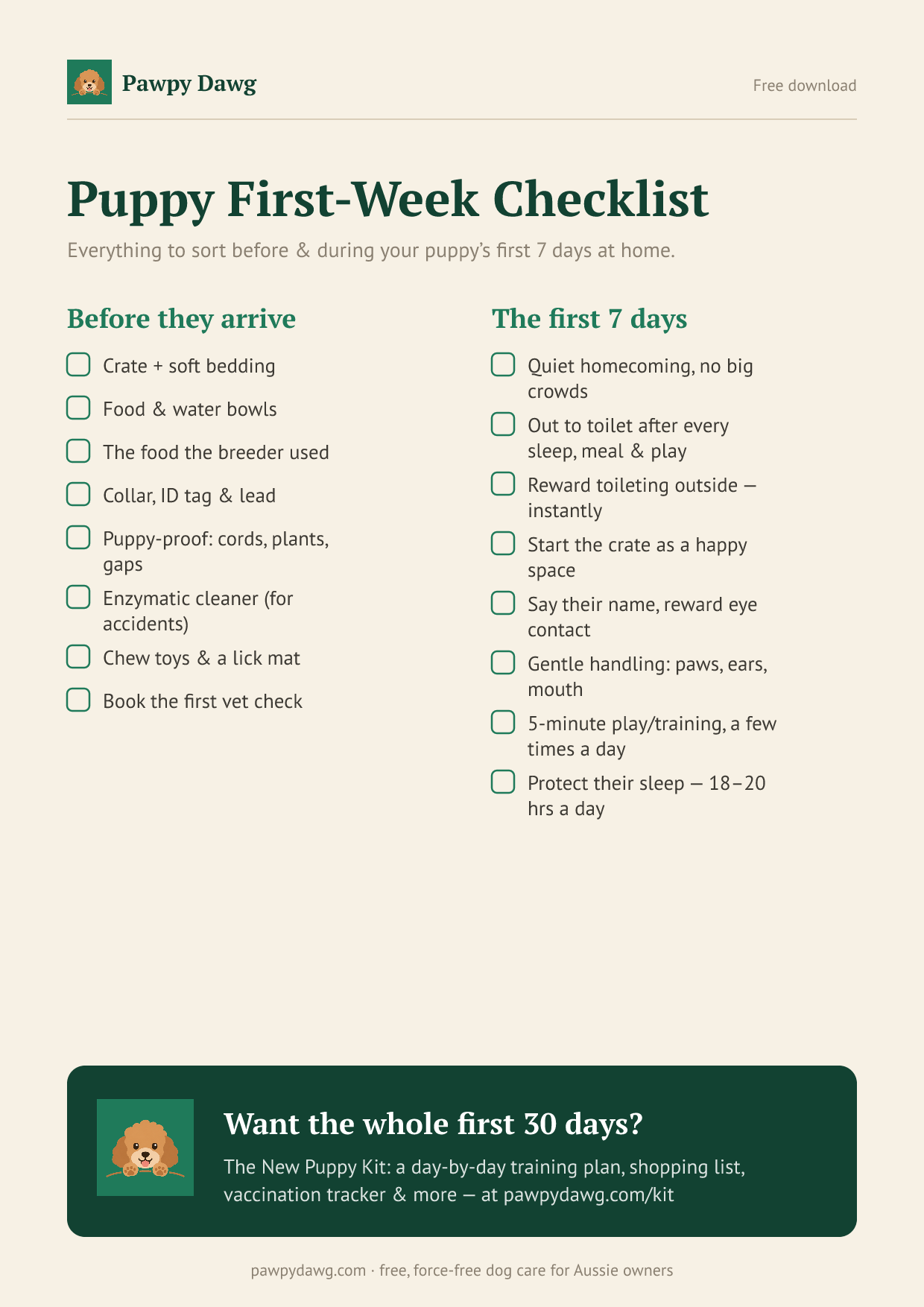
Free printable
Free: the Puppy First-Week Checklist
Everything to sort before and during your puppy's first 7 days home — a printable one-pager. Plus the occasional genuinely useful dog tip. No spam, unsubscribe anytime.
Related guides

Is Pet Insurance Worth It in Australia? The Honest Maths
Is pet insurance worth it in Australia? We crunch real premiums vs real vet bills — cruciate surgery, snake bite & more — so you can decide with confidence.
Read the guide →
How Much a Dog Really Costs Per Year in Australia (2026 Breakdown)
How much does a dog cost per year in Australia? 2026 line-item breakdown covering food, vet, insurance, grooming & the costs first-timers always miss.
Read the guide →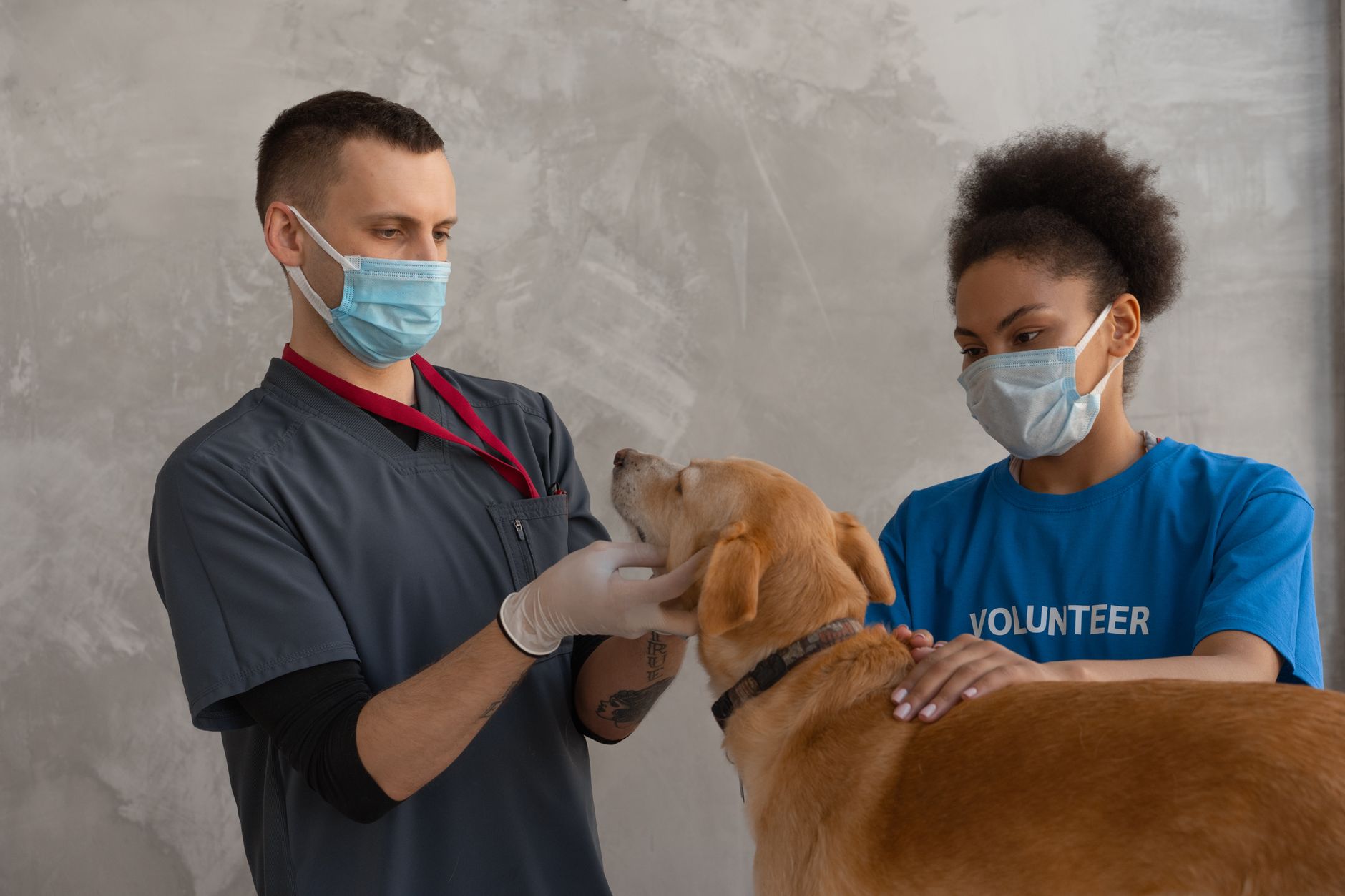
Dog Vaccination Schedule in Australia: What, When and What It Costs
Confused by C3, C5 and kennel cough? Here's your complete dog vaccination schedule Australia cost guide — puppy timelines, adult boosters & typical AUD prices.
Read the guide →