
Fostering a Dog in Australia: How It Works and What It Costs You
Thinking about fostering a dog in Australia? Learn how rescue foster programs work, what's covered, what it costs you, and how to sign up with a local rescue.

Written by Bradley Brown
Founder & editor · Reviewed 2026-11-17

Priya had been meaning to get a dog for years, but her rental lease and long work hours kept getting in the way. When her neighbour mentioned that the local rescue needed someone to take in a timid border collie cross named Biscuit for six weeks, it felt manageable. Biscuit arrived shaking, refused to eat for two days, and slept under the bed. By week three he was sprawled across the couch demanding belly rubs. By week six, Priya was quietly filling out the adoption paperwork.
That's fostering — and it's one of the most underrated things a dog lover in Australia can do.
What fostering actually is (and isn't)
Fostering means you temporarily house a rescue dog on behalf of an organisation while they find that dog a permanent home. You are not adopting. You are not on trial for adoption. You are providing a safe, calm, home environment so the dog can decompress, be properly assessed, and become genuinely adoptable.
Rescue organisations need foster carers because shelter environments — even good ones — are stressful for dogs. Kennels raise cortisol levels, suppress immune function, and can mask or worsen behavioural issues. A dog who appears anxious and reactive in a kennel often transforms in a home. Fosters give rescues a true picture of who the dog actually is.
Fostering is distinct from boarding or pet-sitting. You're part of the rescue's care team. You'll be asked to report on the dog's behaviour, attend vet appointments (or drop the dog to them), and sometimes help with meet-and-greets with potential adopters.
What Australian rescues cover — and what falls on you
This is where people get confused, so here's how it generally works across most Australian rescue organisations.
What the rescue typically covers:
- Vaccinations, desexing, and microchipping (if not already done)
- Flea, tick, and worm treatment
- Veterinary care for pre-existing or rescue-related conditions
- A foster pack (collar, lead, sometimes a crate or bedding)
- Food in some cases — though many rescues ask fosters to cover this
What you'll likely pay yourself:
- Day-to-day food (budget roughly $30–$80/month depending on the dog's size)
- Treats and enrichment toys
- Any incidental items like poo bags, a baby gate, or a second lead
- Petrol to and from vet appointments, unless the rescue reimburses it (some do)
The important rule: never pay for veterinary care without approval from your rescue contact first. Most rescues have preferred vets or will pre-authorise costs. If you take the dog to a random vet in an emergency, you may end up out of pocket. Save the rescue's emergency line in your phone on day one.
Across Sydney, Melbourne, Brisbane, and Perth, the total out-of-pocket cost for a typical six-week foster is usually somewhere between $80 and $250 — mostly food. It's not nothing, but it's significantly less than most people expect.
The shape of a typical foster placement
Most placements run two to eight weeks, though some dogs — particularly those recovering from surgery or severe neglect — stay longer. Rescues will usually give you an estimated duration upfront, and they'll check in regularly.
The first week is almost always the hardest. Dogs need roughly three days to settle physiologically from the stress of transport and change, three weeks to understand your household routine, and three months to fully relax into who they are. Biscuit hiding under Priya's bed wasn't a sign of trauma she'd caused — it was just his nervous system doing what nervous systems do.
What you're actually doing each day is minimal but consistent:
- Two short walks or backyard play sessions (15–20 minutes each)
- Feeding on a schedule
- Brief, calm interaction — letting the dog approach you rather than the other way around
- Noting anything unusual for your rescue contact
For dogs recovering from illness or surgery, your role may also include administering medication or managing rest restrictions. The rescue will walk you through this.
The goodbye — and why it's not a reason to avoid fostering
"Foster fail" is rescue-community slang for when a foster carer adopts the dog they were meant to rehome. It happens constantly, and Priya is a perfect example. But it's worth talking honestly about the fosters who don't fail — the ones who hand the dog over and do it again.
Yes, saying goodbye is hard. Most experienced foster carers describe it as genuinely sad and genuinely worth it. The mental shift that helps: you're not losing a dog, you're finishing a job that made a real difference. The dog gets a permanent family. You get your life back and the capacity to help another dog.
If you're worried you'll struggle, start by asking your rescue for a dog that isn't a great fit for your long-term lifestyle — a large breed when you live in a flat, or a high-energy dog when you work full-time. The mismatch makes the goodbye easier while you build your emotional fostering muscles.
If you do fall in love and have the means to adopt, that's not a failure. It's the system working.
How to sign up with an Australian rescue
A quick search for "[your city] dog rescue foster" will surface your options, but some well-established starting points include RSPCA Australia (which has state-by-state foster programs), PETrescue (which lists hundreds of rescue groups by postcode), Oscar's Law-affiliated farm animal rescues (if you want something broader), and breed-specific rescues for everything from greyhounds to staffy crosses.
The application process typically involves:
- An online form covering your living situation, household members, other pets, and working hours
- A home check — often a brief phone or video call rather than an in-person visit
- A short orientation, sometimes online, covering the rescue's protocols
- Being matched with a dog whose needs suit your circumstances
Most rescues are genuinely grateful for new fosters and will work with your schedule. If you rent, check your lease — many Australian states now have legislation making it harder for landlords to refuse pets, but you'll want to confirm before a dog arrives.
What makes a good foster situation
Rescues will place dogs with singles, families, retirees, and renters. What they're looking for isn't a perfect setup — it's a stable one. A quiet house with a fenced yard is ideal but not mandatory. Some rescues have programs specifically for apartment fosters with low-energy dogs.
Having another dog at home isn't disqualifying either. Many rescue dogs actually decompress faster with a calm, resident dog to model behaviour from. You'll be asked about your dog's temperament and there'll usually be a meet-and-greet first.
What genuinely does matter: being home enough that the foster dog isn't alone for more than four to five hours at a stretch, particularly in the first two weeks. If you work full-time in an office, it's worth being upfront about that so the rescue can match you with a more independent dog.
If a placement isn't working
You can ask for the dog to be moved. This is not failure — it's responsible communication. Fosters who push through bad matches burn out and stop fostering altogether, which helps no one. Good rescues have experienced this and will not judge you. Contact your rescue coordinator early if you're seeing aggression toward children, severe separation distress you can't manage, or anything that feels unsafe. The rescue's job is to solve problems, not assign blame.
Fostering a dog in Australia is one of those rare things that costs relatively little, asks for a few weeks of your time, and genuinely changes two lives — the dog's, and usually your own.
As an Amazon Associate we earn from qualifying purchases.
Frequently asked questions
Can I foster a dog if I rent in Australia?
In many cases, yes. Several Australian states have introduced legislation limiting landlords' ability to unreasonably refuse pets, but your lease and landlord's position still matter. Check your lease and get written permission before a dog arrives — most rescues will ask you to confirm this during your application.
Do I need a fenced yard to foster a dog?
A fenced yard is preferred but not always required. Many rescues have programs for apartment or small-space fosters and will match you with a lower-energy or small dog accordingly. Be honest about your setup on your application so you get an appropriate match.
What happens if the foster dog gets sick or injured?
Contact your rescue coordinator before seeking veterinary care, unless it's a life-threatening emergency. Most rescues have preferred vets and cover all medical costs for rescue-related conditions — but going to an unapproved vet without prior authorisation can leave you out of pocket. Save your rescue's emergency number on day one.
How long does a typical foster placement last in Australia?
Most placements run two to eight weeks, though dogs recovering from surgery or significant neglect may stay longer. Your rescue will give you an estimated timeframe upfront and will usually check in weekly to update you on the rehoming progress.
What if I fall in love with the dog and want to adopt?
This is called a 'foster fail' in rescue circles, and it happens all the time — it's not a bad thing. If you want to adopt your foster dog, let your rescue coordinator know. You'll generally go through the same adoption process as anyone else, including an adoption fee, which typically ranges from around $200 to $600 AUD depending on the rescue and the dog.
Can I foster a dog if I already have a dog at home?
Yes, and many rescues actively look for foster homes with calm resident dogs, as they can help a newcomer settle faster. You'll be asked about your dog's temperament during the application, and most rescues will arrange a meet-and-greet between the two dogs before the placement begins.
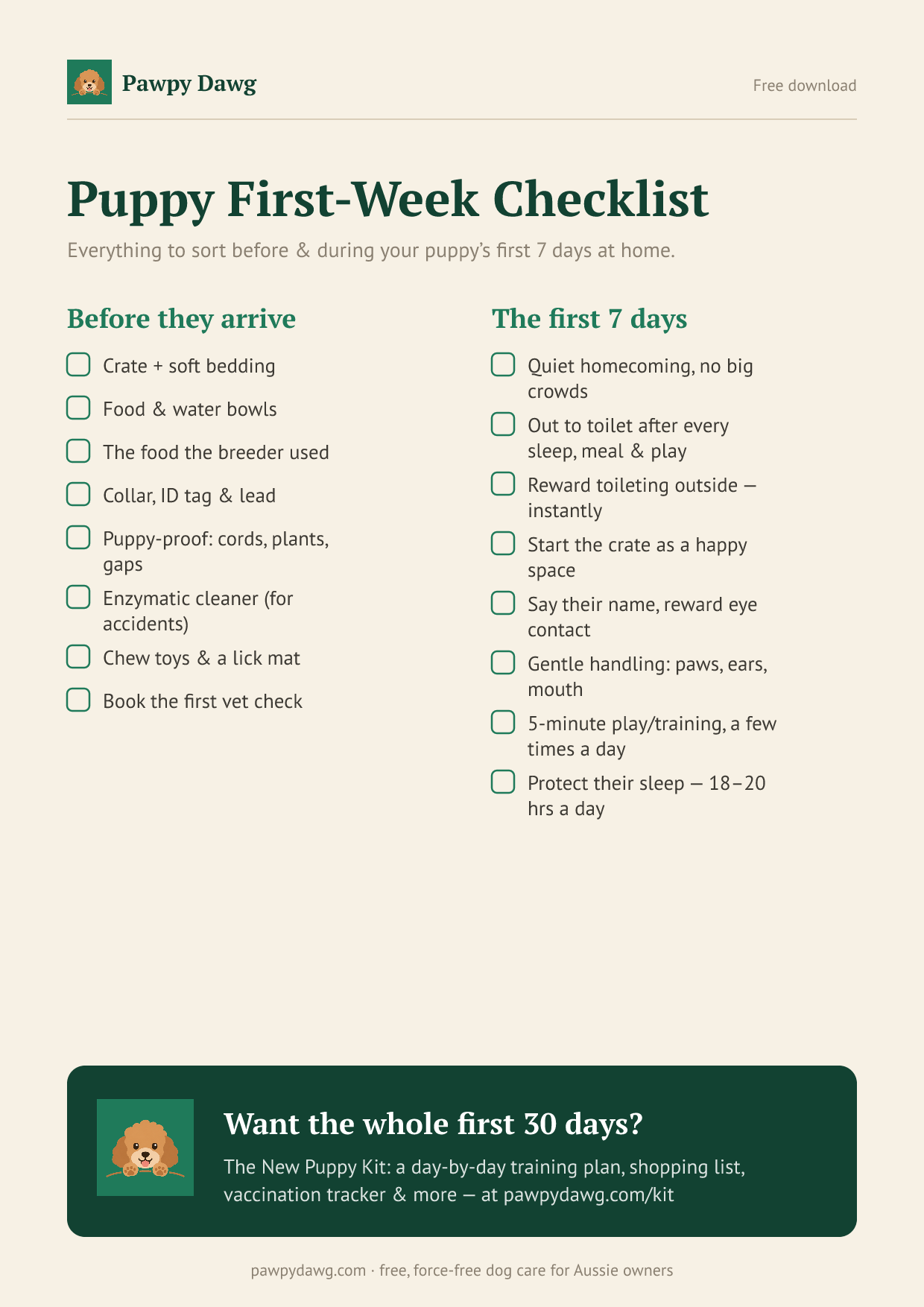
Free printable
Free: the Puppy First-Week Checklist
Everything to sort before and during your puppy's first 7 days home — a printable one-pager. Plus the occasional genuinely useful dog tip. No spam, unsubscribe anytime.
Related guides

Is Pet Insurance Worth It in Australia? The Honest Maths
Is pet insurance worth it in Australia? We crunch real premiums vs real vet bills — cruciate surgery, snake bite & more — so you can decide with confidence.
Read the guide →
How Much a Dog Really Costs Per Year in Australia (2026 Breakdown)
How much does a dog cost per year in Australia? 2026 line-item breakdown covering food, vet, insurance, grooming & the costs first-timers always miss.
Read the guide →
Dog Vaccination Schedule in Australia: What, When and What It Costs
Confused by C3, C5 and kennel cough? Here's your complete dog vaccination schedule Australia cost guide — puppy timelines, adult boosters & typical AUD prices.
Read the guide →