
Best Dog Harnesses in Australia: No-Pull, Everyday and Car Safety
Find the best dog harness in Australia for your size and breed — no-pull, everyday & crash-tested car options explained, with state safety rules.

Written by Bradley Brown
Founder & editor · Reviewed 2026-07-03
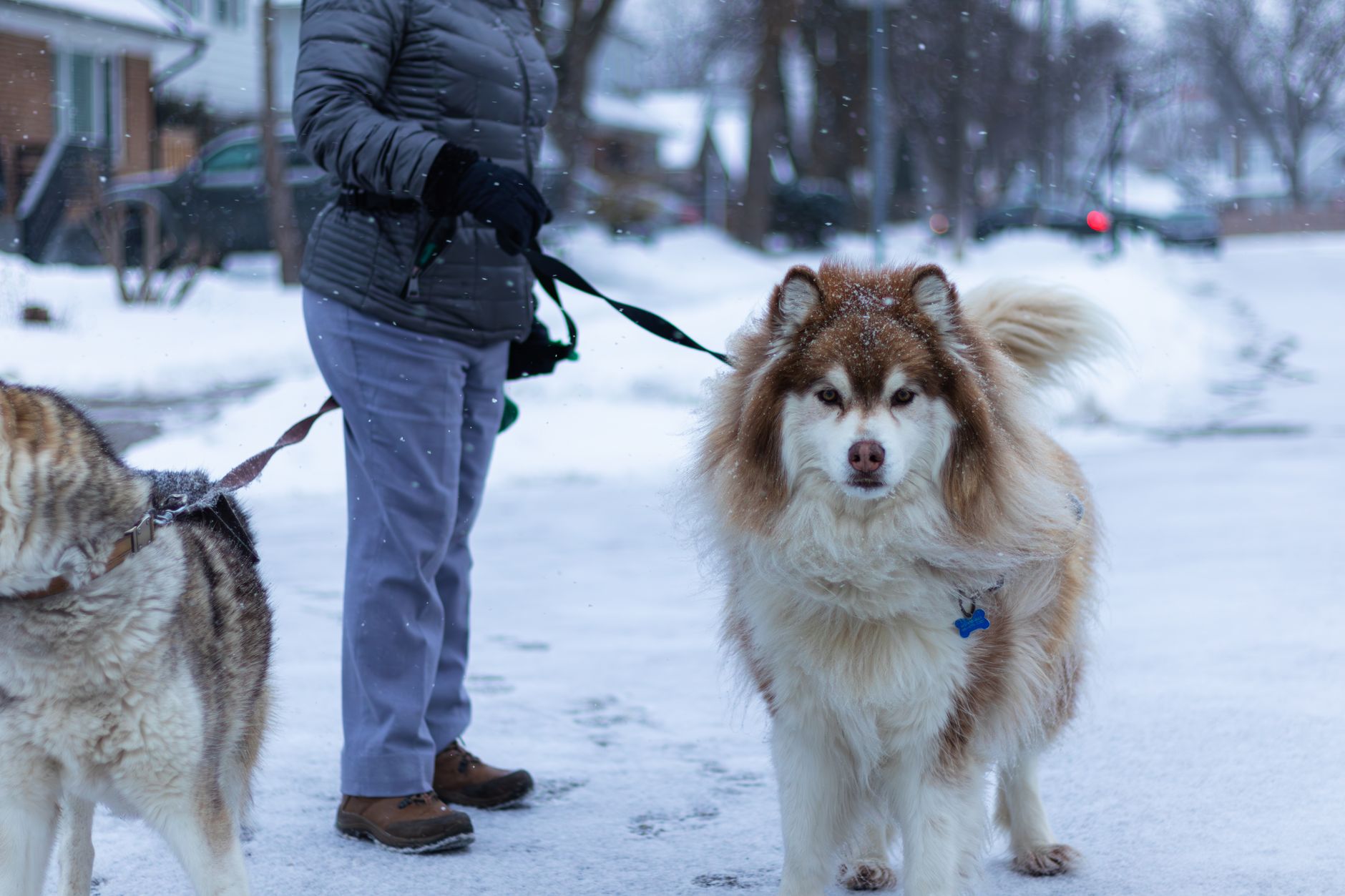
If your dog has just dragged you down the street like a runaway trolley, or you've spent another walk white-knuckling the lead, you're not alone — and you haven't ruined your dog. Pulling is one of the most common complaints Australian owners bring to trainers, and the right harness can make an immediate, tangible difference before you've done a single training session.
Here's your quick win: swap a collar or back-clip harness for a front-clip harness today. Front-clip harnesses redirect a pulling dog back toward you with zero extra effort on your part. It won't fix the underlying habit overnight, but it will make your next walk survivable — and that matters.
Front-Clip vs Back-Clip: Which One Do You Actually Need?
This is the single most important harness decision you'll make.
Front-Clip Harnesses
The lead attaches to a ring on the dog's chest. When your dog surges forward, the chest ring rotates their body sideways and back toward you — physics does the work, not your arm.
Best for:
- Dogs that pull consistently on lead
- Medium to large breeds (Labradors, Staffies, German Shepherds)
- Owners with wrist, shoulder, or back issues
Popular Australian-available options:
- 2 Hounds Design Freedom No-Pull Harness — dual-clip (chest + back), padded, suits most body shapes
- PetSafe Easy Walk Harness — widely available at Petbarn and Pet Circle, budget-friendly (~$40–$65 AUD)
- Ruffwear Front Range — durable, well-padded, good for active dogs (~$90–$110 AUD)
Back-Clip Harnesses
The lead attaches between the shoulder blades. Comfortable for the dog, easy to fit, but offers no mechanical advantage against pulling — it can actually encourage pulling in strong dogs (think sled-dog position).
Best for:
- Small breeds or dogs that don't pull (Cavaliers, Maltese, older dogs)
- Dogs with tracheal or neck sensitivities where a collar is unsuitable
- Puppies still learning loose-lead basics
Popular options:
- Julius-K9 IDC Powerharness — iconic, robust, well-sized for short-backed breeds (~$80–$130 AUD)
- Rogz Utility Harness — affordable, widely stocked across Australia (~$35–$60 AUD)
Dual-Clip Harnesses
Have both a front and back ring. Versatile — you can attach a double-ended lead to both clips simultaneously for extra control, or swap depending on the walk environment.
Sizing by Dog Size: Getting the Fit Right
An ill-fitting harness is worse than no harness — it causes chafing, restricts shoulder movement (a real issue with cheaply made front-clip designs), and can be slipped out of. Follow this process:
- Measure your dog's girth (the widest point of the chest, just behind the front legs) and their neck circumference.
- Cross-check both measurements against the brand's specific size chart — sizing varies wildly between brands.
- The two-finger rule: you should be able to slide two fingers under any strap. Snug but not tight.
- Watch for armpit rubbing after the first few walks — red or hairless patches are a sign the harness is too tight or the wrong style for your dog's build.
| Dog Size | Typical Girth | Harness Type to Prioritise |
|---|---|---|
| Small (Chihuahua, Pug) | 30–45 cm | Back-clip, Y-front style to protect short necks |
| Medium (Beagle, Cocker Spaniel) | 45–65 cm | Front-clip or dual-clip |
| Large (Labrador, Boxer) | 65–85 cm | Front-clip or dual-clip, padded chest plate |
| Extra Large (Rottweiler, Malamute) | 85 cm+ | Dual-clip, heavy-duty hardware, rated webbing |
Short-backed or deep-chested breeds (Bulldogs, Pugs, Whippets, Greyhounds) need harnesses specifically designed for their proportions — standard H-style harnesses often sit incorrectly on these dogs. Look for brands that offer breed-specific sizing or adjustable sternum straps.
Car Safety Harnesses: Australian Rules You Need to Know
Here's where many owners are unknowingly breaking the law — and putting their dog at risk.
The Legal Bit
In Australia, the rules vary by state and territory, but the general picture is:
- NSW, VIC, QLD, SA, WA, TAS: It is an offence to drive with an animal in a way that distracts the driver or endangers any person. In NSW, animals must be restrained in a way that prevents distraction — unrestrained dogs in laps are explicitly targeted.
- QLD additionally requires animals on utes/truck trays to be restrained at all times.
- Fines range from approximately $300–$500 AUD depending on the state and circumstances.
The practical takeaway: your dog should be restrained in the car in every state. It's also about crash physics — in a 60 km/h collision, a 25 kg dog becomes a 1,100 kg projectile.
Crash-Tested vs "Crash-Rated" — Know the Difference
Most pet harnesses sold in Australia are not independently crash-tested. Labels like "safety harness" or "travel harness" are largely unregulated marketing terms.
Look specifically for harnesses that have been tested to Centre for Pet Safety (CPS) standards or equivalent independent crash-test protocols. Two brands that meet this bar:
- Sleepypod Clickit Utility — one of the few harnesses to pass CPS crash testing, available via Australian pet retailers and online (~$130–$160 AUD)
- Kurgo Tru-Fit Smart Harness — CPS tested, dual-purpose (walk + car), widely available in Australia (~$75–$100 AUD)
Car Harness Fitting Checklist
- ✅ Attaches to the car's seatbelt buckle or ISOFIX anchor point (not just a boot tether)
- ✅ Positions the dog upright, facing forward
- ✅ Distributes crash force across the chest — never a collar or neck attachment
- ✅ Has been independently crash-tested (check the brand's website for test certificates)
- ✅ Dog can sit, lie down, and turn comfortably — but cannot move to the front seat
A Simple 5-Minute Harness Introduction Routine
Dogs that haven't worn a harness before — or have had a bad experience with one — can be wary. Don't force it. This takes five minutes a day for three to five days:
- Day 1–2: Leave the harness on the floor near the dog's bed or feeding area. Reward any sniffing with a treat. Do nothing else.
- Day 3: Hold the harness open near the dog's head. If they push their nose toward it, click or say "yes" and treat. No forcing.
- Day 4: Slip it over the head briefly (chest strap undone), treat, remove. Repeat twice.
- Day 5: Fasten fully, give a high-value treat, go for a short walk immediately. End on a good note.
Most dogs accept a harness within a week using this approach. If your dog freezes, shakes, or tries to escape the harness after a week of this, chat to your vet — there may be a comfort or pain issue worth investigating.
Bottom Line: The Right Harness for Your Situation
- Pulling dog, big or small: Start with a front-clip harness like the PetSafe Easy Walk or Ruffwear Front Range.
- Small/gentle dog or puppy: A well-fitted back-clip harness is fine and more comfortable.
- Car travel: Only use an independently crash-tested harness. The Kurgo Tru-Fit is the easiest place to start.
- Strong breed or complex pulling: A dual-clip harness with a double-ended lead gives you the most control with the least effort.
A harness is a tool, not a cure — pairing it with even five minutes of loose-lead practice on each walk will compound over weeks. But starting with the right equipment means today's walk is already better than yesterday's.
As an Amazon Associate we earn from qualifying purchases.
Frequently asked questions
Are no-pull harnesses cruel or harmful to dogs?
Used correctly and fitted properly, front-clip no-pull harnesses are not harmful. The key is fit — a harness that restricts shoulder movement or causes armpit chafing can cause discomfort over time. Check for rubbing after each walk for the first week, and choose a harness with a padded chest plate that sits clear of the armpits.
Is it illegal to have an unrestrained dog in the car in Australia?
Yes, in every Australian state and territory it is an offence to drive with an animal in a way that distracts the driver or creates a hazard. Fines range from around $300–$500 AUD depending on the state. In Queensland, dogs on ute trays must also be restrained at all times.
What's the best harness for a strong pulling dog like a Labrador or Staffy?
A front-clip harness is the most effective starting point — options like the PetSafe Easy Walk (~$40–$65 AUD) or the Ruffwear Front Range (~$90–$110 AUD) are both widely available in Australia and suit medium to large breeds. A dual-clip harness used with a double-ended lead gives even more control for very strong pullers.
Can I use the same harness for walks and car travel?
Some dual-purpose harnesses are designed for both, but only if they are independently crash-tested. The Kurgo Tru-Fit Smart Harness is one of the few available in Australia that is tested for both walking and car restraint. Do not assume a walking harness is safe in a crash — most are not built to withstand collision forces.
How do I know if a harness fits my dog correctly?
Use the two-finger rule: you should be able to slide two fingers under any strap, but the harness shouldn't shift around when the dog moves. Measure your dog's girth (around the widest part of the chest) and neck, then match both to the specific brand's size chart. Check for red or hairless patches under the armpits after the first few walks, which indicate poor fit.
My dog hates wearing a harness — what do I do?
Start with a gradual desensitisation approach over five to seven days: let the dog sniff the harness, reward approach, then slowly build up to wearing it fully before a walk. Most dogs come around within a week. If your dog continues to show distress or freezes when the harness is on, consult your vet to rule out any underlying pain or discomfort.
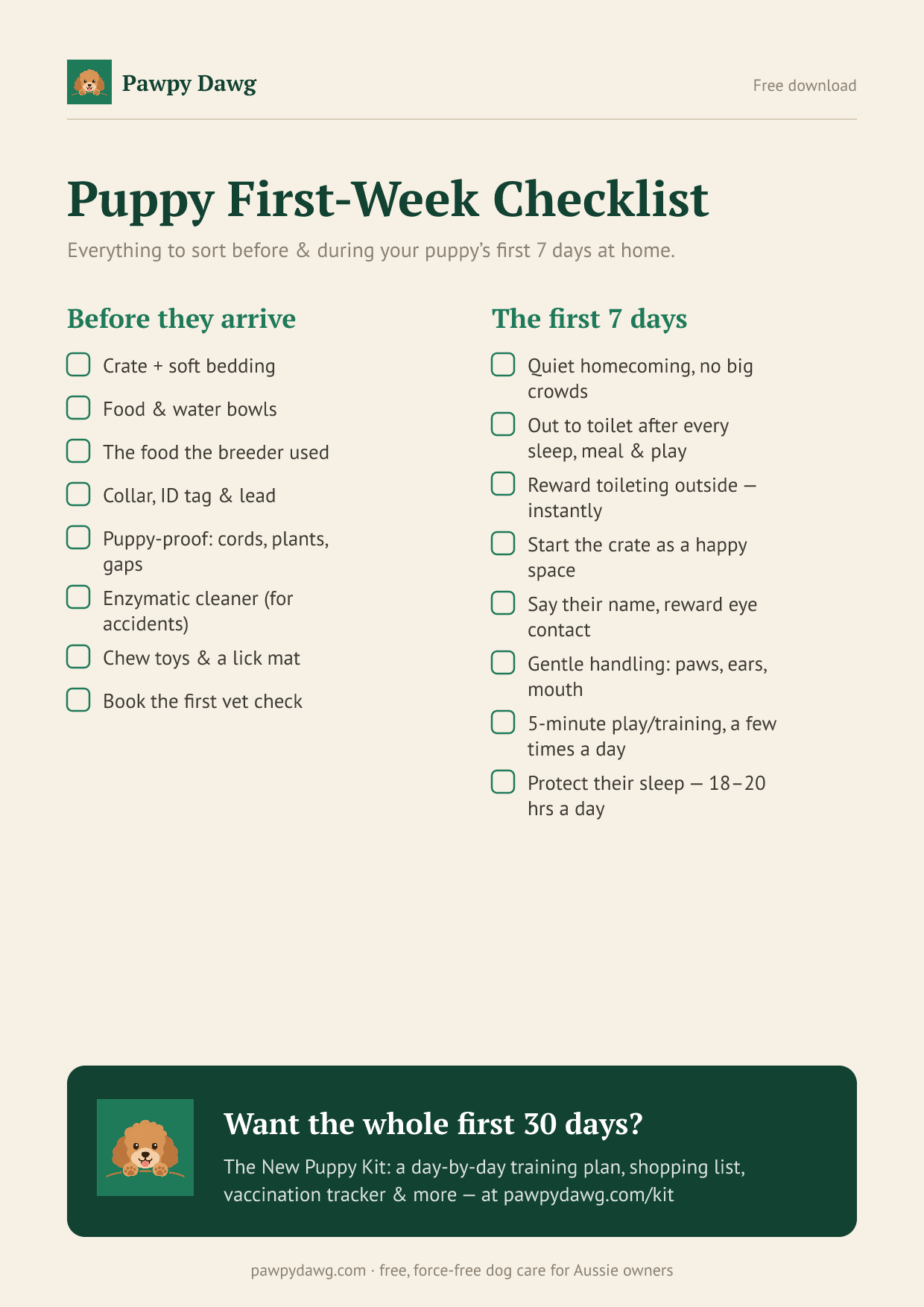
Free printable
Free: the Puppy First-Week Checklist
Everything to sort before and during your puppy's first 7 days home — a printable one-pager. Plus the occasional genuinely useful dog tip. No spam, unsubscribe anytime.
Related guides
Is Pet Insurance Worth It in Australia? The Honest Maths
Is pet insurance worth it in Australia? We crunch real premiums vs real vet bills — cruciate surgery, snake bite & more — so you can decide with confidence.
Read the guide →
How Much a Dog Really Costs Per Year in Australia (2026 Breakdown)
How much does a dog cost per year in Australia? 2026 line-item breakdown covering food, vet, insurance, grooming & the costs first-timers always miss.
Read the guide →
Dog Vaccination Schedule in Australia: What, When and What It Costs
Confused by C3, C5 and kennel cough? Here's your complete dog vaccination schedule Australia cost guide — puppy timelines, adult boosters & typical AUD prices.
Read the guide →