
Barking Complaints in Australia: Council Rules and How to Quiet Your Dog
Facing barking complaints council Australia? Understand the rules, what triggers nuisance barking, and a practical week-by-week plan to quiet your dog fast.

Written by Bradley Brown
Founder & editor · Reviewed 2026-11-14
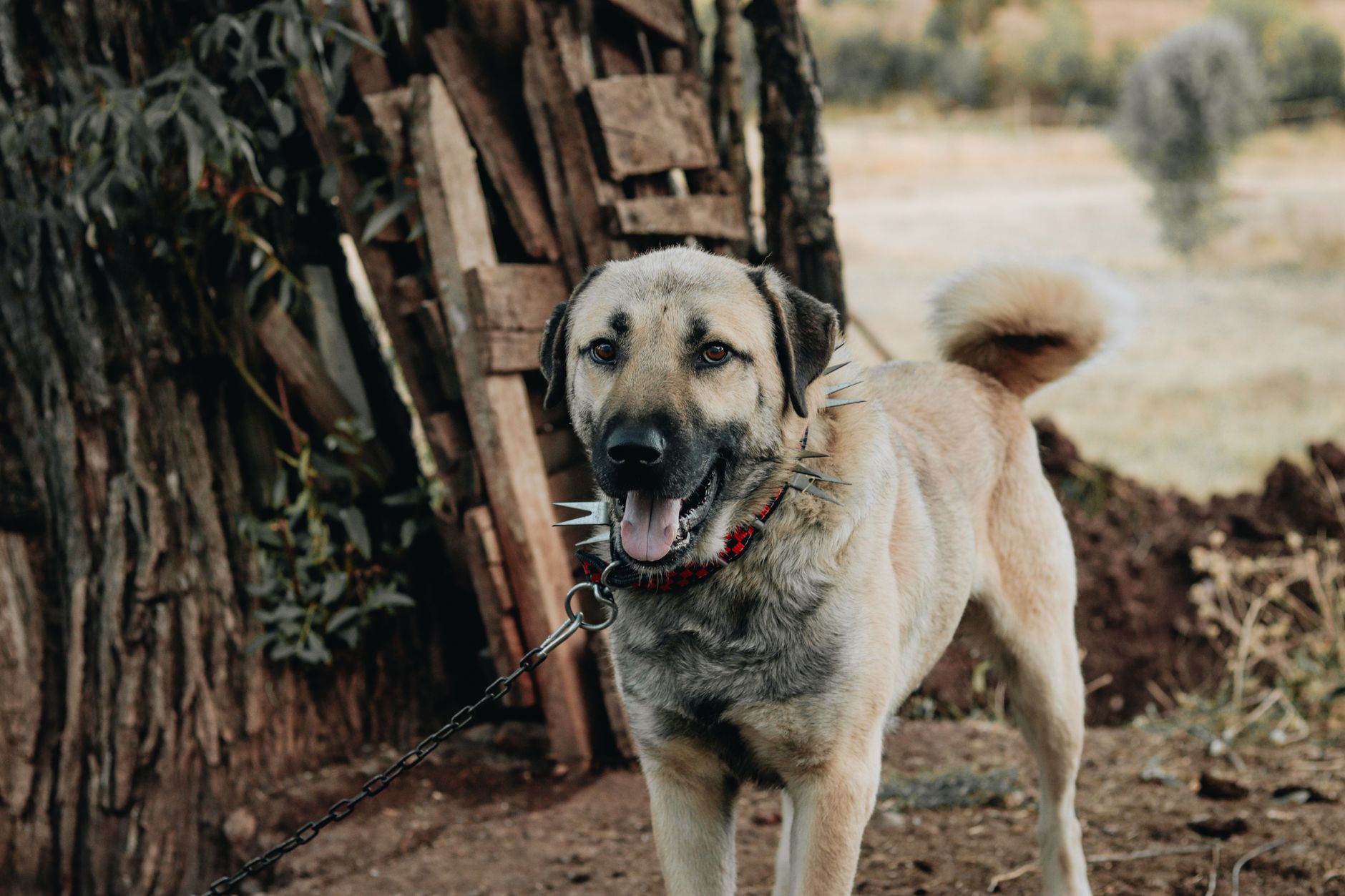
Most dogs bark. Most neighbours understand that. The moment it becomes a council matter is when the barking is frequent, prolonged, or happens repeatedly at anti-social hours — and that threshold is lower than many owners expect. Getting ahead of a formal complaint is far easier than responding to one, and a few targeted changes in the first couple of weeks can make a real difference.
How the council complaint process actually works
Every Australian state and territory has legislation that covers nuisance animals, and local councils enforce it at street level. In Victoria it falls under the Domestic Animals Act 1994; in NSW, the Companion Animals Act 1998; Queensland uses the Animal Management (Cats and Dogs) Act 2008; other states have equivalent frameworks. The language differs, but the concept is the same: a dog whose barking unreasonably interferes with a neighbour's peace can be declared a nuisance.
When a complaint is lodged, council officers typically send a letter to the registered owner first. If the barking continues, an officer may visit, place a monitoring device (a bark-activated recorder) at the property, or ask the complainant to keep a log. Sustained nuisance findings can result in fines ranging from a few hundred to several thousand dollars depending on the state, and repeat offenders can face orders requiring behavioural intervention or, in extreme cases, rehoming.
What counts as "nuisance" is partly subjective, but councils generally look for barking that lasts more than a few minutes continuously, recurs multiple times across a day, or occurs regularly between roughly 10 pm and 7 am. A dog that barks twice when the postman arrives is not a nuisance. A dog that barks solidly for 45 minutes every morning is.
If a neighbour mentions the barking to you directly before lodging a formal complaint, treat it as a gift. That window — before the barking complaints council Australia machinery starts turning — is your best opportunity to fix things quietly.
Week one: working out what's driving it
Before you change anything, spend the first week observing. Set a phone alarm for different times of day and note what's happening when the barking starts. Better still, set up a cheap home camera or baby monitor while you're out. Patterns emerge quickly.
The most common triggers fall into a short list:
- Separation distress — barking starts within minutes of you leaving and may continue for hours
- Territorial/alarm barking — triggered by people, dogs, or movement past the fence line
- Boredom and under-stimulation — scattered throughout the day, often paired with digging or pacing
- Demand barking — directed at you, often at meal times or when attention is wanted
- Reactive barking on walks — not a council issue directly, but signals a dog who is generally over threshold
Separation distress is the one that most reliably generates barking complaints, because it peaks exactly when owners aren't home to interrupt it. If your camera shows barking starting at 8:05 am and barely stopping before you return, that's the problem to solve first.
A vet check is worth doing this week if the barking is new or has escalated suddenly. Pain, cognitive decline in older dogs, and thyroid issues can all increase vocalisation. Rule that out before committing to a training plan.
Week two: the environment does half the work
Once you know the trigger, the environment is the cheapest and fastest lever to pull.
For territorial barkers, reducing visual access to the fence line cuts the trigger before the bark even forms. Shade cloth along a colorbond fence, a secondary garden bed that keeps the dog a metre back, or simply keeping the dog inside during peak foot-traffic hours (school drop-off and pick-up, bin night) can halve the frequency within days.
For boredom barkers, the formula is: physical exercise before alone time, then a food puzzle or frozen Kong to occupy the first 20–30 minutes of your absence. That window matters because it's when most barking begins. A dog who is busy and slightly tired is a dog who is quiet. A 20-minute sniff walk — letting the dog choose the pace and investigate everything — is more exhausting than a 45-minute trot on a tight lead.
For separation distress, environment changes alone won't be enough, but they help. A white noise machine near the dog's rest spot masks street sounds. A worn item of your clothing near the bed provides scent comfort. These aren't cures; they're scaffolding while you work on the underlying anxiety.
Weeks three and four: systematic desensitisation for the persistent barker
If the barking hasn't dropped noticeably by the end of week two, you're dealing with something that needs deliberate counter-conditioning, not just management.
For separation distress: Work in very small increments. Leave for 10 seconds, return before the dog reaches full anxiety. Repeat until the dog is relaxed at that duration, then extend to 30 seconds, then two minutes, and so on. This feels absurdly slow, but pushing too far too fast resets the whole process. Five to ten minutes of practice a day is enough — more isn't better.
For alarm and territorial barking: Teach a solid "quiet" or redirect to an incompatible behaviour (go to mat, hand touch) the moment the trigger appears. The timing has to be early — interrupt at the first woof, not the tenth. Reward silence within two seconds. If the dog is already in full bark, you've missed the window; wait for a natural pause, then reward that.
A registered dog trainer — look for members of the Pet Professional Guild Australia or the Delta Society — is worth the $150–$250/hr consult fee if you're not seeing progress by week four. That's cheaper than a council fine and far cheaper than a legal dispute with a neighbour.
Weeks five and six: keeping the gains
By now, most owners with a boredom or territorial barker are seeing genuine improvement. The dogs who aren't are typically the ones where the routine has slipped — the morning walk dropped on busy days, the Kong preparation skipped because it's messy.
Write the routine on a sticky note on the door. It should take under ten minutes: scatter some kibble in a snuffle mat, freeze a Kong the night before, do five repetitions of the "place" command. Consistency across seven days beats an intensive session on the weekend.
If you've received a formal council notice during this period, respond in writing, describe the steps you've taken, and ask about their review process. Councils are generally reasonable when owners demonstrate genuine effort. Keeping a simple log — date, what you did, observed barking duration — gives you something concrete to show if the matter escalates.
Neighbours who've already complained often come around once the barking drops, even if they never say so directly. The goal isn't their approval; it's a dog who's genuinely calmer, which is better for everyone in the house, including the dog.
As an Amazon Associate we earn from qualifying purchases.
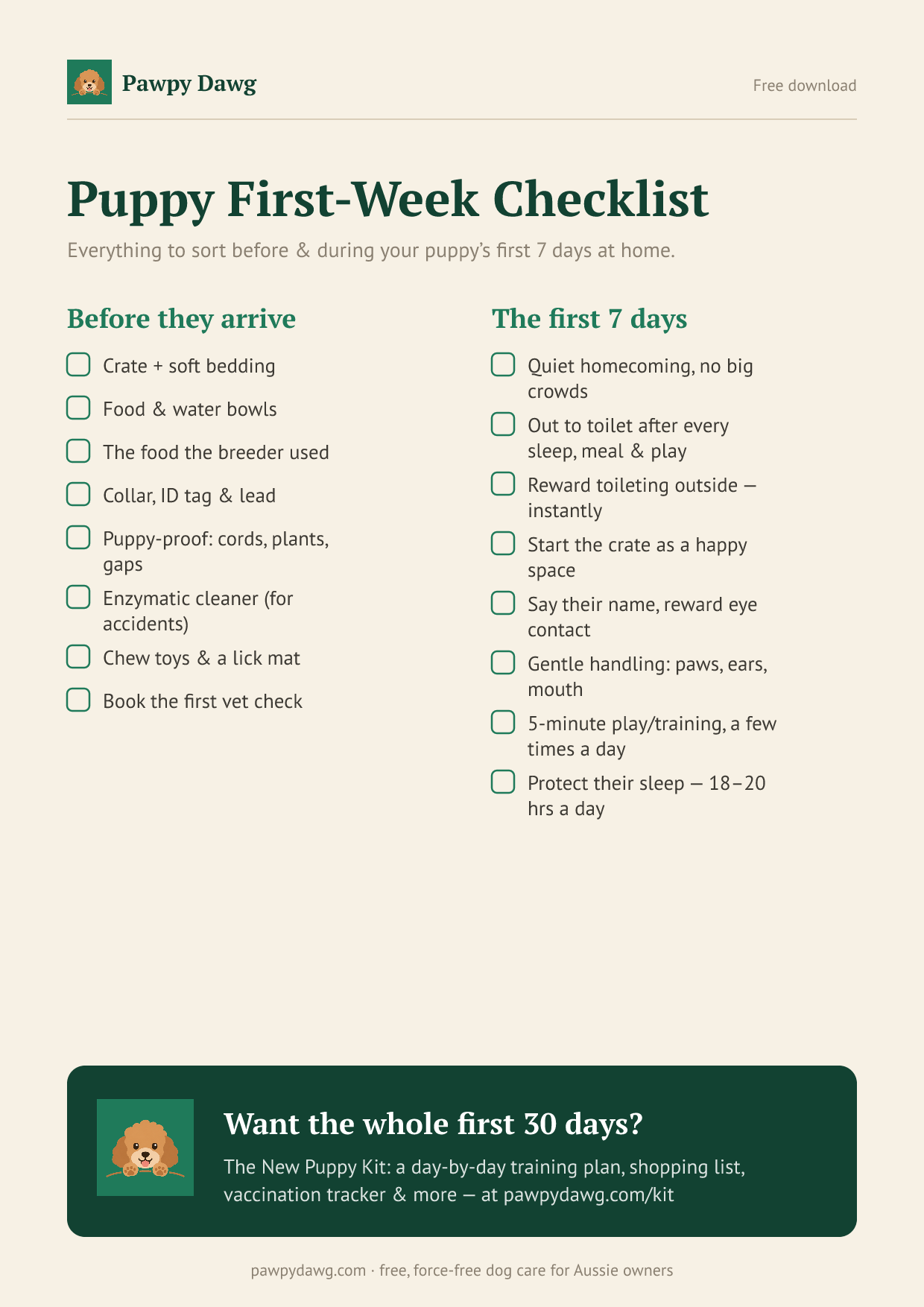
Free printable
Free: the Puppy First-Week Checklist
Everything to sort before and during your puppy's first 7 days home — a printable one-pager. Plus the occasional genuinely useful dog tip. No spam, unsubscribe anytime.
Related guides
Is Pet Insurance Worth It in Australia? The Honest Maths
Is pet insurance worth it in Australia? We crunch real premiums vs real vet bills — cruciate surgery, snake bite & more — so you can decide with confidence.
Read the guide →
How Much a Dog Really Costs Per Year in Australia (2026 Breakdown)
How much does a dog cost per year in Australia? 2026 line-item breakdown covering food, vet, insurance, grooming & the costs first-timers always miss.
Read the guide →
Dog Vaccination Schedule in Australia: What, When and What It Costs
Confused by C3, C5 and kennel cough? Here's your complete dog vaccination schedule Australia cost guide — puppy timelines, adult boosters & typical AUD prices.
Read the guide →