
Toy Poodle Training Guide: A Realistic 8-Week Plan
A realistic 8-week toy poodle training plan built around their temperament — week-by-week sessions, common myths busted, and tips for busy owners.

Written by Bradley Brown
Founder & editor · Reviewed 2026-07-18
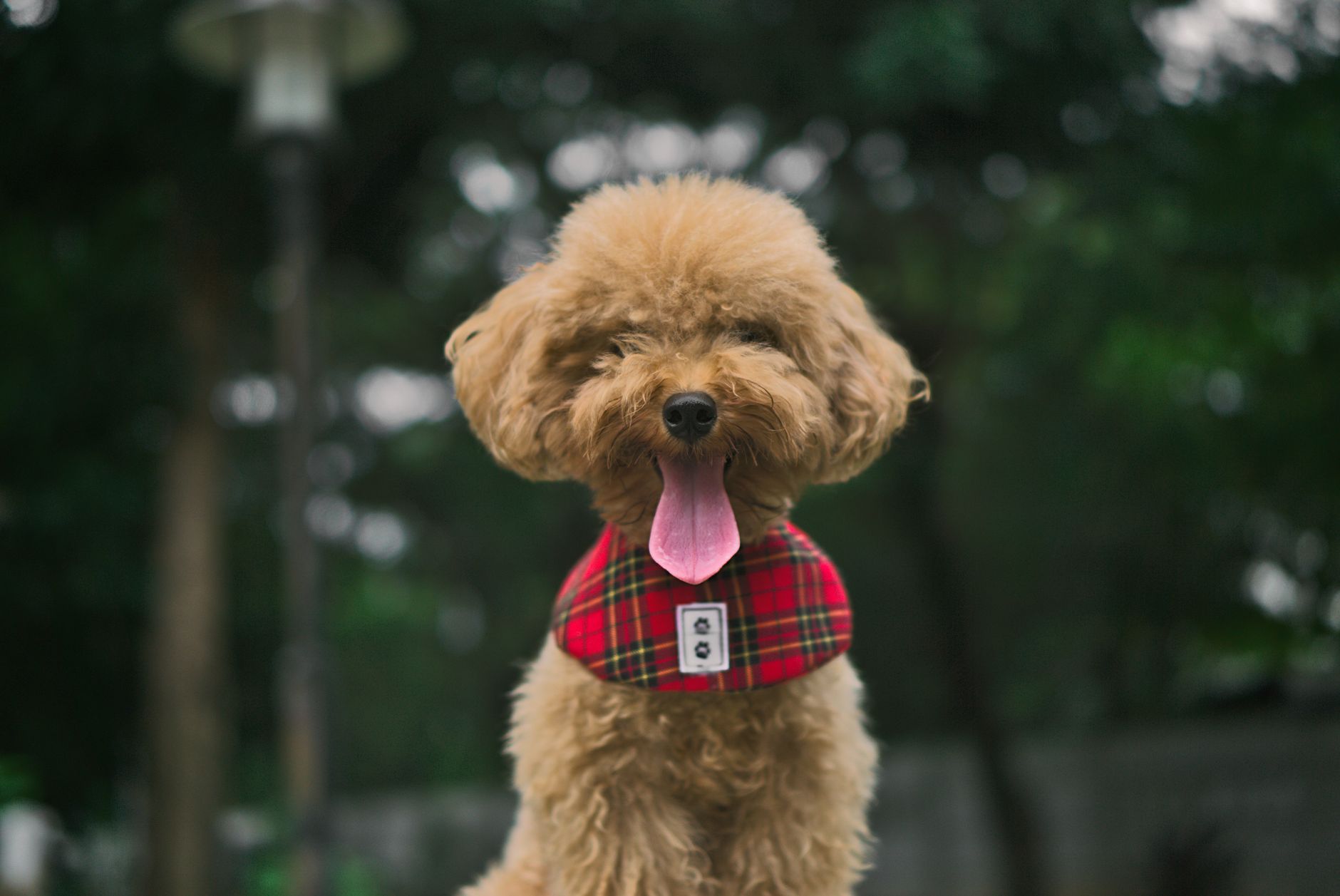
The single worst piece of advice floating around Toy Poodle owner groups is this: "They're so smart, they'll pick it up on their own." It sounds like a compliment, and it is — Toy Poodles consistently rank among the most intelligent dog breeds on the planet. But high intelligence without structure doesn't produce a well-mannered dog. It produces a bored, anxious, or demanding one. Untrained Toy Poodles don't coast — they invent their own jobs, and those jobs are rarely ones you'd approve of.
The good news: that same intelligence means toy poodle training pays off faster than almost any other breed. Five to ten focused minutes a day is genuinely enough, especially in the first eight weeks. Here's what actually works — and what to stop doing first.
"They're Too Sensitive for Firm Correction"
This myth comes from a kind place. Toy Poodles do have a lower stress threshold than, say, a Labrador. They can shut down if training feels confrontational, and some owners interpret this as the dog being "too sensitive" for any correction at all.
The reality: Sensitivity isn't fragility. It means Toy Poodles read you very well — your tone, your body language, your mood. That's an asset. What they struggle with is harsh, unpredictable correction, not clear, calm communication. A calm "nope" and a redirect works far better than either a physical correction or complete avoidance of the word no. Use a marker (a clicker or a sharp "yes!") to pinpoint exactly the right behaviour, and keep your energy neutral. They'll meet you there.
"You Have to Socialise Them Constantly or They'll Be Nervous Wrecks"
Socialisation is critical — no argument there. But the word "constantly" leads owners to drag their Toy Poodle puppy to every café, market, and school pickup until the dog is chronically overstimulated and the owner is exhausted.
The reality: Quality beats quantity. Two or three calm, positive exposures per week in the first eight weeks achieves far more than daily high-intensity outings. The goal is neutral curiosity, not excitement or fear. A puppy who sniffs a stranger's shoes and wanders off is nailing it. A puppy who launches itself at every person it sees has learned that strangers equal chaos — and that creates its own set of problems later.
Aim for: new surface textures underfoot, calm traffic sounds at a distance, meeting one or two unfamiliar (but dog-savvy) people per week. Keep sessions under 20 minutes.
"Small Dogs Don't Need as Much Training as Big Dogs"
This is where small dog syndrome is actually born — not in the dog, but in the owner's expectations. Because a Toy Poodle jumping on guests doesn't knock anyone over, because their barking seems "cute," because they can be carried away from a problem, owners let things slide that they'd address immediately in a 30 kg dog.
The reality: A Toy Poodle that jumps, barks excessively, resource guards, or refuses recall is just as much of a problem as a large dog with the same habits — it's just a problem that's easier to ignore until it isn't. These dogs live 14–18 years. Small issues calcify into big ones.
The fix is simple: apply the same standards you'd apply to any dog. If you wouldn't let a Labrador do it, don't let your Toy Poodle do it.
"Once They Know a Command, They Know It"
Owners teach "sit" in week two, the dog responds perfectly in the kitchen, and training is declared a success. Then the dog ignores "sit" completely at the vet clinic, in the park, or when a visitor arrives.
The reality: Dogs don't generalise automatically. A behaviour learned in one location, with one person, in one context, is only reliable in that location, with that person, in that context. This is called contextual learning, and it's especially pronounced in intelligent breeds who pay close attention to environmental cues. You have to practise the same skill in multiple locations and with mild distractions before it becomes a genuinely reliable behaviour.
The 8-Week Plan (5–10 Minutes a Day)
This plan assumes a puppy aged 8–16 weeks, but the same sequence works for an older Toy Poodle — just progress faster through early weeks.
| Week | Focus | Daily Session Goal |
|---|---|---|
| 1 | Name recognition + sit | Dog turns toward name 8/10 times; offers sit for a treat |
| 2 | Sit + drop | Reliable sit; luring into drop position |
| 3 | Stay (3 seconds) + loose-lead intro | Hold a 3-second stay; begin walking beside you without pulling |
| 4 | Recall ("come") indoors | Comes from another room reliably |
| 5 | Generalise sit + drop in new rooms | Practice in kitchen, lounge, garden |
| 6 | Socialisation proofing | Sit/drop/stay with one mild distraction present |
| 7 | Loose-lead outdoors + recall in garden | Short outdoor walks with loose lead; recall with 5m distance |
| 8 | Consolidation + fun | Chain 2–3 behaviours together; introduce a trick (paw, spin) |
A few non-negotiables for every session:
- Always end on a success, even if you have to make the task easier to get there.
- One skill at a time. Toy Poodles learn fast but lose interest in repetitive drills — five reps is usually enough before switching.
- Use tiny treats (pea-sized). Their caloric needs are small and training sessions add up.
- If the dog is sniffing the ground, yawning, or turning away, the session is over. These are stress or fatigue signals, not stubbornness.
What Progress Actually Looks Like
By week eight, a realistic benchmark for a Toy Poodle is: reliable sit, drop, and stay for 10–15 seconds in a mildly distracting environment; a recall that works in the garden 8 times out of 10; and loose-lead walking for the first 50–100 metres of a walk before they get excited.
That's not a competition dog. It's a dog who is a genuine pleasure to live with — and one whose owner hasn't burned out trying to achieve it.
If you're starting this with a six-month-old who's already learned some bad habits, don't panic. Toy Poodles respond to new rules at any age. The first two weeks will feel like pushing back against inertia; by week four, you'll see the shift. The breed's intelligence works in your favour every single time.
Frequently asked questions
How many minutes a day should I train my Toy Poodle?
Five to ten minutes per session is ideal for Toy Poodles, once or twice a day. They have sharp focus but tire of repetition quickly, so short, high-quality sessions outperform long, drilling ones. Always end while they're still engaged.
At what age should I start training a Toy Poodle puppy?
You can begin basic training the day your puppy arrives home, typically from 8 weeks of age. Early lessons like name recognition, sit, and basic recall are appropriate even at this age. The earlier you start, the more naturally good habits become the default.
Are Toy Poodles easy to toilet train?
Toy Poodles are intelligent and pick up toilet training relatively quickly, but their small bladders mean puppies physically cannot hold on for long — expect accidents up to 12–16 weeks of age regardless of how well training is going. Take them outside every 1–2 hours and immediately after eating, sleeping, or playing. Consistency matters far more than correction.
Why does my Toy Poodle bark so much, and can training fix it?
Toy Poodles are alert dogs with a tendency to vocalise — some barking is breed-typical. However, excessive barking usually signals boredom, anxiety, or inadvertent reinforcement (owners talking to the dog to hush it). Training a solid 'quiet' cue, increasing mental enrichment, and avoiding attention-as-reward for barking all reduce it significantly over four to six weeks.
Do Toy Poodles need a professional trainer or can I do it myself?
Most owners can handle the fundamentals at home using positive reinforcement methods — the breed's trainability makes them an excellent candidate for DIY training. A professional trainer or puppy class is worth considering if you're seeing aggression, severe anxiety, or if progress has stalled after six to eight weeks of consistent effort.
My Toy Poodle already has bad habits — is it too late to retrain them?
It's not too late. Toy Poodles respond well to retraining at any age because they're highly food-motivated and attuned to their owner's cues. Older dogs may take a few extra weeks to replace established habits, but the same principles apply: clear cues, consistent rewards, and patience. Most owners see meaningful improvement within four weeks.
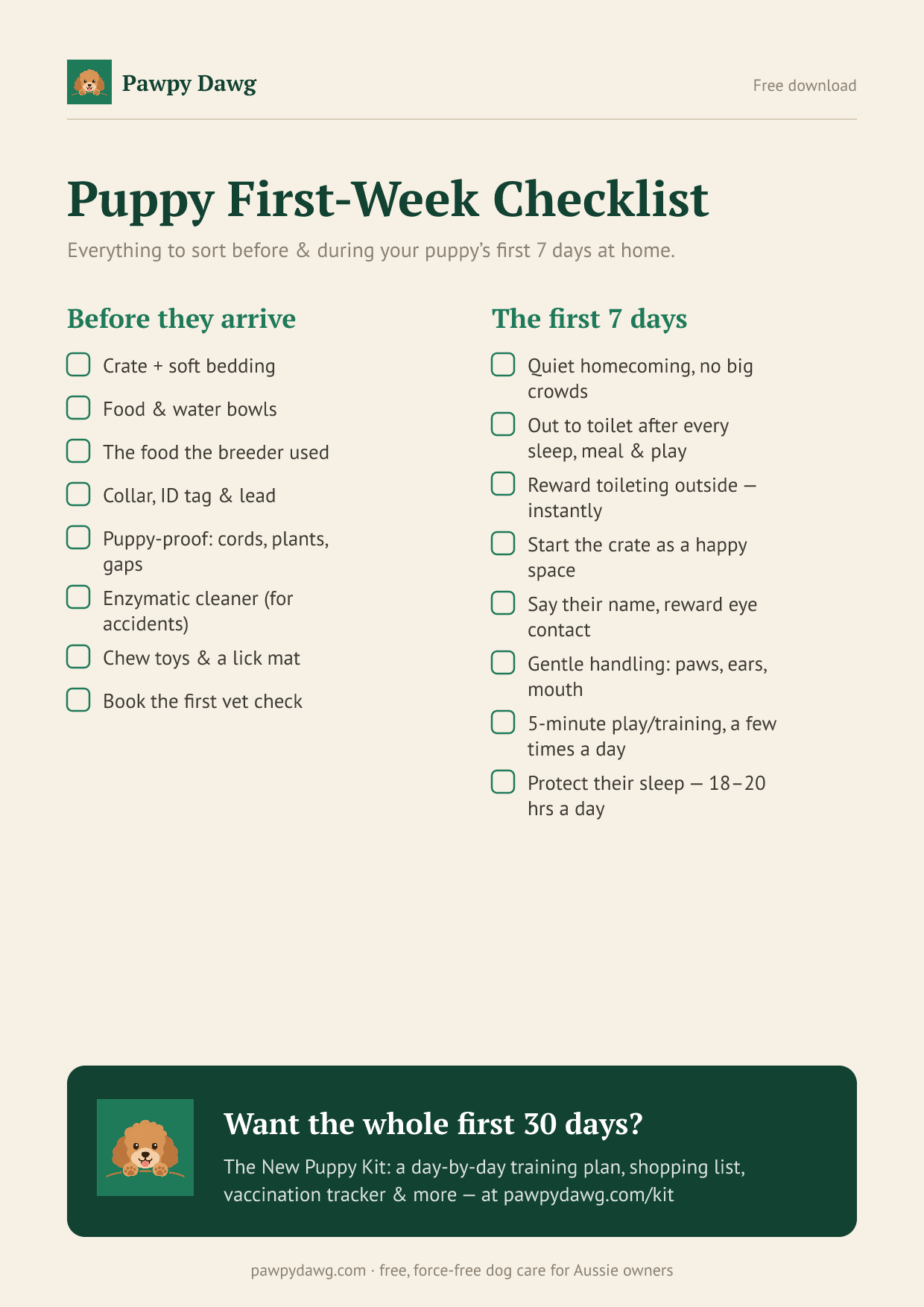
Free printable
Free: the Puppy First-Week Checklist
Everything to sort before and during your puppy's first 7 days home — a printable one-pager. Plus the occasional genuinely useful dog tip. No spam, unsubscribe anytime.