
Rottweiler Training Guide: A Realistic 8-Week Plan
A realistic 8-week rottweiler training plan built around their temperament, strength and smarts — short daily sessions, real results, no guilt.

Written by Bradley Brown
Founder & editor · Reviewed 2026-07-18
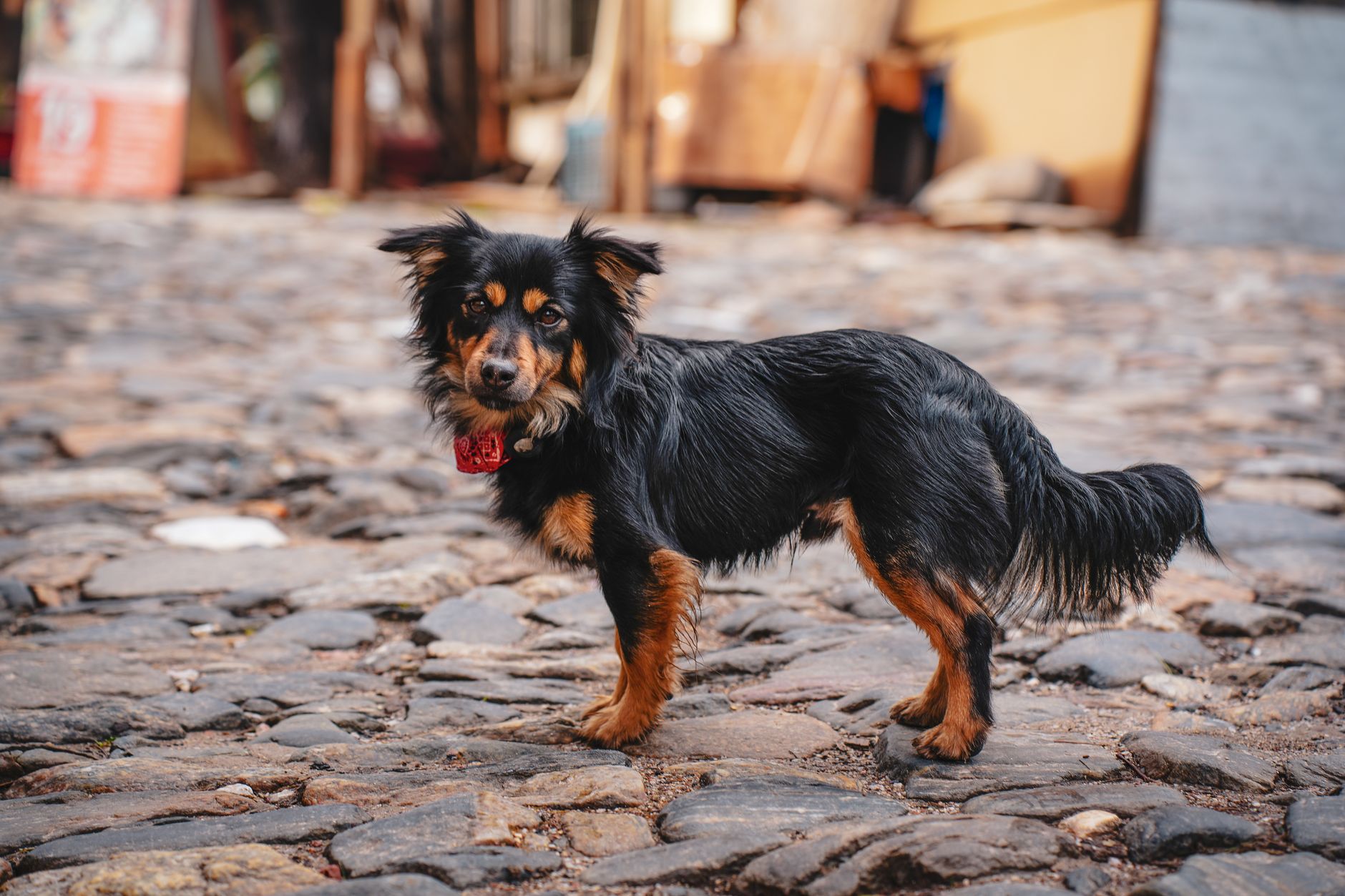
Rottweilers are one of the most trainable breeds on the planet — confident, quick to learn and deeply motivated by their relationship with you. The catch is that their strength, independence and natural wariness of strangers mean that how you train matters just as much as when you start.
This plan is built around five-to-ten minute daily sessions. Life is busy; that's enough, provided you're consistent.
Is a Rottweiler hard to train compared to other breeds?
Not at all — they're actually one of the easier large breeds to train once you understand what drives them. Rottweilers ranked 9th in Stanley Coren's The Intelligence of Dogs for obedience and working intelligence, meaning they typically learn a new command in under five repetitions. The challenge isn't their capacity; it's their temperament.
Rotties are not golden retrievers. They don't live to please — they live to partner. They'll follow your lead when they respect you, but they'll test boundaries if they sense inconsistency. This means your timing, your tone and your follow-through matter more than with a more people-pleasing breed.
The good news: this same quality makes them exceptionally reliable once trained. A cue a Rottweiler has learned sticks. They're not easily distracted, they're not flaky, and they respond well to calm, clear direction. Don't underestimate the breed, and don't let anyone tell you they're "too dominant to train without force" — that's outdated, disproven advice that will damage your relationship and your dog.
What should I actually be doing in weeks 1 and 2?
Weeks 1–2 are entirely about foundation, not commands. Your priorities are:
- Name recognition — say the name once, treat when they look at you. Within days this should be automatic.
- Sit — lure the nose up and back with a treat, reward the moment the bottom hits the ground. Ten reps, twice a day.
- Loose-lead walking — start in the backyard or a quiet hallway. The moment the lead goes tight, you stop. The moment they return to your side, you move again and reward. This is the most important skill you'll build, given their eventual size.
- Crate or settled place introduction — feed meals near or inside the crate. No locking yet. Just positive association.
Keep sessions to five minutes maximum in week 1. Puppies tire mentally before they show it, and even adult rescues need time to learn your communication style before you pile on expectations. The goal by the end of week 2 is eye contact on name, a reliable sit on cue, and a dog who finds your presence rewarding.
When does impulse control training come in — and why does my Rottweiler need it so badly?
Weeks 3 and 4 are where Rottweiler-specific work really begins, and impulse control is the centrepiece. A 50-kg dog who bolts through doorways, launches at guests or charges after a skateboard is a serious liability — and it's not aggression, it's just unchecked arousal in a very large body.
Start with "wait" at doorways: ask for a sit, open the door slightly, close it if they move. Reward heavily for holding. Build the duration by a second or two each session. Extend this to the car door, the gate, the back screen door.
Add "leave it" using the two-hand method: a treat in a closed fist, wait for them to stop pawing and nosing, the moment they pull back and look at you, reward from the other hand. This generalises beautifully to food on the ground, kids' toys and the cat.
In week 4, begin "down" — lure from a sit, treat between the front paws and draw slowly toward the floor. Rotties can be slow to offer a down initially because it puts them in a vulnerable position; be patient and reward generously. Once they're down reliably, introduce a "stay" with you taking one step back, then returning to reward.
My Rottweiler is brilliant at home but falls apart around distractions — what do I do in weeks 5 and 6?
This is completely normal and it doesn't mean you've failed or that they're being stubborn. It means you've only trained in one environment, which is stage one. Generalisation — learning that "sit" means sit everywhere, not just in the kitchen — has to be taught deliberately.
Weeks 5–6 are about taking everything on the road:
- Train in at least three new locations: the front footpath, a quiet car park, a mate's backyard.
- Drop your criteria when you move: in a new place, ask for easier behaviours and reward more generously. The environment is harder; your reinforcement rate should match.
- Introduce mild distractions gradually: another person walking past, a ball on the ground nearby, a dog at a distance. Work at whatever distance keeps your Rottweiler under threshold — meaning they can still think and respond.
- Practise loose-lead walking in public, keeping sessions short and ending before your dog loses focus.
This is also the right time to enrol in a group obedience class if you haven't already. Look for a trainer who uses reward-based methods and has experience with guardian breeds. Rottweilers benefit enormously from learning to work around other dogs in a structured setting — it's socialisation and obedience in one.
How do I handle the Rottweiler's natural wariness around strangers and new dogs?
Weeks 7 and 8 bring socialisation and real-world manners into focus. Rottweilers are a naturally aloof breed with other dogs and strangers — this is breed-typical behaviour, not a flaw and not something you've caused. Your job isn't to make them love everyone; it's to make sure they're calm and responsive in your presence.
With strangers: Ask guests to ignore the dog entirely on arrival — no eye contact, no reaching out. Let your Rottie approach in their own time. Once calm, you can invite a treat hand-off from the guest. Reward any relaxed, non-reactive behaviour lavishly. Never force greetings.
With other dogs: Keep on-lead meetings short and neutral — a brief sniff, then walk on. Avoid face-to-face approaches where dogs are pulling toward each other; this creates tension before anyone's said hello. Dog parks are not ideal for Rottweilers until you're confident in their recall and social signals — a well-fenced, quiet play session with a known dog is a much better starting point.
Recall under distraction should be your week 7–8 focus: call your dog away from something interesting (a sniff, a person, another dog), reward enormously when they come, and never call them to you for anything they find unpleasant (like the bath or the end of play). Recall has to be the best thing that happens to them.
By the end of week 8, you should have a dog with solid sit, down, stay, loose-lead walking, leave it, wait at doorways, name recall and the beginnings of polite greeting behaviour. That's not a magic trick — that's 56 days of five-to-ten minutes. It's genuinely achievable, and it forms the backbone of everything else you'll build together.
What keeps Rottweiler training on track after week 8?
The honest answer: maintenance is easier than the initial training, but it doesn't stop. Rottweilers can develop selective hearing around adolescence (typically six to eighteen months), and unneutered males may test established boundaries. This isn't regression — it's normal canine development.
Keep it sustainable:
- Ask for known behaviours before the good stuff: sit before the bowl goes down, wait before the lead goes on, down before the throw of the ball. These micro-sessions happen in everyday life and cost you nothing extra.
- Do a five-minute refresher once a week if formal training has dropped off — run through your full repertoire to keep everything sharp.
- Add a job: Rottweilers were bred to work. Carting, tracking, nosework, and advanced obedience are all excellent outlets. A Rottie with a job is a Rottie who thrives.
- Find a local trainer or club for ongoing support — Dogs Queensland and equivalent state bodies have breed-positive club listings if you want structured progression.
You have not ruined your dog. The fact you're reading this means you're already doing the right thing.
As an Amazon Associate we earn from qualifying purchases.
Frequently asked questions
At what age should I start training my Rottweiler?
You can start the moment your puppy comes home — typically around eight weeks. At that age, keep sessions to two to three minutes and focus on name recognition, sit and gentle handling. Adult Rottweilers can absolutely be trained too; older dogs often have a longer attention span and learn commands quickly once they understand the game.
Do Rottweilers need a firm or dominant owner to behave?
No — and this is one of the most persistent myths about the breed. Modern veterinary and behavioural science is clear that dominance-based training increases anxiety and can trigger defensive aggression, particularly in confident breeds like Rottweilers. What they respond to is calm consistency, clear communication and reward-based training that makes listening worthwhile.
How much does professional Rottweiler training cost in Australia?
Group obedience classes typically run between $150 and $350 AUD for a six-to-eight week course, depending on location and trainer experience. Private trainers range from $80 to $200 AUD per session. Breed-specific clubs affiliated with your state canine body often offer the most affordable structured training with experienced handlers.
Why does my Rottweiler listen inside but ignore me outside?
This is a generalisation problem, not a disobedience problem. Dogs don't automatically transfer a learnt behaviour from one environment to another — it has to be practised in each new context. Start training outdoors at a distance from distractions, reward more generously than you would at home, and gradually increase the difficulty of the environment over several sessions.
Are Rottweilers good off-leash?
They can be, but reliable off-leash recall takes dedicated training and should not be assumed because a dog is obedient on lead. Rottweilers have a prey drive and can be reactive toward unfamiliar dogs, so off-leash access in unfenced areas should only happen once recall is solid under real-world distractions. Fenced-in areas are a safer starting point.
Is it too late to train a Rottweiler that has already developed bad habits?
It's never too late, though it takes longer to replace a practised behaviour than to teach a new one. Identify what's reinforcing the unwanted behaviour (attention, access, fear relief) and systematically reward an incompatible alternative instead. For serious issues like reactivity or resource guarding, working with an accredited behaviourist gives you the fastest and safest outcome.
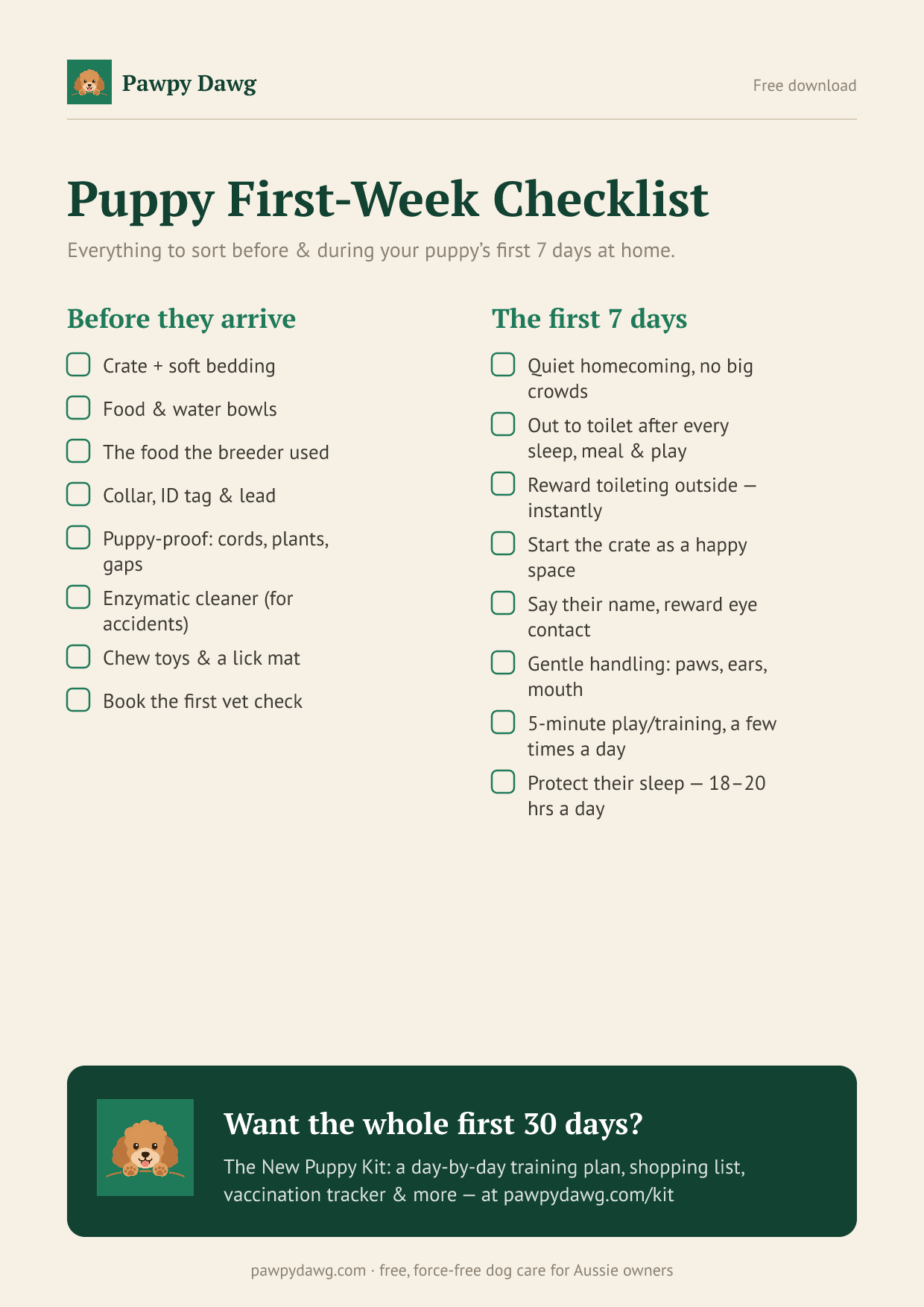
Free printable
Free: the Puppy First-Week Checklist
Everything to sort before and during your puppy's first 7 days home — a printable one-pager. Plus the occasional genuinely useful dog tip. No spam, unsubscribe anytime.