
Pug Training Guide: A Realistic 8-Week Plan
A week-by-week pug training plan built around their real temperament — stubborn, food-driven, and easily overheated. Practical, 5–10 min daily sessions.

Written by Bradley Brown
Founder & editor · Reviewed 2026-07-17
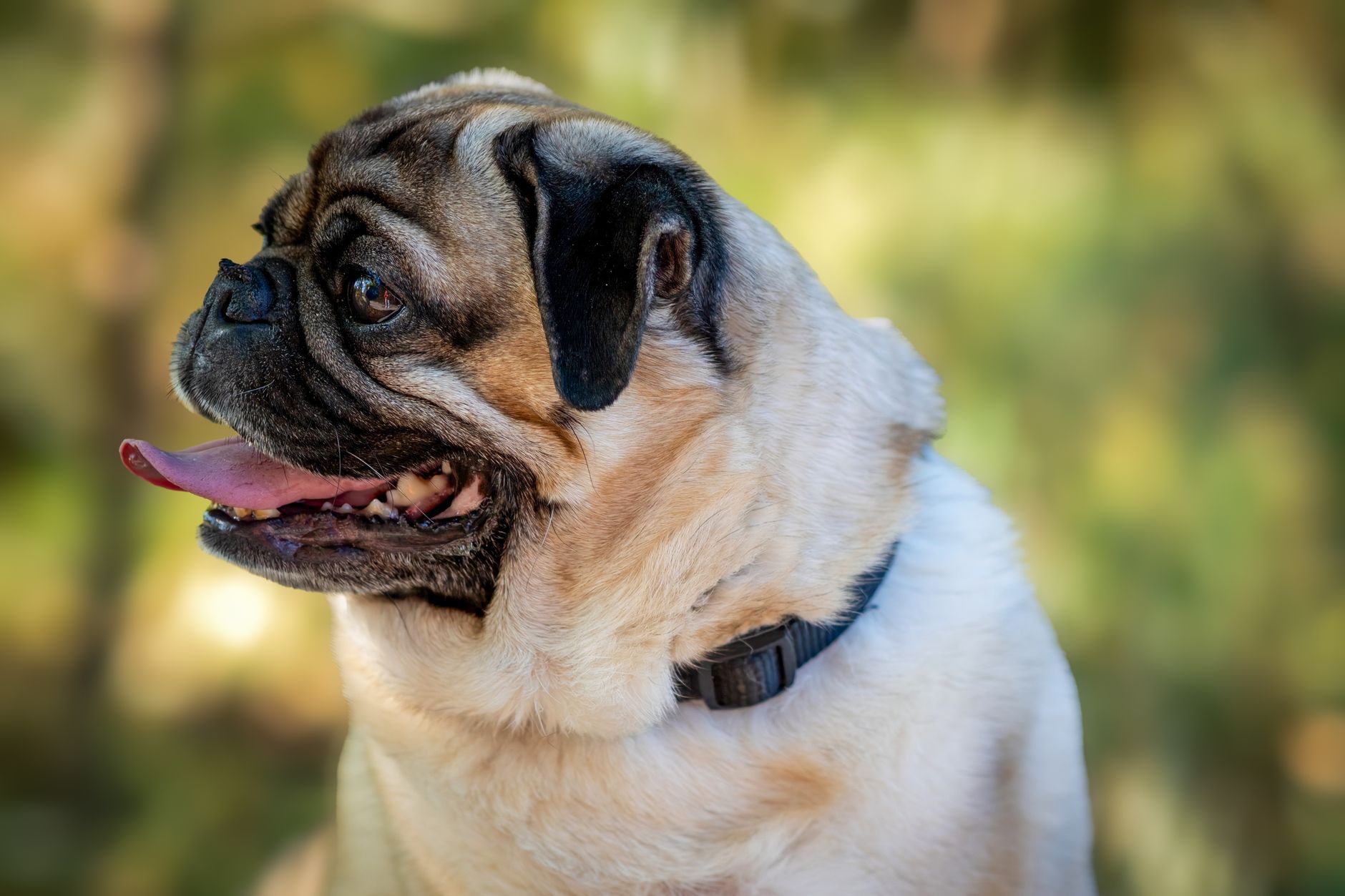
Pugs are one of those breeds that can make you feel like you're failing as a trainer — one minute they're nailing a sit, the next they're flopped on the tiles staring at you like you've personally offended them. You haven't broken your dog. Pugs are just genuinely different to train, and most generic advice was written for Labradors.
Here's a realistic, week-by-week plan built around how pugs actually think, breathe, and get bored.
What makes pug training different
Before you start, it helps to understand why standard advice often falls flat with this breed.
Short attention spans. Pugs typically check out after five to eight minutes. Drilling a command fifteen times in a row produces avoidance, not learning.
Breathing limits their endurance. Brachycephalic anatomy means even mild exertion can wind them. Keep sessions calm. If you hear heavy panting or see open-mouthed gasping, stop immediately and let them recover in a cool spot.
They're food-motivated — but easily bored of the same treat. Rotate between two or three high-value rewards (small pieces of cooked chicken, cheese, or commercial soft treats) to keep engagement high.
Stubbornness is actually sensitivity. Pugs respond very poorly to harsh corrections. Positive reinforcement isn't just kind — it's the only reliable approach with this breed.
Your quick win for today
Before you read another word, grab ten tiny treats and a quiet corner. Ask your pug to sit. The moment their bottom touches the floor, mark it ("yes!" or a click) and give a treat. Do this five times, then stop. That's it. You've just run a successful pug training session. Seriously.
The 8-week plan
Sessions should run 5–10 minutes once or twice a day, always ending before your pug loses interest. Train before meals when possible — hunger sharpens focus.
Weeks 1–2: The three foundations
Focus on sit, look at me (eye contact on cue), and their name. These aren't basic — they're the building blocks every skill after this depends on.
- Sit: Lure the nose upward with a treat until the bottom drops. Mark and reward. Add the verbal cue once they're doing it reliably.
- Look at me: Hold a treat near your eyes, wait for eye contact, mark and reward. Build to three seconds of sustained eye contact.
- Name recognition: Say their name once in a happy tone. The second they glance at you, mark and reward. Never repeat their name over and over — it teaches them to ignore it.
Weeks 3–4: Adding duration and distance
Now you make the foundations harder rather than teaching new things. Ask for a sit, then wait two seconds before rewarding. Then three. Then five. Introduce stay as simply a longer sit — don't make it a separate dramatic command.
Start practising in slightly more distracting locations: near the back door, in the hallway, in the garden during a cooler part of the day.
Weeks 5–6: Down, leave it, and loose-lead walking
Down is often the trickiest for pugs because it requires them to fully commit to the floor. Lure from a sit position, moving the treat slowly toward the ground between their front paws. Patience is everything here — some pugs take a week just to get a partial down. That's fine.
Leave it is taught in two stages: first with a treat in your closed fist (they stop nosing at it, you reward with the other hand), then progressing to a treat on the floor covered by your foot.
Loose-lead walking — start in the backyard, reward heavily for any moment the lead is slack. Keep sessions to the length of a garden lap. Pugs can overheat quickly in warm weather, so avoid midday walks entirely during summer.
Weeks 7–8: Putting it together in the real world
Take your skills out of the house. A quiet car park, a friend's backyard, or a low-traffic footpath. Expect some regression — this is completely normal when a dog encounters new environments. Drop back to easier versions of each skill and rebuild from there.
Introduce a simple recall. Call their name, then "come" in an upbeat voice. When they arrive, throw a little party — multiple treats, praise, a brief play session. Never call your pug to you for something they find unpleasant (nail trims, baths). Go to them for that instead.
What to expect, realistically
| Week | Reasonable goal |
|---|---|
| 1–2 | Reliable sit and name response indoors |
| 3–4 | 5-second stay, consistent eye contact |
| 5–6 | Down on cue, leave it with floor treats |
| 7–8 | All skills working in at least two locations |
Progress won't be linear. Your pug will have off days — so will you. A missed session here and there won't undo anything. What matters is consistency over weeks, not perfection in any single session.
Keeping it going after week 8
Short, regular training woven into everyday life — asking for a sit before meals, a down before the lead goes on — maintains skills far better than dedicated sessions alone. Pugs are clever dogs underneath the comedy. They just need you to meet them where they are.
Frequently asked questions
Are pugs easy to train?
Pugs are moderately trainable but have a reputation for stubbornness that can frustrate owners expecting quick results. They respond best to short, positive sessions with high-value food rewards. With consistency, most pugs can learn household manners and basic obedience reliably within a couple of months.
How long should pug training sessions be?
Five to ten minutes is the sweet spot for most pugs. They have short attention spans and can disengage quickly when pushed past this, making longer sessions counterproductive. Two brief sessions a day — one in the morning and one in the evening — tend to produce faster results than one long session.
Why does my pug ignore me when I'm training?
Pugs often switch off when they're bored, overheated, or when the reward on offer isn't motivating enough. Try switching to a higher-value treat like small pieces of cooked chicken or cheese, training in a cooler environment, and shortening your sessions. Repeating a cue more than twice without a response is usually a sign to change something rather than persist.
Can you train an older pug, or is it too late?
It's never too late. Adult and senior pugs learn new skills perfectly well — and older dogs often have slightly better focus than excitable puppies. The same positive reinforcement methods apply at any age. You may simply need to account for reduced mobility when teaching physical positions like down.
When should pug training start?
As soon as your puppy arrives home, typically from around eight weeks of age. Early socialisation and basic cue learning during the first few months has a lasting impact on temperament and behaviour. Even brief, playful sessions at this age build the habits and communication patterns you'll rely on for life.
Is pug training different in hot Australian weather?
Yes — this is important for pug owners in Australia. Because pugs can't regulate body temperature efficiently due to their flat faces, training outdoors should be limited to early morning or evening during warm months. Watch for rapid panting, drooling, or reluctance to move, and always have fresh water available. Keep outdoor sessions shorter than indoor ones.
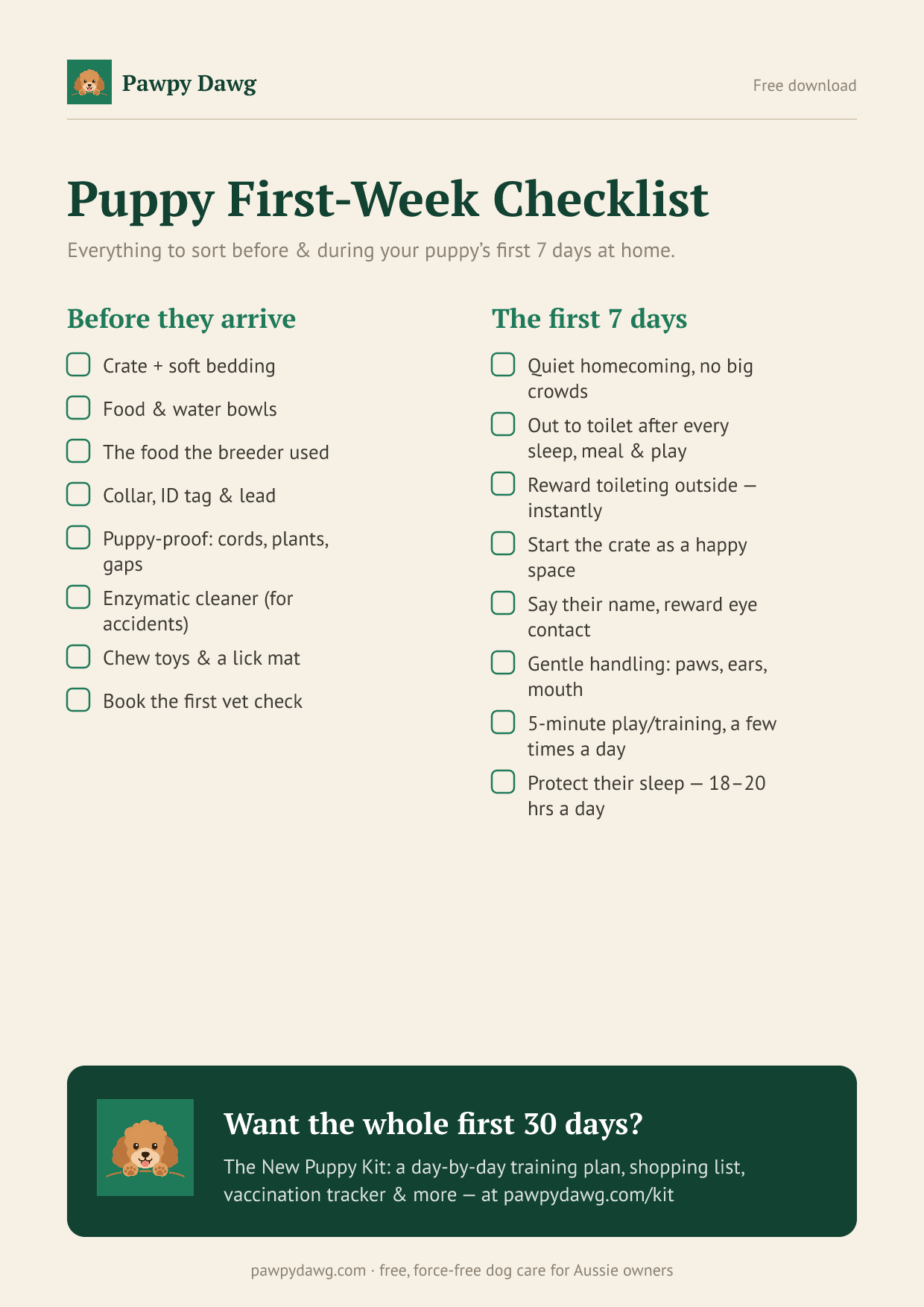
Free printable
Free: the Puppy First-Week Checklist
Everything to sort before and during your puppy's first 7 days home — a printable one-pager. Plus the occasional genuinely useful dog tip. No spam, unsubscribe anytime.