
Itchy Dog? Allergies and Skin Problems in Australian Dogs
Dog allergies and itchy skin in Australia explained — fleas, food, grasses and vet treatment options with costs, so you can get your dog comfortable fast.

Written by Bradley Brown
Founder & editor · Reviewed 2026-11-07
A quick note: this guide is general information, not veterinary advice. For anything urgent or specific to your dog, your vet is always the right call.
Watching your dog scratch, chew their paws, or rub their face raw is exhausting — and the guilt that comes with not knowing what's causing it makes it worse. The good news is that itchy skin is one of the most common reasons Australian dogs visit the vet, so you are absolutely not alone, and you haven't ruined your dog. Most cases are manageable once you identify the trigger.
The Quick Win You Can Try Today
Before anything else, check for fleas — even if you can't see them. Part the fur at the base of the tail and over the lower back and look for tiny black specks (flea dirt). Wet a piece of white paper towel, place some specks on it, and if they turn reddish-brown, that's digested blood: fleas confirmed. One flea can trigger a reaction in a sensitive dog for weeks. Apply a vet-recommended flea treatment (not supermarket brands — many are ineffective) to every pet in the household today, and wash all bedding on a hot cycle. This single step resolves the itch for a large proportion of Australian dogs.
The Three Allergy Types and How to Tell Them Apart
Australian dogs deal with three main allergy categories, and they overlap more often than not.
Flea allergy dermatitis (FAD) is by far the most common, particularly in Queensland, NSW and WA where fleas thrive year-round. The itch concentrates at the rump, tail base and inner thighs. Even one flea bite every few weeks is enough to keep a sensitive dog miserable. Year-round prevention is non-negotiable for FAD dogs.
Environmental allergies (atopy) are triggered by pollens, dust mites, mould spores and grasses. Several Australian native and introduced grasses are notorious culprits: couch grass (Cynodon dactylon), kikuyu (Pennisetum clandestinum), buffalo grass, and rye grass all produce pollens that sensitise atopic dogs. Symptoms typically flare seasonally (spring and autumn for grass pollens, year-round for dust mites) and present as paw licking, face rubbing, recurrent ear infections and a red, inflamed belly. Atopy usually first appears in dogs aged one to three years.
Food allergies are the least common (roughly 10–15% of allergic dogs) but are often over-suspected. The most frequent offenders are proteins the dog has eaten for a long time — beef, chicken, dairy and wheat top the list in Australia. Food allergies don't follow a seasonal pattern, and they often involve gut signs alongside skin signs: loose stools, vomiting, or excessive flatulence alongside the itch.
Reading the Itch: Where It Is Matters
| Location of itch/rash | Most likely trigger |
|---|---|
| Tail base, rump, inner thighs | Flea allergy dermatitis |
| Paws, face, armpits, groin, ears | Environmental allergy (atopy) |
| Paws, face plus gut signs | Food allergy |
| Widespread, with odour/grease | Secondary yeast or bacterial infection |
| Seasonal pattern, young–middle aged dog | Grass/pollen allergy |
A secondary skin infection (yeast or staph bacteria) almost always develops on top of an underlying allergy because broken skin is an open door. The infection needs treating separately — it's not a diagnosis in itself.
Running a Food Elimination Trial
If your vet suspects food allergy, an elimination diet is the gold standard. This means feeding a single novel protein and carbohydrate source your dog has never eaten before — think kangaroo and sweet potato, or a hydrolysed prescription diet — for a strict 8–12 weeks with zero other food: no treats, no flavoured chews, no human food. This is genuinely hard, but it's the only reliable way to confirm food allergy. If the itch improves significantly, you reintroduce old foods one by one to identify the specific culprit. Prescription hydrolysed diets from your vet (brands such as Royal Canin Anallergenic or Hills z/d) cost roughly $120–$180 per month for a medium-sized dog but remove the guesswork on novel proteins.
Vet Treatment Options and What They Cost
Once a trigger is identified — or even while you're investigating — vets have several effective tools:
- Cytopoint injection: A monoclonal antibody that interrupts the itch signal. Works within 24 hours, lasts 4–8 weeks. Cost: approximately $80–$150 per injection depending on dog size and clinic location.
- Apoquel (oclacitinib) tablets: Daily oral medication that controls itch and inflammation within hours. Cost: roughly $2–$4 per tablet; ongoing for atopic dogs.
- Immunotherapy (desensitisation): Allergy testing (intradermal or serology) followed by a custom injection or oral serum. The only treatment that retrains the immune response rather than suppressing it. Best for confirmed atopy. Cost: $400–$800 for initial testing, then $50–$120/month ongoing.
- Medicated shampoos: Chlorhexidine or miconazole shampoos (around $20–$45) treat secondary infections and provide short-term relief. Bathe twice weekly during flare-ups, leave the shampoo on for 10 minutes before rinsing.
- Steroids: Prednisone is effective and cheap (cents per tablet) but carries side effects with long-term use. Best reserved for short-term flare control.
A Simple Daily Routine (Under 10 Minutes)
You don't need a complicated regime. During a flare, focus on three things:
- Paw rinse after walks (2 minutes): Rinse your dog's paws in plain water to remove grass pollen. Pat dry thoroughly — moisture between toes encourages yeast.
- Weekly flea check (2 minutes): Part the coat at the tail base and inspect.
- Targeted spot treatment (2–3 minutes): Apply prescribed medicated spray or wipe to the worst spots — usually paws, groin and ears.
That's it. Consistency over five days beats a one-off bath every time.
Working With Your Vet Efficiently
Bring your vet a photo timeline on your phone: when the itch started, where on the body, what's changed in diet, flea treatment brand and frequency, and whether it's seasonal. This cuts consultation time and helps reach a diagnosis faster. If your regular vet isn't making progress, a veterinary dermatologist is a genuine option — Australia has specialist dermatology clinics in most capital cities, and a single specialist consult often saves months of trial and error.
Dog allergies and itchy skin in Australia are rarely a single-visit fix, but with the right trigger identified, most dogs get to a point where their owners describe them as "almost normal again." That's a realistic and very achievable goal.
Frequently asked questions
What grasses in Australia commonly cause dog allergies?
Couch grass, kikuyu, buffalo grass and rye grass are the most frequent grass allergens affecting dogs across Australia. Symptoms typically flare in spring and autumn when pollen counts are highest. Rinsing your dog's paws after walks on grass can reduce pollen exposure significantly.
How do I know if my dog has a food allergy or environmental allergy?
Food allergies don't follow a seasonal pattern and often come with gut symptoms like loose stools or vomiting alongside skin signs. Environmental allergies tend to be seasonal or year-round but are linked to outdoor exposure. Your vet can help narrow it down based on the itch location, your dog's age, and their history — a food elimination trial or allergy testing may be recommended.
How much does Cytopoint cost in Australia?
Cytopoint injections typically cost between $80 and $150 per injection in Australia, depending on the size of your dog and your clinic's location. Each injection lasts approximately four to eight weeks. It's one of the most effective short-term options for environmental allergy itch.
Can I use a human antihistamine on my itchy dog?
Some antihistamines like cetirizine are occasionally used in dogs, but their effectiveness for skin allergies in dogs is generally modest compared to veterinary-specific treatments like Apoquel or Cytopoint. Always check with your vet before giving any human medication, as some antihistamine formulas contain xylitol or decongestants that are toxic to dogs.
How long does a food elimination diet take to work in dogs?
A proper food elimination trial takes 8–12 weeks of strict adherence to a novel or hydrolysed protein diet with no other food sources. Some dogs show improvement within four weeks, but the full trial period is needed to confirm food allergy reliably. Any treats, flavoured medications or table scraps during this time can invalidate the results.
Why does my dog keep getting ear infections alongside their itchy skin?
Recurrent ear infections are a classic sign of an underlying allergy, particularly environmental atopy — the same inflammation that affects the skin also affects the ear canal lining. Treating just the ear infection without addressing the root allergy cause means the infections will keep returning. Ask your vet to assess your dog for atopy if ear infections are a recurring problem.
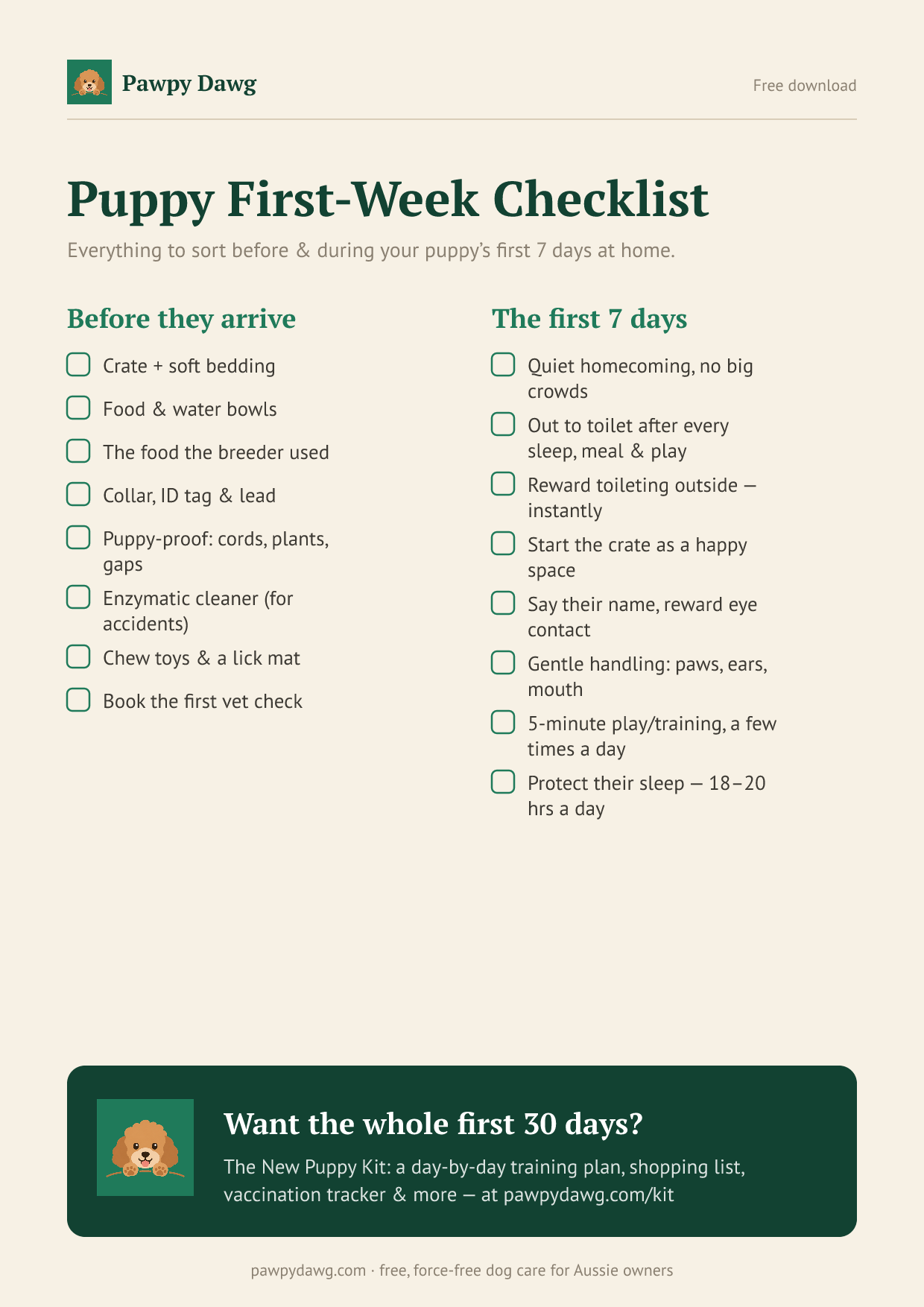
Free printable
Free: the Puppy First-Week Checklist
Everything to sort before and during your puppy's first 7 days home — a printable one-pager. Plus the occasional genuinely useful dog tip. No spam, unsubscribe anytime.
Related guides
Is Pet Insurance Worth It in Australia? The Honest Maths
Is pet insurance worth it in Australia? We crunch real premiums vs real vet bills — cruciate surgery, snake bite & more — so you can decide with confidence.
Read the guide →
How Much a Dog Really Costs Per Year in Australia (2026 Breakdown)
How much does a dog cost per year in Australia? 2026 line-item breakdown covering food, vet, insurance, grooming & the costs first-timers always miss.
Read the guide →
Dog Vaccination Schedule in Australia: What, When and What It Costs
Confused by C3, C5 and kennel cough? Here's your complete dog vaccination schedule Australia cost guide — puppy timelines, adult boosters & typical AUD prices.
Read the guide →