
Is Your Dog Overweight? A Realistic Weight-Loss Plan for Australian Dogs
Overweight dog weight loss made simple: body-condition scoring at home, safe calorie cuts, treat swaps, and how fast to expect results. No guilt, just a plan.

Written by Bradley Brown
Founder & editor · Reviewed 2026-11-10
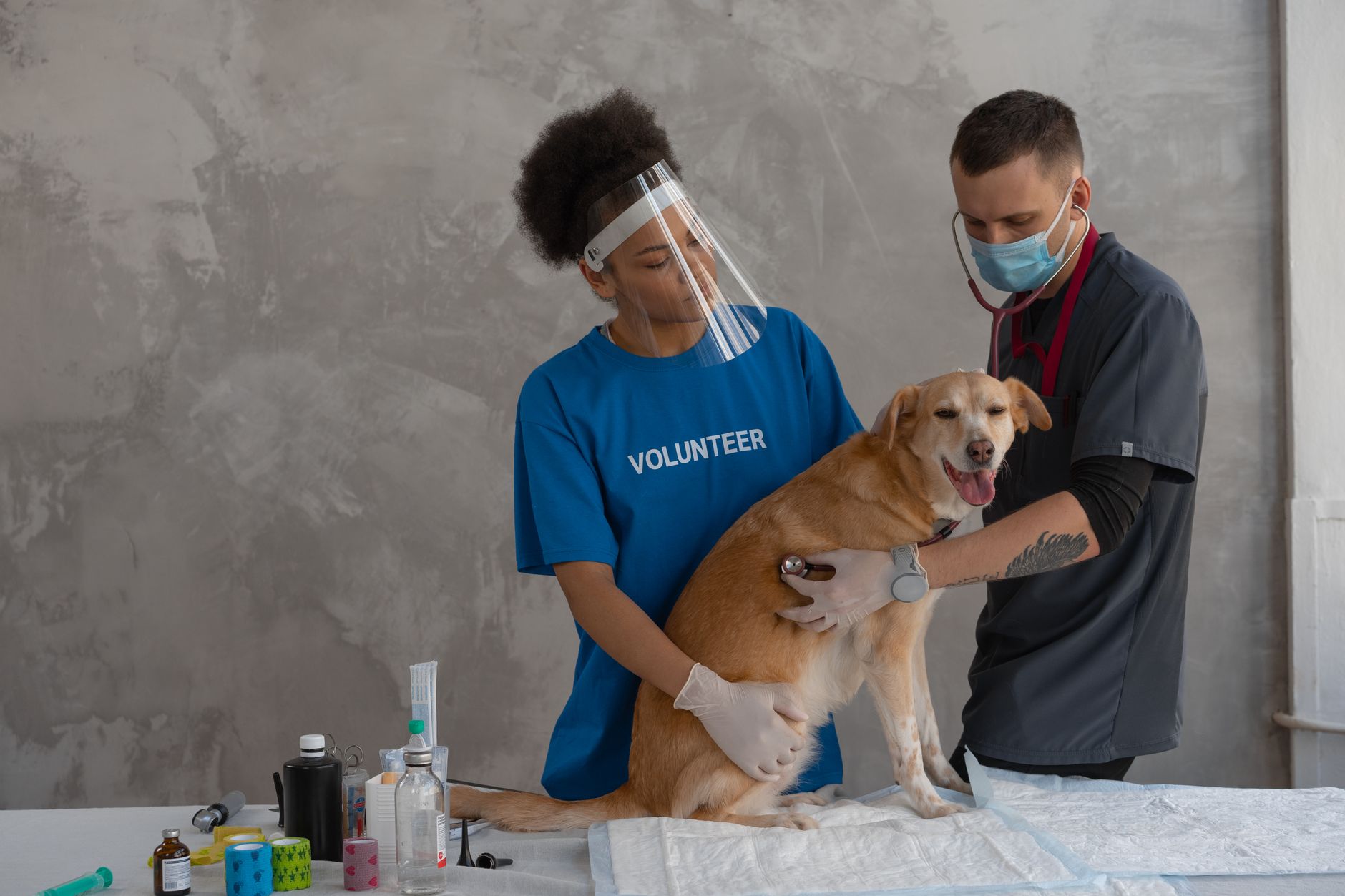
A quick note: this guide is general information, not veterinary advice. For anything urgent or specific to your dog, your vet is always the right call.
Most dogs don't get fat because their owners are neglectful. They get fat because modern kibble is calorie-dense, treat packaging is misleading, and dogs are brilliant at looking hungry even after a full meal. If your dog has a bit of a belly and you're wondering what to actually do about it, here's a clear-eyed look at your options.
Check First: Does Your Dog Actually Need to Lose Weight?
Before changing anything, run a body condition score (BCS) check at home. Vets use a 9-point scale; here's what matters at each end of it:
Ribs: Slide your hands along your dog's ribcage with flat palms — no pressing hard. You should feel ribs easily, like knuckles under a thin blanket. If you have to push to find them, your dog is carrying excess weight. If they protrude visibly, they're underweight.
Waist: Looking from above, there should be a visible tuck behind the ribs. From the side, the belly should slope upward toward the hind legs.
Belly pad: A soft, pendulous belly — especially the fat pad that swings when they trot — is a reliable sign of excess body fat, even in dogs whose ribs you can still feel.
A BCS of 6–7 out of 9 means modest overweight; 8–9 means significantly overweight and worth a vet check to rule out thyroid issues or joint pain before you start a plan.
Three Ways to Tackle It — and Who Each One Suits
Option 1: Adjust what you're already feeding
How it works: Calculate your dog's current daily calorie intake (kibble bag feeding guides are notoriously generous — written to sell more food). Most adult dogs need roughly 20–30% fewer calories than the bag suggests to actually lose weight. Cut kibble by around 20%, hold treats to under 10% of daily calories, and reweigh in four weeks.
Who it suits: Dogs that are mildly overweight (BCS 6), eating standard kibble, and in otherwise good health. Also ideal for owners who want a low-effort starting point.
Who it doesn't suit: Dogs with health conditions (hypothyroidism, Cushing's disease, post-desexing weight gain that hasn't responded before), or dogs more than 20% above their ideal weight. It also struggles if your household has multiple feeders — portion creep undoes everything.
Option 2: Switch to a veterinary weight-management food
How it works: Prescription or vet-channel weight-management diets (brands like Royal Canin Satiety, Hills Metabolic, or Purina Pro Plan Weight Management) are specifically formulated to deliver fewer calories per cup while keeping fibre and protein high enough that the dog feels full. You often feed a larger volume than regular food, which is psychologically easier for owners and more satisfying for the dog.
Who it suits: Dogs that are significantly overweight, seem ravenous on reduced-ration standard kibble, or have failed a simple portion-cut approach before. Also suits multi-pet households where it's hard to separate feeding, since swapping the food removes the mental load of calculating.
Who it doesn't suit: Tight budgets — these foods run $90–$180 for a 12 kg bag, and results still require discipline on treats. Also less useful if your dog is a free-grazer who self-regulates naturally.
Option 3: A vet-supervised plan with regular weigh-ins
How it works: Your vet calculates a target weight and a precise daily calorie target, may run bloodwork to rule out metabolic causes, and schedules monthly weigh-ins (many clinics do these free or for a small fee). Some clinics run dedicated weight clinics with nurses.
Who it suits: Dogs with a BCS of 8–9, those with joint disease (where even 1–2 kg matters enormously for pain levels), dogs on medications that affect weight, or owners who have tried options 1 or 2 and stalled.
Who it doesn't suit: Owners who genuinely won't make it to monthly appointments — an unsupervised "vet plan" is just a plan with no accountability, which isn't better than option 1.
The Clear Pick for Most Dogs
Option 1 or 2 depending on how hungry your dog acts. For a mildly overweight dog with no health issues, start with a 20% kibble reduction and honest treat tracking for four weeks. If your dog seems miserable, raids bins, or loses weight too fast, move to a satiety-formulated food — it makes the process far more sustainable. Only escalate to a full vet plan if there's a medical complication or you've genuinely tried and stalled twice.
Treats That Won't Undo the Work
Treats are where most weight-loss plans collapse. A single commercial dog treat can pack 40–80 kcal — that's 10–20% of a small dog's daily allowance in one biscuit.
| Treat | Approx. kcal | Notes |
|---|---|---|
| Plain rice cake (broken quarter) | 8–10 kcal | Dogs love the crunch |
| Baby carrot | 4–5 kcal | Most dogs accept these readily |
| Frozen green bean | 3–4 kcal | High fibre, very low cal |
| Small cube of cooked chicken breast | 5–8 kcal | High value for training |
| Commercial dog biscuit (medium) | 40–80 kcal | Use sparingly or swap out |
Deduct treat calories from the daily kibble allowance — this is non-negotiable if you want progress.
How Fast Should You Expect Results?
Safe weight loss in dogs is 1–2% of body weight per week. For a 20 kg Labrador that should be 18 kg, that's roughly 200–400 g per week. Any faster risks muscle loss and nutritional deficiency; any slower and you need to revisit the numbers.
Expect to see a meaningful change in body condition at the six-to-eight-week mark, not the two-week mark. Reweigh monthly on the same scale, same time of day. If there's been zero movement after eight weeks despite genuine adherence to the plan, that's the moment to book a vet visit — it's worth checking thyroid function, especially in middle-aged dogs and certain breeds (Labrador Retrievers, Cocker Spaniels, Dobermanns, Golden Retrievers).
Five to ten minutes a day of slightly longer walks also helps — not as a punishment, but because light activity preserves muscle while fat drops. You don't need to overhaul your life; a walk around the block twice instead of once is a genuine contribution.
Frequently asked questions
How do I know if my dog is overweight or just a big breed?
Use the body condition score check rather than relying on weight alone — a large dog can be a healthy weight for their frame, or genuinely overweight, and the number on the scale won't tell you which. Run your hands along the ribcage: if you can't feel ribs without pressing firmly, that's excess fat regardless of breed size. Your vet can confirm with a formal BCS assessment at any routine visit.
My dog acts starving all the time — how do I cut calories without it being cruel?
Switch to a high-fibre, high-protein weight-management food rather than simply feeding less of a standard kibble — your dog will often eat a larger volume for fewer calories. You can also add low-calorie bulkers like steamed green beans or grated zucchini to the bowl. Splitting the daily ration into two or three smaller meals instead of one also reduces the time between feeds, which helps dogs feel less deprived.
Can I just increase exercise instead of reducing food?
Exercise alone rarely produces meaningful weight loss in dogs — it increases appetite at roughly the same rate as it burns calories. A 30-minute walk burns around 80–100 kcal for a medium dog, which is about one commercial treat. Modest calorie reduction is far more effective, with exercise playing a supporting role in preserving muscle mass during the process.
How long does it realistically take for a dog to lose weight?
Safe loss is 1–2% of body weight per week, so a dog that needs to lose 2 kg should take roughly 10–20 weeks. Rushing it faster than this risks muscle loss and nutritional gaps. Set a six-to-eight-week review to assess progress rather than expecting visible changes in the first fortnight.
Are vegetables safe to use as low-calorie treats for dogs?
Many are — carrots, green beans, cucumber, zucchini, and broccoli (in small amounts) are all safe and very low in calories. Avoid grapes, onions, garlic, and corn cobs, which are toxic or pose choking risks. Introduce any new vegetable in small amounts first to check your dog tolerates it digestively.
My dog was fine until they were desexed — is that why they gained weight?
Yes, desexing lowers metabolic rate and can increase appetite, particularly in dogs desexed before 12 months. It's a genuine physiological change, not a reflection of your care. Post-desexing, most dogs need around 20–30% fewer calories than before the procedure to maintain a healthy weight, so reducing portions proactively at that point is a smart move.
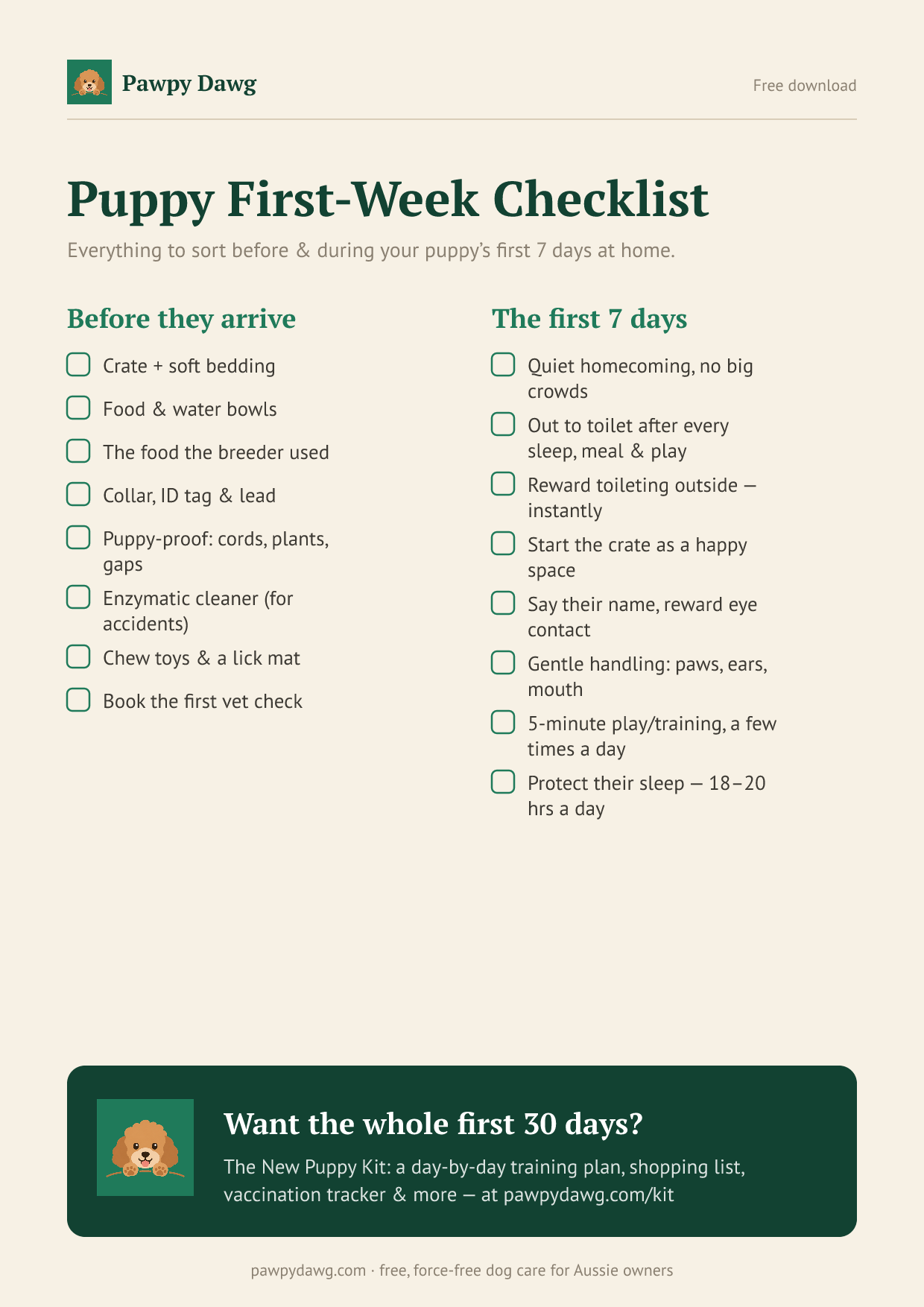
Free printable
Free: the Puppy First-Week Checklist
Everything to sort before and during your puppy's first 7 days home — a printable one-pager. Plus the occasional genuinely useful dog tip. No spam, unsubscribe anytime.
Related guides

Is Pet Insurance Worth It in Australia? The Honest Maths
Is pet insurance worth it in Australia? We crunch real premiums vs real vet bills — cruciate surgery, snake bite & more — so you can decide with confidence.
Read the guide →
How Much a Dog Really Costs Per Year in Australia (2026 Breakdown)
How much does a dog cost per year in Australia? 2026 line-item breakdown covering food, vet, insurance, grooming & the costs first-timers always miss.
Read the guide →
Dog Vaccination Schedule in Australia: What, When and What It Costs
Confused by C3, C5 and kennel cough? Here's your complete dog vaccination schedule Australia cost guide — puppy timelines, adult boosters & typical AUD prices.
Read the guide →