
Heartworm Prevention for Dogs in Australia: What You Need and What It Costs
Yearly injection or monthly chews? Get the real facts on heartworm prevention for dogs in Australia — risks by region, testing needs, and true annual costs.

Written by Bradley Brown
Founder & editor · Reviewed 2026-11-05

A quick note: this guide is general information, not veterinary advice. For anything urgent or specific to your dog, your vet is always the right call.
The worst advice doing the rounds about heartworm is deceptively simple: "My dog lives indoors, so I don't need to worry about it." It sounds reasonable — mosquitoes are an outside problem, right? The trouble is that mosquitoes don't particularly care about your flyscreen. One bite from an infected mosquito is all it takes to transmit Dirofilaria immitis, the parasite that causes heartworm disease. Indoor dogs get bitten too. That misconception leads owners to skip prevention entirely, and because heartworm shows no obvious symptoms for years, the disease is well advanced before anyone realises something is wrong. Treatment at that stage is expensive, risky, and hard on the dog.
Here's what you actually need to know.
"Heartworm Is Only a Problem Up North"
The reality: Tropical Queensland and the Northern Territory do carry the highest risk — warm, humid climates mean mosquitoes breed year-round, so transmission pressure never drops. But heartworm has been confirmed in dogs across all Australian states, including Victoria, South Australia, and Western Australia. Anywhere mosquitoes exist, the risk exists, and Australian mosquito seasons are lengthening.
The practical takeaway: if your vet is in Cairns, year-round prevention is non-negotiable. If you're in Melbourne, the risk is lower but not zero — particularly if you travel north with your dog or live near water where mosquitoes breed. Talk to your vet about the specific risk level in your area, but don't assume a southern postcode means you're off the hook entirely.
"If My Dog Had Heartworm, I'd Know About It"
The reality: Heartworm is nicknamed the "silent disease" for good reason. Dogs infected with heartworm can appear completely healthy for one to three years while adult worms quietly take up residence in the heart and pulmonary arteries. By the time classic signs appear — coughing, lethargy, reduced exercise tolerance, laboured breathing — the worm burden is often substantial and organ damage has already occurred.
This is why vets require a blood test before starting any prevention protocol on a dog that hasn't been on continuous prevention. Starting a preventive product on a dog that already carries adult heartworms can cause a severe, sometimes fatal reaction. The test takes a few minutes in-clinic and costs roughly $50–$80. It's not a money grab — it's a genuinely important safety step.
"The Yearly Injection Is Easier, So It Must Be Better"
The reality: The yearly injection (proheart SR-12, containing moxidectin) is genuinely convenient — one visit, done for twelve months — and for owners who struggle with monthly routines, that reliability is a real clinical advantage. Missed doses are a common cause of prevention failure, so if monthly chews slip your mind, the injection may well be the better practical choice for your dog.
But "easier" and "better" aren't always the same thing. Here's how the two main options compare in plain terms:
Annual injection (e.g. ProHeart SR-12)
- One vet visit per year for the injection itself
- No risk of missed doses or the dog spitting out a tablet
- Must be given by a vet, so there's a consultation fee each time
- Not suitable for sick, underweight, or debilitated dogs, or for certain breeds with known drug sensitivities — your vet will screen for this
- Approximate annual cost: $80–$150 for the injection, plus a consult fee of $70–$100, so roughly $150–$250 per year depending on dog size and clinic location
Monthly chewables or tablets (e.g. Heartgard, NexGard Spectra, Simparica Trio, Interceptor Spectrum)
- Administered at home — no vet visit required each month
- Many combination products also cover intestinal worms, fleas, and ticks, which can simplify your overall parasite control
- Requires consistent monthly reminders (phone calendar reminders work well)
- Approximate annual cost: $120–$220 per year depending on the product, dog's weight, and whether you buy single or multi-packs
The honest cost comparison: they're in a similar range. Combination monthly products often provide better overall value if you'd otherwise be buying separate flea and tick treatments. If you currently pay for separate flea, tick, and heartworm products, running the numbers on a combination chewable is worth doing.
One more thing worth knowing: neither option is available without veterinary involvement. Monthly chewables require a prescription or are sold through a vet or licensed online pharmacy. This isn't bureaucratic inconvenience — it ensures the right product for your dog's weight, health status, and local parasite pressures.
"Once I Start Prevention, I Can Stop in Winter"
The reality: Stopping prevention over winter is risky, particularly in warmer parts of Australia where mosquito activity doesn't halt completely. More importantly, even in genuinely cold regions where mosquitoes disappear for a few months, heartworm preventives work retrospectively — a monthly dose given now kills larvae acquired over the past month. If you stop for three months and restart, you've left a window where larvae from late-season bites can mature before being killed. Year-round, uninterrupted prevention is what the product data and veterinary guidelines actually recommend.
If cost is the barrier to staying consistent, talk to your vet. Some clinics offer payment plans, and buying a 12-month pack of monthly chewables upfront is usually cheaper than buying monthly.
What to Actually Do
- Book a vet check if your dog isn't on current prevention. Get the heartworm antigen test first — it's a non-negotiable safety step before starting any product.
- Decide on injection vs. monthly based on your lifestyle, not just convenience. If you travel with your dog, have a large multi-dog household, or struggle with monthly routines, discuss the injection. If you want flea and tick coverage bundled in, a combination monthly chewable likely makes more sense.
- Set a reminder. Monthly chewables given on the same date each month take about 30 seconds. Put it in your phone now.
- Don't skip the annual vet visit even if you use monthly prevention. A yearly check ensures the product is still appropriate as your dog ages and their weight changes.
Heartworm prevention for dogs in Australia is one of the genuinely straightforward parts of dog ownership once you've chosen your method. The disease itself is serious; preventing it isn't complicated.
Frequently asked questions
Does my dog need a heartworm test before starting prevention?
Yes — if your dog hasn't been on continuous heartworm prevention, a blood test is needed before you start. Starting a preventive product on a dog that already has adult heartworms can trigger a serious or fatal reaction. The test is quick and costs roughly $50–$80 at most Australian vet clinics.
How much does heartworm prevention cost per year in Australia?
Both main options — the annual injection and monthly chewables — typically cost between $150 and $250 per year for most dogs, depending on size, product, and clinic. Combination monthly products that also cover fleas and ticks can offer better overall value if you're currently buying separate treatments.
Is heartworm a risk in southern Australia, or only in the tropics?
Heartworm has been diagnosed in dogs across all Australian states, not just tropical Queensland and the Northern Territory. The risk is highest in warm, humid regions, but anywhere mosquitoes are present, there is some level of risk. Your vet can advise on the specific risk level in your area.
What is the ProHeart SR-12 injection and how does it work?
ProHeart SR-12 is a slow-release injectable heartworm preventive containing moxidectin, administered by a vet once a year. It works by releasing medication gradually to kill heartworm larvae before they can mature into adult worms. It's a good option for owners who find monthly dosing difficult to maintain consistently.
Can I buy heartworm prevention for my dog without going to a vet?
In Australia, heartworm preventives — whether injectable or oral — require veterinary involvement. Monthly chewables need a prescription or must be sourced through a vet or licensed online veterinary pharmacy. This ensures your dog receives the correct product and dose, and that testing is done if needed before starting.
What happens if I miss a month of heartworm prevention?
Missing a single monthly dose creates a window where heartworm larvae picked up from a mosquito bite could potentially survive and begin maturing. If you've missed more than one dose or are unsure how long the gap has been, see your vet before restarting — they may recommend retesting before continuing prevention.
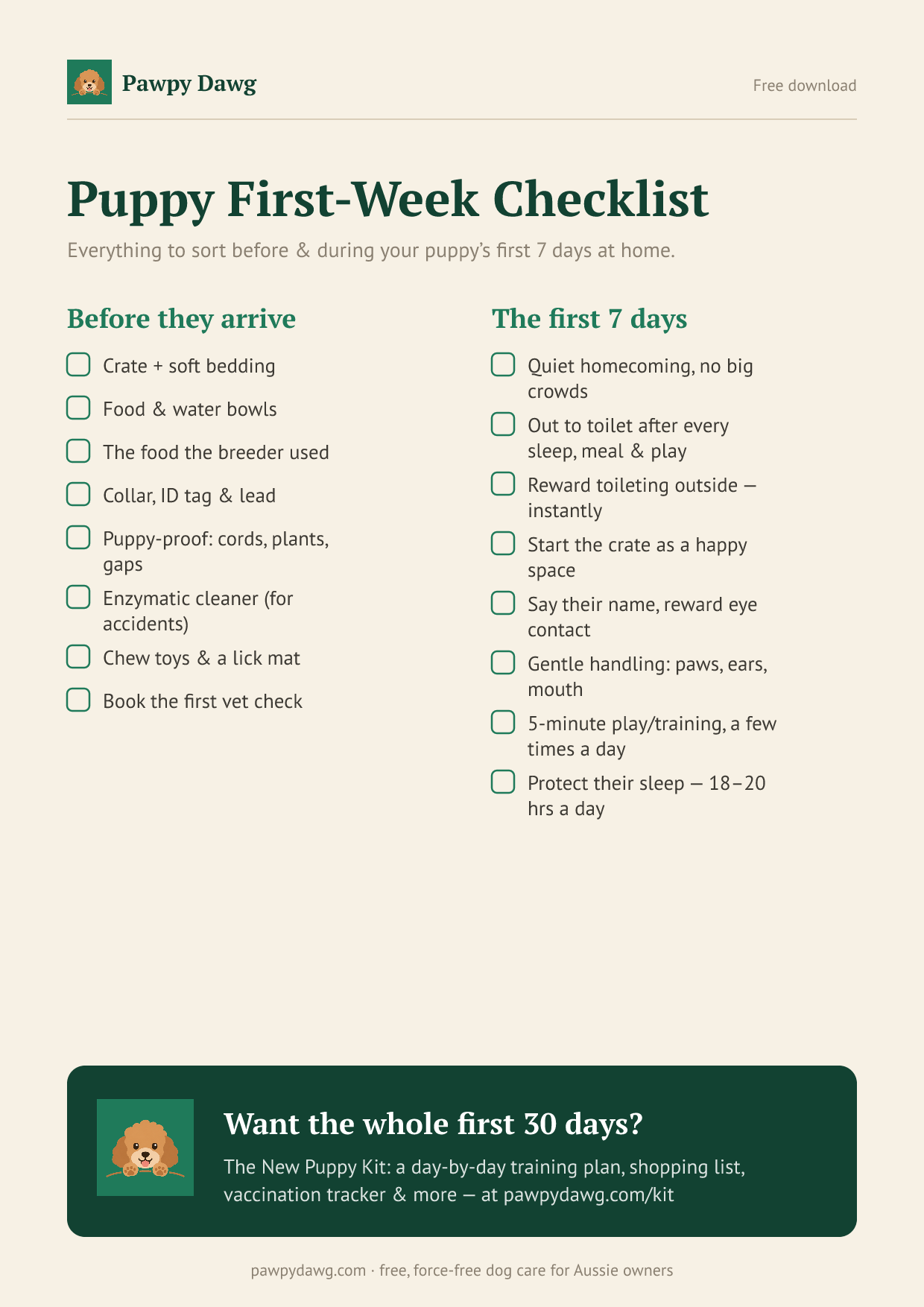
Free printable
Free: the Puppy First-Week Checklist
Everything to sort before and during your puppy's first 7 days home — a printable one-pager. Plus the occasional genuinely useful dog tip. No spam, unsubscribe anytime.
Related guides

Is Pet Insurance Worth It in Australia? The Honest Maths
Is pet insurance worth it in Australia? We crunch real premiums vs real vet bills — cruciate surgery, snake bite & more — so you can decide with confidence.
Read the guide →
How Much a Dog Really Costs Per Year in Australia (2026 Breakdown)
How much does a dog cost per year in Australia? 2026 line-item breakdown covering food, vet, insurance, grooming & the costs first-timers always miss.
Read the guide →
Dog Vaccination Schedule in Australia: What, When and What It Costs
Confused by C3, C5 and kennel cough? Here's your complete dog vaccination schedule Australia cost guide — puppy timelines, adult boosters & typical AUD prices.
Read the guide →