
Dog Vomiting: When to Wait It Out and When to See the Vet
Dog vomiting when to see vet — know the red flags, what to do in the first 24 hours, and when it's safe to wait with a bland diet at home.

Written by Bradley Brown
Founder & editor · Reviewed 2026-11-10
A quick note: this guide is general information, not veterinary advice. For anything urgent or specific to your dog, your vet is always the right call.
Six things that actually determine whether vomiting is serious
Most dogs vomit occasionally and bounce back within hours. The job in that first window is working out whether you're dealing with a self-resolving stomach upset or something that needs a vet today. These six points are what experienced owners and vets use to make that call:
- Count the vomits and note the timing. One or two episodes then nothing? Probably fine to watch. Vomiting that keeps happening every 20–30 minutes is a red flag.
- Check for blood. Fresh red blood or dark "coffee-ground" material in the vomit means call your vet now, not in the morning.
- Look at the abdomen. A bloated, hard, or visibly distended belly — especially in a large or deep-chested breed — is an emergency. This can signal GDV (gastric dilatation-volvulus), which is life-threatening.
- Watch for other symptoms alongside the vomiting. Lethargy, pale or white gums, collapse, or severe pain escalate this from "upset stomach" to "leave now."
- Think about what they may have eaten. Known toxins (xylitol, grapes, raisins, macadamias, human medications) or possible foreign-body ingestion (toys, socks, bones) change the equation entirely.
- Factor in your dog's history. A puppy, a senior dog, or one with a known condition like kidney disease, diabetes, or Addison's disease warrants a lower threshold for calling the vet.
One or two vomits: what's usually behind it
The most common reasons a healthy adult dog vomits once or twice and then acts perfectly normal are genuinely undramatic: eating too fast, raiding the bin, chewing grass, or a sudden food change. Motion sickness accounts for a surprising number of panicked calls to vets after family road trips.
Bilious vomiting syndrome — that yellow foamy bile dogs produce first thing in the morning — is also common and usually harmless. It tends to happen when the stomach has been empty too long overnight. Feeding a small meal before bed often stops it.
The mistake owners make here is catastrophising a single vomit while simultaneously not noticing ongoing vomiting because "he seems fine." Keep an eye on frequency and behaviour together.
The first 24 hours at home
If your dog has vomited once or twice, is otherwise bright, alert, and not showing any red flags from the checklist above, a 24-hour watchful wait at home is reasonable for healthy adult dogs.
What to do:
- Withhold food for 2–4 hours to let the stomach settle. Water in small amounts is fine; don't withhold it.
- After that rest period, offer a bland diet: plain boiled chicken (no skin, no seasoning) with plain white rice, or plain boiled white fish with rice. Small portions, three to four times across the day rather than one big meal.
- Keep the portions modest — about half what you'd normally feed — for 24–48 hours, then gradually reintroduce their regular food over the following two days.
- Watch for repeat vomiting, any change in energy or gum colour, diarrhoea that becomes bloody, or signs of abdominal pain (hunching, reluctance to move, whining when touched).
If vomiting returns during this window, or if your dog hasn't improved after 24 hours, that's your cue to book a vet appointment rather than extending the wait.
Vomiting in puppies: shorter fuse, faster action
Puppies do not get the 24-hour grace period that healthy adults do. They dehydrate quickly and can go downhill fast. Parvovirus is a genuine, life-threatening risk in unvaccinated or incompletely vaccinated puppies, and vomiting is one of its earliest signs. If a puppy vomits more than once or seems at all lethargic, same-day vet assessment is warranted — don't wait to see how tonight goes.
Signs that mean an emergency vet visit right now
Don't wait for business hours if you see any of the following:
- Repeated vomiting that isn't stopping, especially if unproductive (retching without bringing anything up)
- Blood in vomit — either bright red or dark and grainy
- Bloated or distended abdomen, particularly in Labradors, Great Danes, German Shepherds, Weimaraners, and other deep-chested breeds
- Pale, white, blue, or grey gums — this signals circulatory shock
- Known or suspected ingestion of a toxin or foreign object
- Collapse, extreme weakness, or seizures
- Vomiting alongside suspected heatstroke (panting heavily, disorientated, been in a hot car or outside in Australian summer heat)
Emergency vet clinics operate after hours across most Australian capital cities and many regional centres. The cost of an after-hours consult — typically $200–$500 AUD or more for treatment — feels steep, but delayed treatment for GDV or toxin ingestion can be fatal within hours. If you're uncertain, call ahead: most clinics will triage over the phone and tell you whether to come in immediately.
What to expect day by day
Day 1: One or two vomits, then nothing. Dog is alert and interested in the world. Bland diet, small meals, close observation.
Day 2: Most straightforward cases resolve here. Dog should be holding food down and acting like themselves. Begin mixing bland food with regular food (roughly 75/25 bland to normal).
Day 3: Gradual transition continues (50/50). No new vomiting. If your dog is still vomiting at this point with no improvement, book the vet — don't go to day four without an answer.
Day 4–5: Full return to normal diet if all is well. If you notice vomiting recurs every time you reintroduce regular food, that's worth investigating — could be a food sensitivity or something the vet should assess.
Recurring vomiting over weeks, gradual weight loss alongside occasional vomiting, or vomiting that only happens at a specific time of day are all patterns worth raising with your vet even when no single episode looks dramatic. Chronic, low-grade symptoms are easier to miss and easier to dismiss — but they usually have an answer.
Frequently asked questions
My dog vomited once and seems fine — do I need to go to the vet?
Usually not, if your dog is bright, alert, and not showing any red flags like blood in the vomit, a distended belly, or pale gums. Withhold food for a couple of hours, then offer small amounts of bland food and watch closely over the next 24 hours. Call your vet if vomiting returns or your dog's condition changes.
What is the best bland diet for a dog that has been vomiting?
Plain boiled chicken breast (no skin, no seasoning) mixed with plain white rice is the standard go-to. Plain boiled white fish with rice is a good alternative. Feed small portions three or four times a day rather than one large meal, and gradually reintroduce their normal food over two days once they're holding things down.
Why does my dog vomit yellow foam in the morning?
This is typically bilious vomiting syndrome — the stomach is empty overnight and bile irritates the lining, causing that yellow foamy vomit. It's usually harmless. Feeding a small meal before bed, or splitting daily food into more frequent smaller meals, often resolves it. If it's happening daily or is accompanied by other symptoms, mention it to your vet.
Can I give my dog anything from the medicine cabinet when they're vomiting?
No. Human medications including Pepto-Bismol, Imodium, and many others can be toxic to dogs. Never give your dog any medication without specific guidance from your vet. If you're concerned your dog needs medication, call your vet or an after-hours clinic for advice.
How do I know if my dog ate something toxic and that's why they're vomiting?
Think back over the last few hours — did they have unsupervised access to the kitchen, bin, garden, or someone's bag? Common Australian household toxins include xylitol (in sugar-free gum and some peanut butters), grapes, raisins, macadamia nuts, chocolate, and human medications. If toxin ingestion is possible, don't wait — call your vet or the Animal Poisons Helpline (1300 869 738) immediately.
How long is too long for a dog to keep vomiting before seeing the vet?
If vomiting is happening repeatedly within a short period, hasn't stopped after 24 hours, or is accompanied by any other worrying signs, that's too long to wait at home. A healthy adult dog with a single mild episode can be watched for 24 hours, but puppies, seniors, and dogs with underlying conditions should be seen the same day.
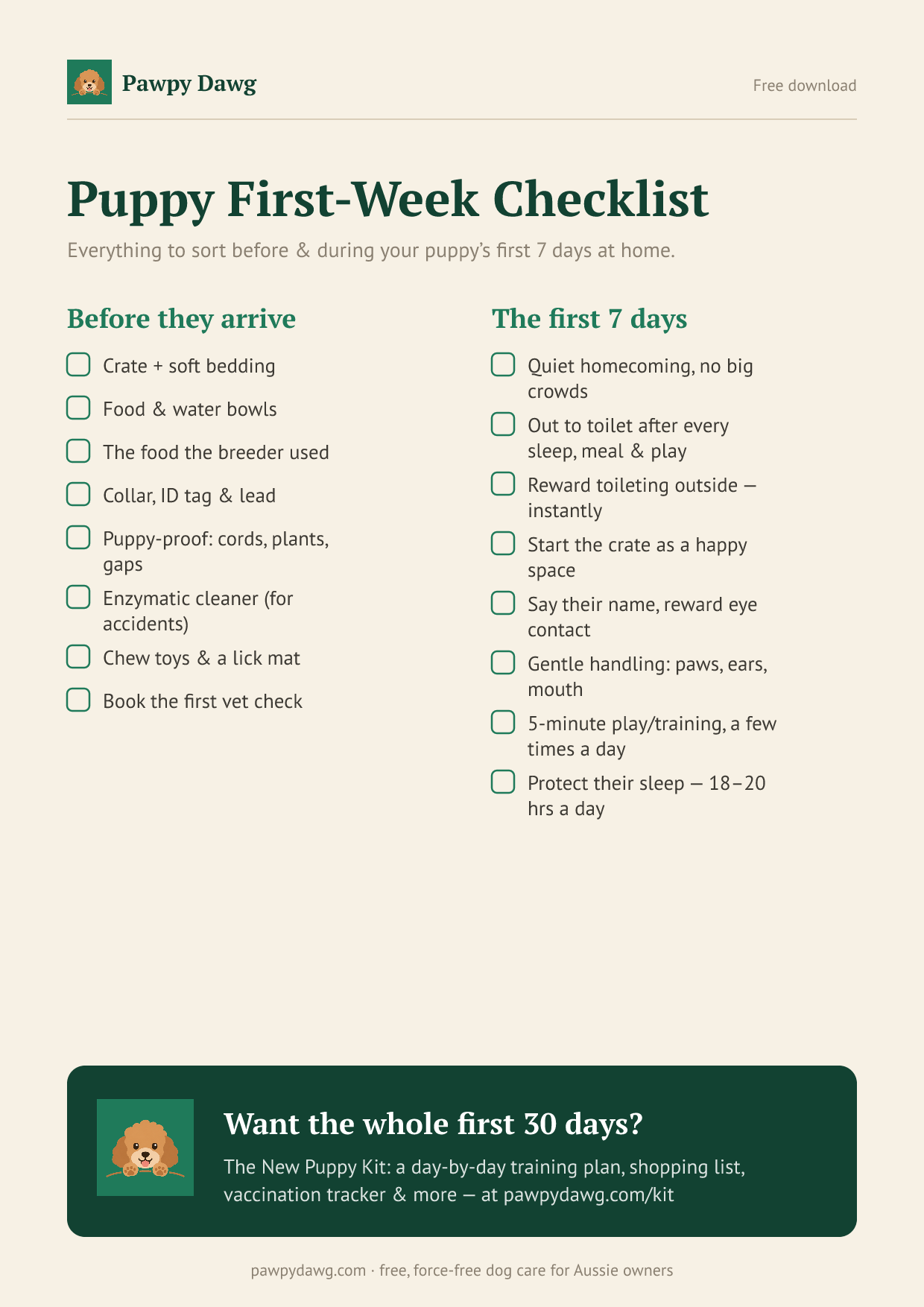
Free printable
Free: the Puppy First-Week Checklist
Everything to sort before and during your puppy's first 7 days home — a printable one-pager. Plus the occasional genuinely useful dog tip. No spam, unsubscribe anytime.
Related guides

Is Pet Insurance Worth It in Australia? The Honest Maths
Is pet insurance worth it in Australia? We crunch real premiums vs real vet bills — cruciate surgery, snake bite & more — so you can decide with confidence.
Read the guide →
How Much a Dog Really Costs Per Year in Australia (2026 Breakdown)
How much does a dog cost per year in Australia? 2026 line-item breakdown covering food, vet, insurance, grooming & the costs first-timers always miss.
Read the guide →
Dog Vaccination Schedule in Australia: What, When and What It Costs
Confused by C3, C5 and kennel cough? Here's your complete dog vaccination schedule Australia cost guide — puppy timelines, adult boosters & typical AUD prices.
Read the guide →