
Dog Ear Infections: Signs, Causes and What Treatment Costs in Australia
Dog ear infection Australia: spot the signs early, understand why some dogs are prone, and know your treatment options before the vet bill surprises you.

Written by Bradley Brown
Founder & editor · Reviewed 2026-11-10
A quick note: this guide is general information, not veterinary advice. For anything urgent or specific to your dog, your vet is always the right call.
That head-shaking, the smell, the way your dog won't stop pawing at one ear — ear infections are one of the most common reasons Australian dogs visit the vet, and they're almost always very treatable. The tricky part is knowing what you're actually dealing with, which treatment path makes sense, and whether anything you're doing at home is helping or quietly making things worse.
What You're Actually Seeing (and Smelling)
Ear infections in dogs — medically called otitis externa when they affect the outer ear canal — announce themselves pretty loudly once you know the signs:
- Head shaking or tilting, especially repeated shaking after waking up
- Scratching at one or both ears, sometimes hard enough to cause small cuts or scabs around the ear flap
- Redness or swelling inside the ear flap or just inside the canal opening
- Dark, waxy or yellow/green discharge that looks different from normal light-brown wax
- A yeasty, musty or just plain foul smell — this is one of the clearest signals something is wrong
- Sensitivity when you touch the ear — your dog may flinch, pull away or vocalise
An infection that's moved deeper (middle or inner ear) may cause balance problems, a head tilt that doesn't resolve, or unusual eye movements. That warrants a same-day vet call rather than a wait-and-see approach.
Why Some Dogs Get Them Constantly
Ear infections don't happen randomly. There's almost always an underlying reason, and knowing it determines whether you'll be back at the vet in six weeks with the same problem.
Ear shape is a major factor. Dogs with long, floppy ears — Cocker Spaniels, Basset Hounds, Labradoodles, Golden Retrievers — have ear canals that trap warmth and moisture, creating ideal conditions for yeast and bacteria to multiply. The same goes for dogs with very hairy ear canals, like Poodles.
Swimming and bathing are significant contributors, particularly for Australian dogs who spend summer in backyard pools, at the beach, or in rivers. Water that sits in the canal after a swim is a reliable trigger. This is why a beach-loving Labrador in Queensland may need far more ear maintenance than the same breed living in a dry inland climate.
Allergies are the most underestimated cause. Dogs with environmental or food allergies frequently show it through their ears and paws rather than sneezing. If your dog gets recurrent infections despite correct treatment, talk to your vet about allergy testing — treating the ear alone won't break the cycle.
Other contributors include hormonal conditions like hypothyroidism, ear mites (more common in puppies and multi-pet households), and foreign bodies like grass seeds, which are a real risk during Australian summer and autumn.
Three Treatment Paths — Which One Suits Your Dog
Option 1: Vet diagnosis and prescription treatment
Who it's for: First-time infections, any infection with significant pain or discharge, infections in dogs with a history of recurrence, and any case where you're genuinely unsure what's going on.
A vet will use an otoscope to examine the canal and typically take a swab for cytology — a quick in-clinic microscope check to identify whether the infection is bacterial, yeast-based, or both. This matters because the wrong treatment (antifungal drops on a bacterial infection, for example) will not work.
Prescription ear drops typically combine an antifungal, an antibiotic, and a mild steroid to reduce inflammation. Treatment courses usually run 7–14 days. Severe or chronic cases may require a professional ear flush under sedation before drops can penetrate the canal effectively.
Cost in Australia: A standard consult plus ear drops generally runs $120–$220 AUD at a metropolitan clinic. Add a cytology swab ($30–$60) and costs climb. An ear flush under sedation can be $300–$600 AUD or more. Pet insurance with illness cover usually includes ear infections — worth checking your policy before the visit.
Who it doesn't suit: Owners whose dog has a known, stable history of mild yeast flare-ups and whose vet has previously confirmed the pattern — in those cases, a quick phone call to the clinic may be enough to get a repeat script.
Option 2: At-home ear cleaning (maintenance, not treatment)
Who it's for: Dogs prone to build-up or mild wax accumulation, dogs who swim regularly, and owners maintaining ear health between vet-confirmed infections.
A good veterinary ear cleaner (look for ones with a drying agent if your dog swims) used once a week or after every swim can genuinely reduce infection frequency. Squeeze a small amount into the canal, massage the base of the ear for 20–30 seconds, then let your dog shake — the cleaner loosens debris and brings it to the surface. Wipe the visible part of the ear flap and the opening with a cotton ball. Never use cotton buds inside the canal.
What it won't do: Resolve an active infection. If there's already redness, smell or discharge, cleaning alone will not clear it. You need a vet diagnosis first.
Products: Epi-Otic, PAW Gentle Ear Cleaner and Virbac Ear Cleaner are widely available from Australian vet clinics and pet stores ($18–$35 AUD). Avoid home remedies involving vinegar or hydrogen peroxide — both can irritate already-inflamed tissue.
Option 3: Doing nothing and hoping it resolves
Who it's for: Nobody, honestly.
Ear infections do not reliably self-resolve in dogs the way minor human ear irritations sometimes do. Left untreated, they progress deeper into the canal, become significantly more painful, and can eventually cause permanent narrowing of the canal or hearing loss. The cost of treating a chronic, advanced infection is many times higher than catching it early.
The Practical Upshot
For most dogs presenting with their first ear infection, Option 1 is the clear call — get a proper diagnosis, use the right drops, and finish the full course. Then shift to Option 2 as ongoing maintenance, especially if your dog swims or has floppy ears.
| Option 1: Vet + Prescription | Option 2: Home Cleaning | Option 3: Wait It Out | |
|---|---|---|---|
| Active infection | ✅ Correct choice | ❌ Not sufficient | ❌ Risky |
| Preventive maintenance | Not needed | ✅ Correct choice | ❌ Misses the point |
| Recurrent infections | ✅ Plus investigate why | ✅ Between episodes | ❌ Guarantees recurrence |
| Cost | $120–$600+ AUD | $18–$35 AUD | Likely higher long-term |
If your dog has had three or more infections in a year, that's the signal to push your vet for an underlying cause rather than just treating each episode in isolation. Recurrent ear infections are manageable — they just need a smarter plan, not more of the same drops.
Five minutes of weekly ear maintenance is genuinely enough for most dogs. That's a reasonable trade for fewer vet trips and a much more comfortable dog.
Frequently asked questions
Can I use olive oil or vinegar to treat my dog's ear infection at home?
It's best to avoid both for active infections. Vinegar and hydrogen peroxide can irritate inflamed ear tissue, and olive oil does nothing to address the bacteria or yeast causing the infection. Use a veterinary-formulated ear cleaner for maintenance, and see a vet if an infection is already present.
How do I know if it's a yeast infection or a bacterial ear infection?
You generally can't tell from the outside — yeast infections often have a distinctive musty or corn-chip smell and darker brown discharge, while bacterial infections may produce yellower or greenish discharge, but there's significant overlap. A vet cytology swab is the reliable way to identify what's present and choose the right treatment.
My dog keeps getting ear infections. Is something else going on?
Recurrent ear infections almost always have an underlying driver — most commonly allergies (food or environmental), but also hormonal conditions or anatomy. If your dog has had three or more infections in a year, ask your vet about allergy testing or a referral to a veterinary dermatologist rather than simply repeating treatment.
Are dog ear infections contagious to other pets or people?
Standard bacterial and yeast ear infections are not contagious to humans or other dogs. Ear mites, however, are highly contagious between pets and can spread quickly in a multi-animal household — if mites are identified, all pets in the home typically need treatment at the same time.
How long does it take for a dog ear infection to clear up with treatment?
Most uncomplicated outer ear infections improve noticeably within three to five days of starting the correct drops, with full resolution by the end of a 7–14 day course. If your dog isn't improving after five days of treatment, go back to your vet — it may be the wrong medication or a more resistant infection.
Should I clean my dog's ears before or after swimming?
After is more effective. The goal is removing the water and debris that sits in the canal post-swim, which is what creates the warm, moist environment infections thrive in. Apply a drying veterinary ear cleaner after swimming, massage the base of the ear, and let your dog shake it out.
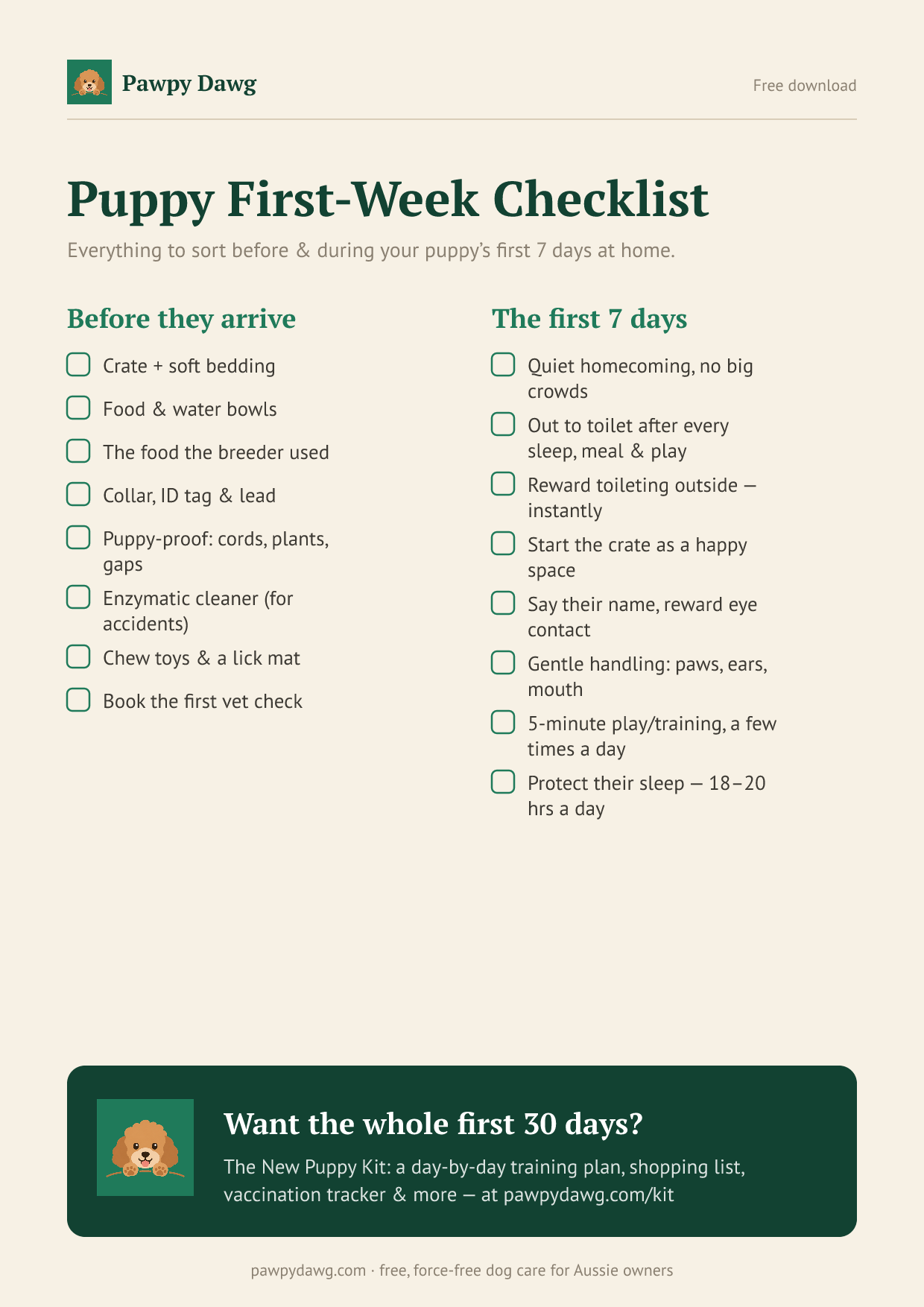
Free printable
Free: the Puppy First-Week Checklist
Everything to sort before and during your puppy's first 7 days home — a printable one-pager. Plus the occasional genuinely useful dog tip. No spam, unsubscribe anytime.
Related guides
Is Pet Insurance Worth It in Australia? The Honest Maths
Is pet insurance worth it in Australia? We crunch real premiums vs real vet bills — cruciate surgery, snake bite & more — so you can decide with confidence.
Read the guide →
How Much a Dog Really Costs Per Year in Australia (2026 Breakdown)
How much does a dog cost per year in Australia? 2026 line-item breakdown covering food, vet, insurance, grooming & the costs first-timers always miss.
Read the guide →
Dog Vaccination Schedule in Australia: What, When and What It Costs
Confused by C3, C5 and kennel cough? Here's your complete dog vaccination schedule Australia cost guide — puppy timelines, adult boosters & typical AUD prices.
Read the guide →