
Dog Diarrhoea: Home Care, Red Flags and When It's an Emergency
Dog diarrhoea in Australia: safe home care for mild cases, red flags that need a vet today, and what to expect from AU vet bills. Calm, practical advice.

Written by Bradley Brown
Founder & editor · Reviewed 2026-11-10
A quick note: this guide is general information, not veterinary advice. For anything urgent or specific to your dog, your vet is always the right call.
Most dogs get diarrhoea at some point. It doesn't mean you've done something wrong — it usually means your dog ate something they shouldn't have, hit a patch of stress, or picked up a common gut bug. The real skill is knowing which category you're in: watch-and-wait, gentle home care, or straight to the vet.
The Three Buckets: Which One Are You In?
Before anything else, run through this quick read of your dog's overall state.
| Sign | Watch & Wait | Home Care | Vet Today |
|---|---|---|---|
| Bright, alert, eating normally | ✓ | ✓ | |
| Soft or liquid stool, no blood | ✓ | ✓ | |
| Vomiting and diarrhoea together | ✓ | ||
| Blood in stool (red or black/tarry) | ✓ | ||
| Lethargic, won't eat, seems painful | ✓ | ||
| Puppy under 16 weeks | ✓ | ||
| Adult dog, 3+ days with no improvement | ✓ | ||
| Known toxin or foreign object ingested | ✓ |
If you're in the right-hand column, skip the rest of this article and call your vet now. The sections below are for dogs in the first two columns.
Why It Happens (the Short Version Worth Knowing)
Dogs have sensitive guts that react quickly to change. The most common triggers in Australia include:
- Dietary indiscretion — bin raiding, dead things at the park, a neighbour's well-meaning sausage
- Sudden food changes — switching kibble brands without a gradual transition
- Stress — a new baby, moving house, thunderstorm season
- Intestinal parasites — roundworm, hookworm, Giardia (common in dogs that drink from puddles or creeks)
- Viral or bacterial infections — often picked up at dog parks or kennels
- Rich or fatty food — a one-off exposure to table scraps
Knowing the trigger helps because it tells you how likely a quick recovery is. A dog who ate grass and is otherwise bouncy will almost certainly resolve in 24–48 hours. A dog who visited a kennel three days ago with worsening loose stools probably needs a faecal test.
Home Care: What Actually Helps
For a mild, single bout in a healthy adult dog, the goal is to let the gut settle without starving or stressing your dog further.
Step 1 — Don't fast (usually). Fasting fell out of favour with most vets. Food keeps the gut lining intact. Offer small, frequent meals of a bland diet instead.
Step 2 — Feed bland for 2–3 days. Boiled white rice with boiled, skinless chicken breast (no seasoning, no onion) is the classic. Plain, low-fat cottage cheese or cooked pumpkin also work. Aim for roughly the same calorie amount as their normal daily food, split into 3–4 smaller servings.
Step 3 — Keep water up. Diarrhoea dehydrates dogs faster than most owners expect. Offer fresh water frequently. A dog who won't drink at all warrants a vet call.
Step 4 — Probiotics are worth trying. Dog-specific probiotic supplements (brands like FortiFlora or Protexin are widely available in Australian pet stores and vet clinics) have reasonable evidence behind them for reducing duration of acute diarrhoea. Human probiotics aren't formulated for dogs — skip those.
Step 5 — Avoid human anti-diarrhoea medications. Imodium (loperamide) can be used in dogs under veterinary guidance, but it's contraindicated in certain breeds (Collies, Shelties and related breeds with the MDR1 gene mutation are at serious risk) and in cases where a pathogen needs to be expelled. Don't give it without asking your vet first.
Transition back to normal food gradually over 2–3 days once stools are firming up.
The Signs That Change Everything
Blood in the stool always warrants a call, even if your dog seems fine. Bright red blood often points to irritation in the lower bowel; black, tarry stools suggest bleeding higher up and are more urgent. Neither should be managed at home.
Puppies under 16 weeks have far less physiological reserve than adult dogs, and parvovirus — a potentially fatal but vaccine-preventable disease — is a real risk in unvaccinated or incompletely vaccinated pups. If your puppy has diarrhoea, treat it as urgent regardless of other signs.
Two or more of the following together — vomiting, lethargy, loss of appetite, bloated abdomen — means the gut is in more trouble than a bland diet can fix.
What You'll Pay at an Australian Vet Clinic
A standard consultation for diarrhoea runs roughly $80–$120 AUD in most metro areas, more in after-hours or emergency clinics ($150–$300+ AUD for the consult alone). If your vet recommends a faecal test for parasites, budget an additional $40–$80 AUD. IV fluids for a dehydrated dog add significantly to that figure — another reason catching things early costs less.
Pet insurance with an illness component covers most diarrhoea-related vet visits after the waiting period, so if you haven't looked at a policy recently, it's worth revisiting.
The Recommendation for the Most Common Case
A healthy adult dog with a one-off bout of loose stools and no other symptoms: start the bland diet, add a probiotic, and give it 48 hours. That handles the vast majority of cases. If you're not seeing clear improvement by day two — firmer stools, normal energy, eating willingly — book the vet rather than waiting it out further. You're not overreacting; you're making the right call.
Frequently asked questions
How long does dog diarrhoea usually last?
In a healthy adult dog with a mild cause — something they ate, a minor stress event — diarrhoea typically resolves within 24 to 48 hours with bland food and rest. If it's still going strong after 48–72 hours, or worsening at any point, it's time to see your vet rather than continue waiting.
Can I give my dog rice and chicken for diarrhoea?
Yes, boiled white rice and plain boiled chicken breast (no skin, no seasoning, no onion) is a well-established bland diet for dogs recovering from an upset stomach. Offer it in small, frequent meals over 2–3 days, then gradually mix their normal food back in. It won't cure an underlying infection but it gives the gut a chance to settle.
Is blood in my dog's stool always an emergency?
It always warrants a vet call, though the urgency depends on what you're seeing. Black, tarry stools suggest upper gastrointestinal bleeding and are more urgent — call now. Bright red streaks in an otherwise bright, alert dog can indicate minor rectal irritation and may not be a critical emergency, but you should still speak to your vet the same day rather than leaving it overnight.
What's the difference between dog diarrhoea caused by stress versus a parasite?
Stress diarrhoea usually appears around or shortly after a known stressor (a move, fireworks, a kennel stay) and resolves within a day or two once things settle. Parasite-related diarrhoea tends to be more persistent and may recur, and your dog might have had exposure to creeks, puddles, or other dogs' faeces. A simple faecal test at your vet can confirm parasites like Giardia; this is worth doing if diarrhoea keeps coming back.
My puppy has diarrhoea — do I need to go to the vet straight away?
Yes, treat puppy diarrhoea as urgent, particularly if your pup is under 16 weeks or hasn't completed their full vaccination course. Parvovirus is a serious risk in young unvaccinated dogs and can deteriorate rapidly. Don't wait to see if it resolves — call your vet the same day.
How much will a vet visit for dog diarrhoea cost in Australia?
A standard consultation typically runs $80–$120 AUD at a regular clinic during business hours. After-hours or emergency clinic consults can be $150–$300 AUD or more just for the consultation, before any tests or treatment. A faecal parasite test adds roughly $40–$80 AUD. Pet insurance with illness cover will usually reimburse a significant portion of these costs after any applicable excess.
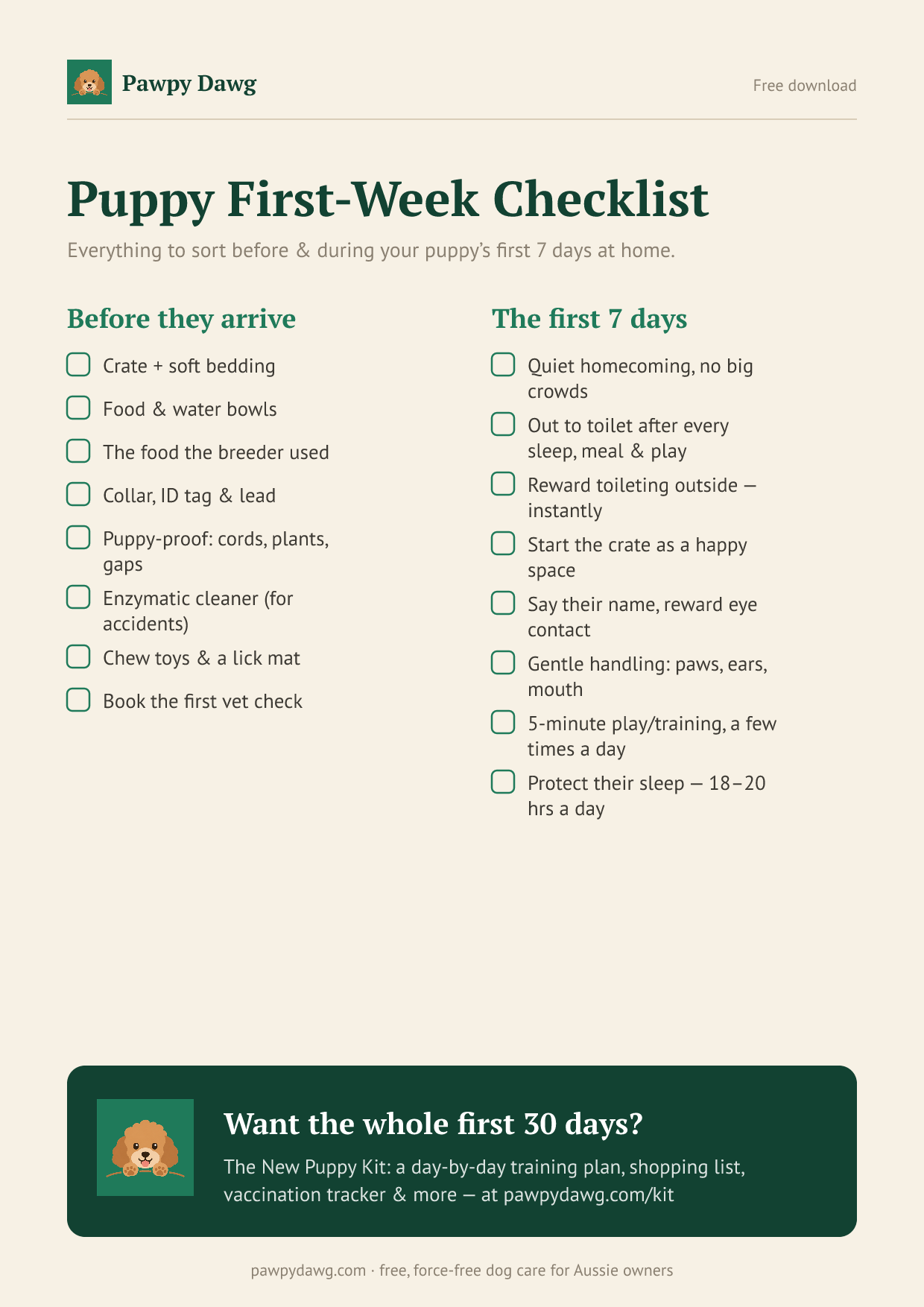
Free printable
Free: the Puppy First-Week Checklist
Everything to sort before and during your puppy's first 7 days home — a printable one-pager. Plus the occasional genuinely useful dog tip. No spam, unsubscribe anytime.
Related guides
Is Pet Insurance Worth It in Australia? The Honest Maths
Is pet insurance worth it in Australia? We crunch real premiums vs real vet bills — cruciate surgery, snake bite & more — so you can decide with confidence.
Read the guide →
How Much a Dog Really Costs Per Year in Australia (2026 Breakdown)
How much does a dog cost per year in Australia? 2026 line-item breakdown covering food, vet, insurance, grooming & the costs first-timers always miss.
Read the guide →
Dog Vaccination Schedule in Australia: What, When and What It Costs
Confused by C3, C5 and kennel cough? Here's your complete dog vaccination schedule Australia cost guide — puppy timelines, adult boosters & typical AUD prices.
Read the guide →