
Caring for a Senior Dog: Vet Checks, Comfort and Costs in Australia
Everything you need to know about senior dog care in Australia — vet checks, diet, exercise, home comfort tweaks, and realistic costs to budget for.

Written by Bradley Brown
Founder & editor · Reviewed 2026-11-06
A quick note: this guide is general information, not veterinary advice. For anything urgent or specific to your dog, your vet is always the right call.
Watching your dog slow down is hard, especially when you're not sure whether what you're seeing is normal ageing or something that needs attention. You might be second-guessing every grey muzzle and stiff morning and wondering if you've missed something. You haven't — most owners feel exactly this way, and the good news is that a few targeted changes make a genuine difference.
Quick win: check the water bowl today
Before anything else, make sure your dog is drinking well. Senior dogs are prone to kidney changes and are often mildly dehydrated without obvious signs. Place an extra bowl in a second room so they don't have to walk far — arthritis makes distance matter. That's it. One bowl, today.
When does your dog actually become a senior?
Size drives the answer more than age does. Large and giant breeds (Labradors, German Shepherds, Great Danes) are considered senior from around 7 years. Medium breeds (Border Collies, Spaniels) from about 8–9 years. Small and toy breeds (Maltese, Chihuahuas) don't typically hit senior status until 10–12 years.
This matters because the timing of your vet check schedule, diet switch, and supplement decisions should follow your dog's size category, not a one-size birthday rule.
What a six-monthly vet check actually covers
Once a dog is classified senior, most vets recommend shifting from annual to six-monthly wellness checks. At each visit, your vet will typically:
- Weigh and body-condition score your dog — both weight gain and loss signal problems in older dogs
- Run bloodwork (biochemistry and a full blood count) to catch kidney, liver, thyroid, and blood-cell changes early
- Check a urine sample for kidney function and early diabetes markers
- Assess joint mobility and muscle mass — muscle loss (sarcopenia) is common and treatable if caught early
- Examine teeth and gums — dental disease accelerates in senior dogs and causes systemic inflammation
- Screen blood pressure — hypertension is underdiagnosed in older dogs and linked to kidney and eye disease
- Discuss pain indicators — dogs hide pain instinctively, so a vet's structured assessment often catches what owners miss
Bring a short video of anything that seems off at home (a wobbly gait, unusual posture when resting). What looks subtle on your phone is genuinely useful clinical information.
Feeding an older dog without overcomplicating it
Caloric needs often drop by 20–30% as dogs become less active, but protein needs actually increase to maintain muscle. This is why a good senior-formula food matters — not just "light" food, which may cut protein alongside calories.
Look for a commercial food with:
- Clearly named animal protein as the first ingredient
- Added omega-3 fatty acids (EPA and DHA) for joint and cognitive support
- Controlled phosphorus levels (supports kidney health)
Joint supplements containing glucosamine and chondroitin are widely used; evidence is mixed but side-effect risk is low. Fish oil (omega-3) has stronger evidence for inflammation. Run any supplements past your vet before starting — some interact with medications.
Puzzle feeders and slow bowls still work well for seniors — they provide mental stimulation without physical strain.
Exercise: less isn't always better
It's tempting to ease right off when a dog looks stiff, but gentle, consistent movement actually helps more than rest. Aim for two shorter walks daily rather than one long one — 10–15 minutes each is enough for most seniors. Shorter outings let you read their body language and stop before they're fatigued.
Swimming is excellent for dogs with arthritis because it's low-impact and builds muscle. Hydrotherapy pools exist in most Australian capital cities and larger regional centres; a referral from your vet can sometimes attract a Medicare-style rebate through pet insurance.
Making home life genuinely easier
Small environmental changes reduce pain and anxiety without requiring much effort or money:
- Orthopedic or memory-foam bed — not a luxury; it reduces pressure on arthritic joints. Budget around $60–$180 AUD for a decent one.
- Non-slip mats on tiles and floorboards — cheap, immediate, and prevents painful slips.
- Raised food and water bowls — reduces neck and shoulder strain, particularly for large breeds.
- Ramps or low steps to the couch or car — if your dog is used to jumping, stopping suddenly is confusing and they'll attempt it anyway.
- Night lights — cognitive dysfunction (canine dementia) is common in dogs over 11 and causes nighttime disorientation. A simple plug-in light helps them navigate.
Realistic costs to budget for in Australia
Senior dog care costs more than adult care — it's worth planning for rather than being caught off guard.
- Six-monthly vet wellness check: $80–$160 AUD per visit (varies by clinic and state)
- Annual bloodwork and urinalysis: $150–$350 AUD depending on the panel
- Pet insurance: premiums rise with age; expect $80–$180 AUD/month for a senior dog, with exclusions for pre-existing conditions — review your policy now if you haven't recently
- Prescription medications (pain relief, thyroid, blood pressure): $30–$100 AUD/month depending on the drug
- Dental procedure under anaesthetic: $400–$1,200 AUD — another reason six-monthly checks catch problems before they escalate
If cost is a barrier, ask your vet about staged bloodwork (running the most critical panels first) or whether a veterinary nurse health check between full appointments is an option — many clinics offer these at a reduced rate.
Your dog is not falling apart, and you are not behind. Senior dog care in Australia is increasingly well-supported — by better diagnostics, better food, and vets who specialise in ageing animals. A little structure goes a long way.
As an Amazon Associate we earn from qualifying purchases.
Frequently asked questions
At what age is a dog considered a senior in Australia?
It depends on size. Large and giant breeds are generally considered senior from around 7 years, medium breeds from 8–9 years, and small or toy breeds from 10–12 years. Your vet will use your dog's size and breed to guide the right timing for senior-focused care.
How often should a senior dog see the vet?
Most vets recommend six-monthly wellness checks once a dog reaches senior status, rather than the annual visits typical for younger dogs. More frequent visits allow earlier detection of kidney disease, dental problems, arthritis, and other age-related conditions that progress quickly if missed.
What should I feed my senior dog?
Look for a commercial senior-formula food with a named animal protein as the first ingredient, added omega-3 fatty acids, and controlled phosphorus to support kidney health. Avoid simply switching to a 'light' food — older dogs often need the same or higher protein levels to maintain muscle mass, just fewer overall calories.
How much does senior dog care cost in Australia?
Budget for six-monthly vet checks at roughly $80–$160 AUD each, plus $150–$350 AUD for annual bloodwork and urinalysis. Pet insurance premiums for senior dogs typically run $80–$180 AUD per month. Dental procedures and ongoing medications can add several hundred dollars per year depending on your dog's needs.
Is it normal for a senior dog to slow down or sleep more?
Increased sleep and reduced energy are common in older dogs, but a sudden or marked change in activity level is worth investigating. It can indicate pain, anaemia, hypothyroidism, or other treatable conditions rather than 'just ageing.' Mention any noticeable shifts to your vet at your next check.
Can I claim senior dog vet costs on pet insurance in Australia?
Yes, if you have an active policy, though senior dog premiums are higher and pre-existing conditions are typically excluded. Wellness or preventive care extras vary by insurer — some cover a portion of annual check-ups and bloodwork. Review your policy's product disclosure statement carefully, and compare policies before your dog reaches senior age when switching becomes harder.
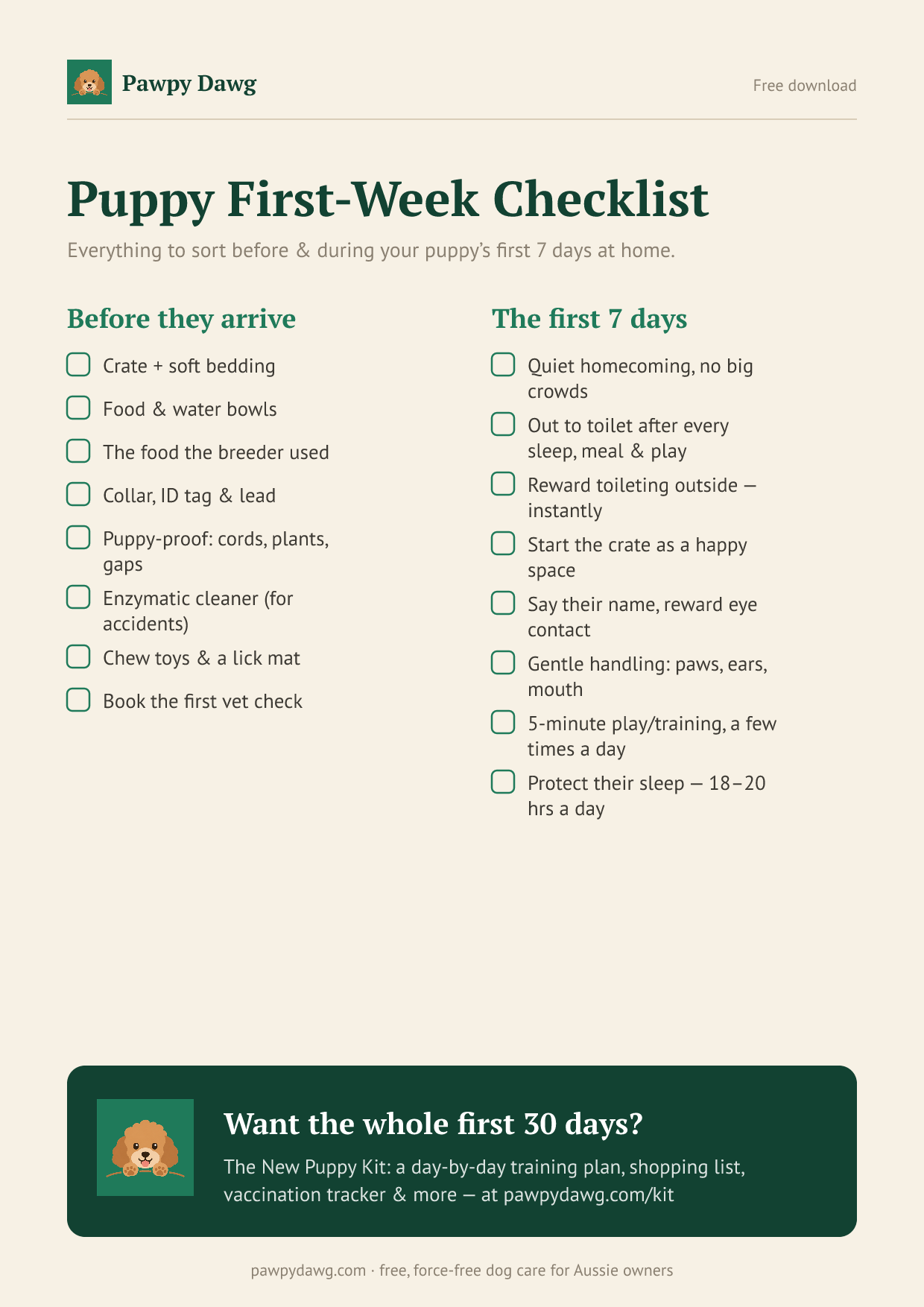
Free printable
Free: the Puppy First-Week Checklist
Everything to sort before and during your puppy's first 7 days home — a printable one-pager. Plus the occasional genuinely useful dog tip. No spam, unsubscribe anytime.
Related guides

Is Pet Insurance Worth It in Australia? The Honest Maths
Is pet insurance worth it in Australia? We crunch real premiums vs real vet bills — cruciate surgery, snake bite & more — so you can decide with confidence.
Read the guide →
How Much a Dog Really Costs Per Year in Australia (2026 Breakdown)
How much does a dog cost per year in Australia? 2026 line-item breakdown covering food, vet, insurance, grooming & the costs first-timers always miss.
Read the guide →
Dog Vaccination Schedule in Australia: What, When and What It Costs
Confused by C3, C5 and kennel cough? Here's your complete dog vaccination schedule Australia cost guide — puppy timelines, adult boosters & typical AUD prices.
Read the guide →