
Beagle Training Guide: A Realistic 8-Week Plan
A realistic 8-week beagle training plan built around their stubborn, scent-driven nature — short daily sessions, honest timelines, and what actually works.

Written by Bradley Brown
Founder & editor · Reviewed 2026-07-17
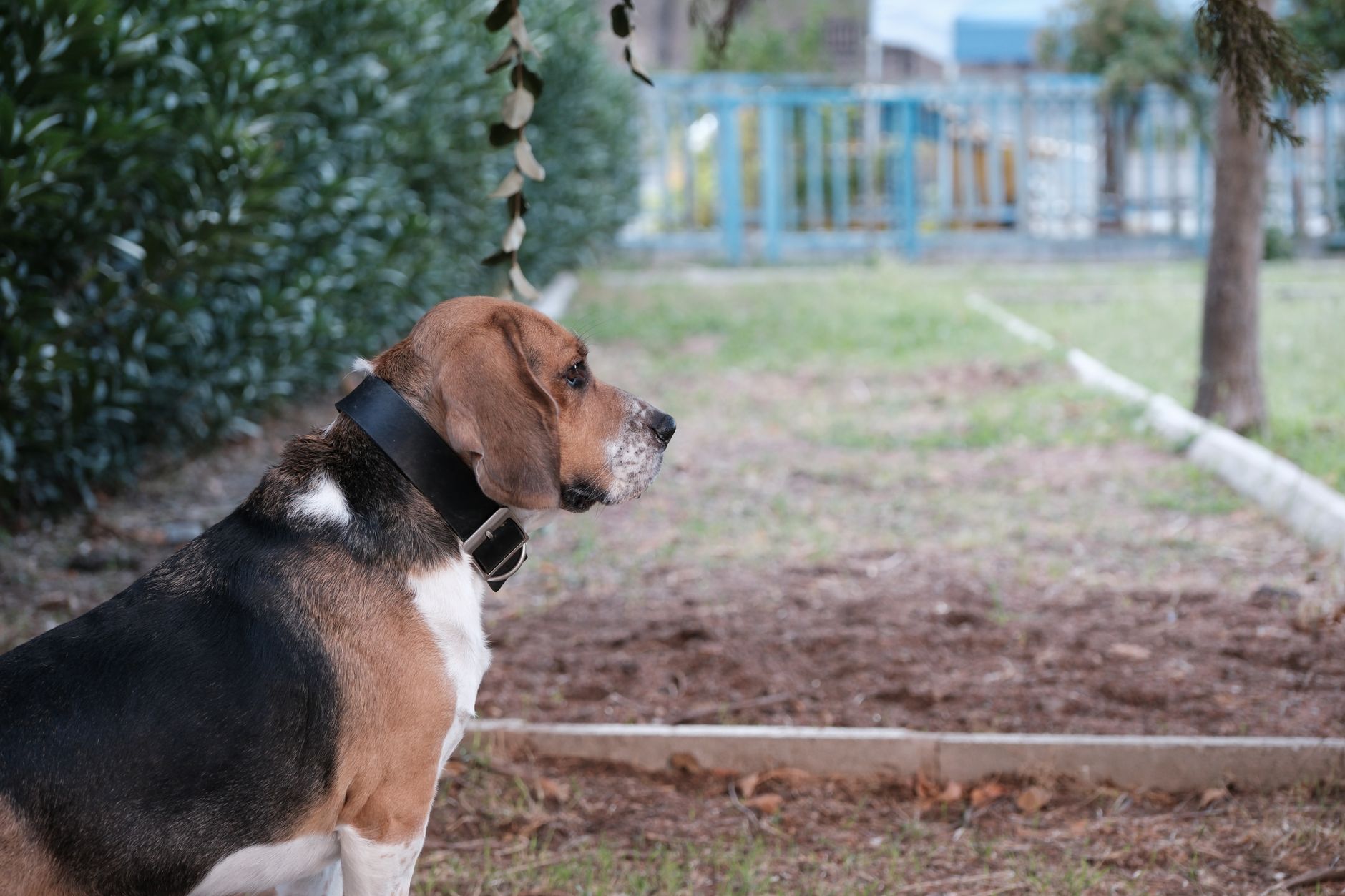
The most common piece of advice handed to new Beagle owners is "be firm and consistent and they'll fall into line." It sounds reasonable. It backfires spectacularly. Beagles were bred for centuries to work independently, follow their nose over any human instruction, and make their own decisions in the field. Doubling down on firmness without understanding why a Beagle ignores you just teaches them to tune you out faster. The good news: once you work with their temperament instead of against it, Beagles are genuinely trainable. This 8-week plan is built around what they actually are — a scent hound with stamina, curiosity, and a food drive that is basically a superpower.
"Beagles Are Stubborn — You Just Have to Show Them Who's Boss"
This myth does more damage than almost any other. Beagles aren't stubborn in the way a teenager tests a curfew. They're independently motivated — their brain is wired to chase olfactory information, not to defer to authority. Dominance-based training (alpha rolls, collar corrections, raised voices) increases anxiety in scent hounds and makes them less responsive, not more. Research consistently shows that reward-based methods produce faster learning and fewer behavioural problems in dogs across all breeds.
Reality: Beagles respond brilliantly to high-value food rewards. Kibble won't cut it. Think small pieces of cooked chicken, cheese, or commercial treats with strong smell. The smellier, the better — you're essentially competing with the entire outside world for their attention.
Weeks 1–2: Foundation Skills
Keep sessions to 5 minutes, twice a day. This isn't laziness — Beagle puppies and adolescents fatigue mentally faster than they fatigue physically. Your goals for the first fortnight:
- Name recognition: Say their name once, mark with "yes!" the moment they look at you, treat immediately. Ten repetitions per session.
- Sit: Lure with a treat held just above the nose, moving slowly back over the head. The moment the bottom hits the floor, mark and treat. Do not repeat the cue — one ask, then lure.
- Recall on a long line: Never practise recall off-lead in an unfenced area at this stage. A Beagle that catches a scent trail will go. Use a 5–10 metre long line and call them to you enthusiastically, rewarding with their best treat when they arrive.
"Let Them 'Sniff It Out' — They'll Get Bored and Come Back"
Owners are often told that if a Beagle bolts after a scent, just wait and they'll return. This strategy creates a dog that learns they can disappear whenever they like, with no consequence. It also puts them at genuine risk — Beagles are consistently among the most frequently lost and impounded breeds in Australia because of exactly this pattern.
Reality: Sniffing is not the enemy. It is, in fact, one of your most powerful training tools. Controlled sniff time — a "sniff break" cued on your terms — acts as an enormous reward and mentally tires a Beagle far more efficiently than a long walk. The goal isn't to suppress the nose; it's to teach that coming back to you unlocks more sniffing.
Weeks 3–4: Impulse Control and the Reliable Recall
- "Go sniff" as a reward: After a successful recall or sit-stay, release them with a cue ("go sniff!") and let them explore for 30–60 seconds. They learn that checking in with you pays.
- Leave it: Place a treat on the floor, cover with your foot. The moment they disengage and look up, mark and reward with a different treat from your hand. Progress slowly — this takes longer with Beagles than most breeds.
- Recall proofing: Practice in the backyard with mild distractions (another person, a toy on the ground). Every recall should result in a genuine party — enthusiastic praise, the best treat you have. Never call them to you for something unpleasant (bath, nail trim) during this phase.
"Crate Training Is Cruel — Beagles Need Company 24/7"
Beagles are pack animals and genuinely prone to separation anxiety — that part is true. But the conclusion that crates are therefore harmful gets it backwards. An uncrated Beagle left alone with access to the whole house is a Beagle that howls, destroys furniture, and rehearses panic. A properly introduced crate becomes a den: a place associated with calm and safety, not punishment.
Reality: Crate training, done gradually, is one of the kindest things you can do for a separation-anxious Beagle. It limits the rehearsal of destructive behaviours and gives them a predictable, safe space.
Weeks 5–6: Crate Confidence and Alone-Time Skills
- Feed meals inside the crate with the door open for the first week. No pressure.
- Increase duration slowly: door closed for 2 minutes while you're in the room, then 5, then 10. Only progress when they're relaxed.
- Practise short absences — step outside for 30 seconds, return calmly. Build to 20–30 minutes over this fortnight.
- A stuffed Kong or lick mat inside the crate makes the association strongly positive.
If your Beagle shows persistent distress (continuous vocalising, self-injury, excessive drooling) beyond the first few introductory sessions, consult a vet or accredited behaviourist — true separation anxiety needs targeted support beyond crate training alone.
"Once They've Got the Basics, You Can Stop"
Training classes end, owners feel relief, and then six months later the recall has evaporated and the lead-pulling is back. Beagles don't generalise skills automatically. A sit learned in your kitchen doesn't automatically transfer to the park with ducks nearby.
Reality: Maintenance is short and easy, but it must continue.
Weeks 7–8: Generalising and Building Real-World Reliability
- Take known skills to three new locations this fortnight: a quiet carpark, a friend's garden, a low-traffic path.
- Increase distraction gradually — success rate should stay above 80%. If they're failing more than that, the distraction level is too high.
- Introduce loose-lead walking properly if you haven't: stop the moment the lead tightens, wait for slack, reward forward movement. Expect slow progress; consistency matters more than duration.
- By week 8 your goal isn't a perfect dog — it's a dog with a foundation you can keep building on with 5–10 minutes of practice a day.
What to Do From Here
Beagle training isn't a project you complete — it's a communication style you maintain. Short sessions, brilliant treats, controlled sniff time as a reward, and never practising recall anywhere it might fail. The breed isn't broken and neither are you. The dogs that "can't be trained" are almost always dogs whose training didn't account for what a Beagle actually is.
If you're hitting a wall at any point, a single session with a reward-based trainer (look for membership with the Pet Professional Guild Australia or the Delta Society) can save weeks of frustration. The investment — typically $A80–$A150 for a private session — is worth it.
As an Amazon Associate we earn from qualifying purchases.
Frequently asked questions
How long does it take to train a Beagle?
Basic obedience — sit, stay, name recall — can be reliably established in 6–8 weeks with consistent 5-minute daily sessions. A truly reliable recall in high-distraction environments takes several months of gradual proofing. Beagles learn quickly when motivated; the timeline depends more on consistency than the dog's ability.
Why does my Beagle ignore me when we're outside?
Beagles process scent information at a level that genuinely competes with your voice for their attention — it's neurological, not defiance. Outside, you need higher-value rewards (strong-smelling treats) and a trained recall response that's been proofed in gradually increasing distraction levels. Starting recall training indoors first is essential before expecting results outdoors.
At what age should I start training my Beagle puppy?
As soon as they come home, typically 8 weeks of age. Puppies at this age are highly receptive to learning and forming habits. Early socialisation (exposing them to different people, surfaces, sounds, and environments) is just as important as formal obedience work during the first 16 weeks.
Is a Beagle a good dog for a first-time owner?
Beagles can work well for first-time owners who do their research, but they're not the easiest breed. Their scent drive, tendency to vocalise, and separation anxiety require specific management strategies. Owners willing to commit to reward-based training and adequate daily mental stimulation will find them affectionate and rewarding companions.
Why does my Beagle howl so much and can training stop it?
Howling is a deeply ingrained hound behaviour — Beagles were bred to bay when on a trail or when isolated from their pack. Training can reduce howling triggered by boredom or separation anxiety through crate training, mental enrichment, and gradual alone-time conditioning. Howling that's purely instinctive (responding to sirens, for example) is much harder to eliminate entirely.
Do Beagles ever fully master off-lead recall?
Some do, but it requires months of consistent training and should only happen in safely fenced areas until the recall is bombproof. Many experienced Beagle owners use long lines rather than full off-lead freedom in unfenced spaces — this isn't a training failure, it's a sensible acknowledgment of the breed's instincts. A well-managed Beagle on a long line gets the same enrichment with far less risk.
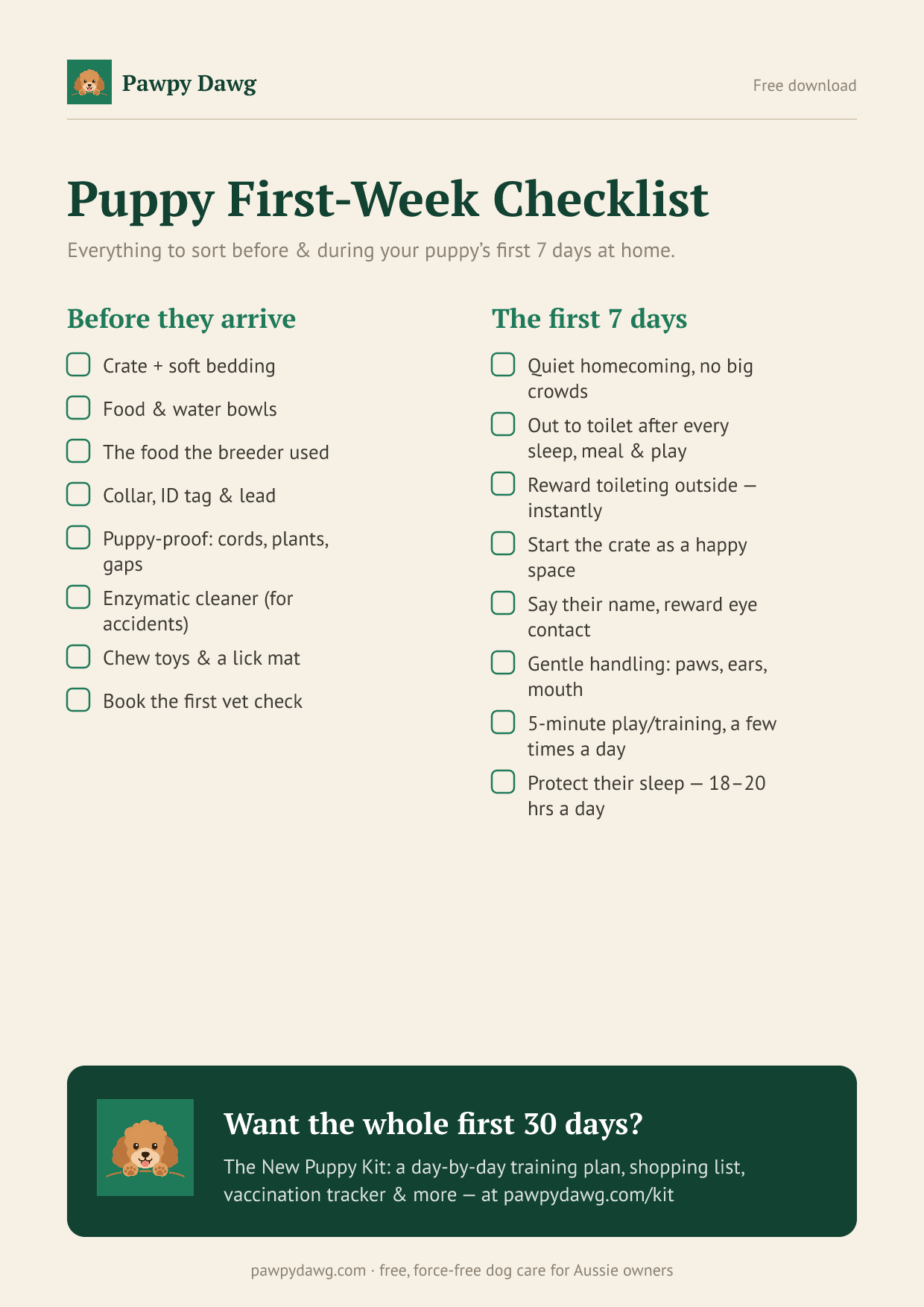
Free printable
Free: the Puppy First-Week Checklist
Everything to sort before and during your puppy's first 7 days home — a printable one-pager. Plus the occasional genuinely useful dog tip. No spam, unsubscribe anytime.