
Travelling With Your Dog in the Car: Australian Laws and Safe Restraints
Confused by dog car restraint laws Australia-wide? Get a clear state-by-state breakdown, harness vs crate advice, ute tray rules, and tips for anxious dogs.

Written by Bradley Brown
Founder & editor · Reviewed 2026-11-07
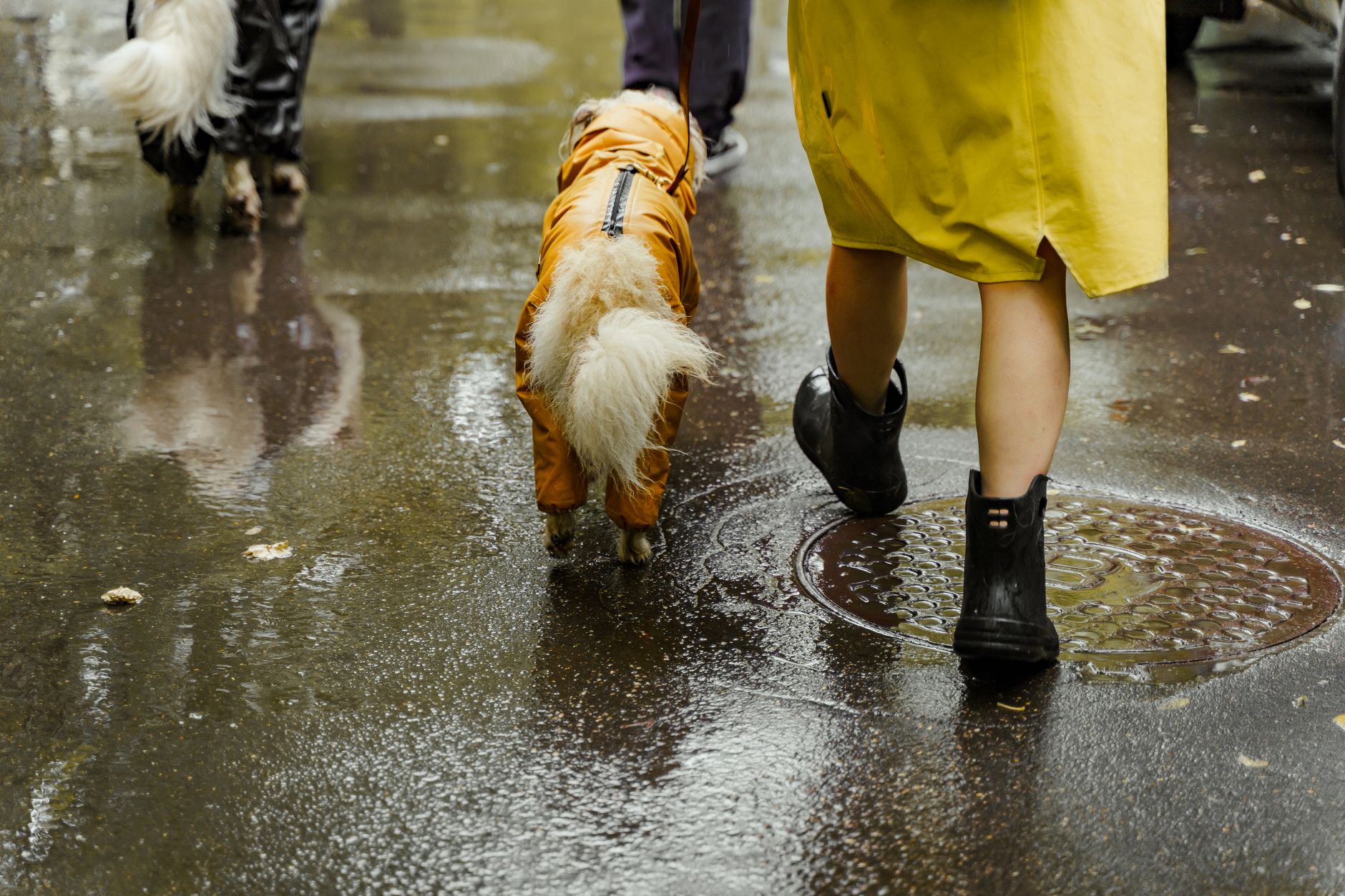
You've probably been driving with your dog loose in the back seat for years — most people have. Then someone mentions fines, or you spot a police car, and suddenly you're not sure what's actually legal. The rules around travelling with dogs in cars are patchier than they should be, and the information online is often flat-out wrong. Here's what the law actually says, what genuinely keeps your dog safe, and how to make road trips less stressful for both of you.
Your Quick Win for Today
Before anything else: if your dog currently travels loose, grab a seatbelt clip-style harness from a pet shop (around $20–$60 AUD) and loop it through your car's existing seatbelt buckle today. It's not a perfect long-term solution, but it's a legal, safer starting point in every state while you work out what suits your setup best.
What the Law Actually Says, State by State
Australia doesn't have a single national standard for dogs in cars, which is where most of the confusion comes from. Here's the practical picture:
New South Wales: Under the Road Rules 2014, it's illegal for a driver to have an animal in their lap or to be distracted by an unsecured animal. Police can issue a distracted driving fine (up to $481 AUD and three demerit points). There's no specific requirement to restrain a dog in the back seat, but if the animal affects your control of the vehicle, you're liable.
Victoria: Similar to NSW. VicRoads guidance recommends restraining dogs, and police can apply distracted or careless driving provisions if an animal is interfering with the driver.
Queensland: The Transport Operations (Road Use Management — Road Rules) Regulation 2009 prohibits driving with an animal on your lap. Dogs in the cargo area of a ute must be restrained — more on that below.
South Australia: SA has one of the more explicit rules: a dog must be secured if it could interfere with the driver's control. The RSPCA SA also notes that an unsecured dog in an accident becomes a projectile, which counts as an animal welfare issue.
Western Australia: Similar distraction-based provisions apply. Perth has seen infringements issued under general careless driving rules where dogs were loose in vehicles.
Tasmania, ACT, Northern Territory: These jurisdictions follow the Australian Road Rules model, applying distracted driving provisions. No specific restraint mandate beyond the driver-distraction standard.
The takeaway: No state currently mandates a specific type of restraint for dogs in the cabin — but every state can fine you for distracted driving if your dog is interfering with control, and those fines are real. The ute tray is a different matter entirely.
The Ute Tray Rules (These Are Stricter)
If your dog rides in the back of a ute or on a truck tray, Queensland law explicitly requires the dog to be tethered — and the tether must be short enough to prevent the dog from falling off the sides or rear. NSW, WA, and the NT have similar provisions under their respective road rules or animal welfare legislation.
The RSPCA recommends that the tether is attached to a harness — never a collar — and that the dog cannot reach the edge of the tray. A crate bolted or strapped securely to the tray is the gold standard: it protects the dog from wind, debris, and ejection in a collision.
Harnesses, Crates, and Barriers — What's Actually Worth Buying
Crash-tested harnesses are the best option for dogs who travel in the back seat. Look for harnesses tested to the Centre for Pet Safety (CPS) standard or similar crash-test protocols — brands like Sleepypod Clickit and Kurgo Tru-Fit have published test data. A regular walking harness clipped to a seatbelt will limit movement but won't necessarily protect your dog (or the humans in front) in a serious crash.
Hard-sided crates secured with cargo straps in an SUV or wagon boot offer excellent protection. The dog is contained, comfortable, and the crate won't become a projectile. Measure your boot carefully — a crate that slides is worse than no crate.
Boot barriers keep the dog physically separated from the driver but offer almost no crash protection. They're useful for preventing distraction on short trips; they're not a safety solution on the highway.
Making Long Drives Easier for Anxious Dogs
An anxious dog in a car is a distracted driver in the making, so this is a safety issue as much as a welfare one.
- Build up gradually. Start with the engine off, feeding treats in the car. Progress to short drives to somewhere good — the park, not just the vet.
- Familiar smells settle nerves. Put a worn t-shirt or the dog's own blanket in the crate or on the back seat.
- Stop every 2 hours on long trips. Even 5 minutes off-lead in a safe area helps regulate a dog's stress hormones.
- Cover the crate if your dog is crate-trained. Visual stimulation from passing traffic is a significant anxiety trigger for many dogs.
- Talk to your vet if the dog pants, drools, or vomits consistently on trips. Short-term anti-nausea or mild sedation options exist and are nothing to be embarrassed about — some dogs genuinely need a little help.
None of this requires hours of prep. Even 5 minutes of counter-conditioning before a trip — treats in the car, calm departure — adds up fast over a few weeks.
As an Amazon Associate we earn from qualifying purchases.
Frequently asked questions
Is it illegal to have a dog loose in the car in Australia?
No single law bans loose dogs in the cabin outright, but every Australian state and territory can fine you for distracted driving if your dog interferes with your control of the vehicle. Fines and demerit points vary by state. Dogs on the driver's lap are explicitly prohibited in most jurisdictions.
Do dogs on ute trays need to be restrained in Australia?
Yes. Queensland, NSW, WA, and the NT all have rules requiring dogs on ute trays or truck beds to be tethered or otherwise secured. The tether should attach to a harness (not a collar) and be short enough to prevent the dog from falling off the sides or rear. A bolted or strapped crate is the safest option.
What is the safest car restraint for a dog?
A crash-tested harness — one that has undergone independent crash-test certification — offers the best protection for dogs travelling in the back seat. For boots and cargo areas, a hard-sided crate secured with cargo straps is the gold standard. Standard boot barriers provide driver distraction reduction but little crash protection.
Can I be fined for my dog distracting me while driving?
Yes. Distracted and careless driving provisions apply across all Australian states and territories, and police have issued fines where an unrestrained dog was involved. In NSW, for example, the fine can be over $480 AUD plus demerit points.
My dog gets anxious or car sick on drives — what can I do?
Start with very short trips to positive destinations and build up gradually. Familiar smells in the car, covering a crate, and regular stops every two hours all help. If your dog consistently vomits or shows severe stress, speak to your vet — anti-nausea medication and mild situational sedatives are safe, effective options for some dogs.
Are regular walking harnesses safe for car travel?
A walking harness clipped to a seatbelt will limit your dog's movement and may help with distraction, but most are not designed or tested to withstand crash forces. For genuine crash protection, look for harnesses with published crash-test results from organisations like the Centre for Pet Safety.
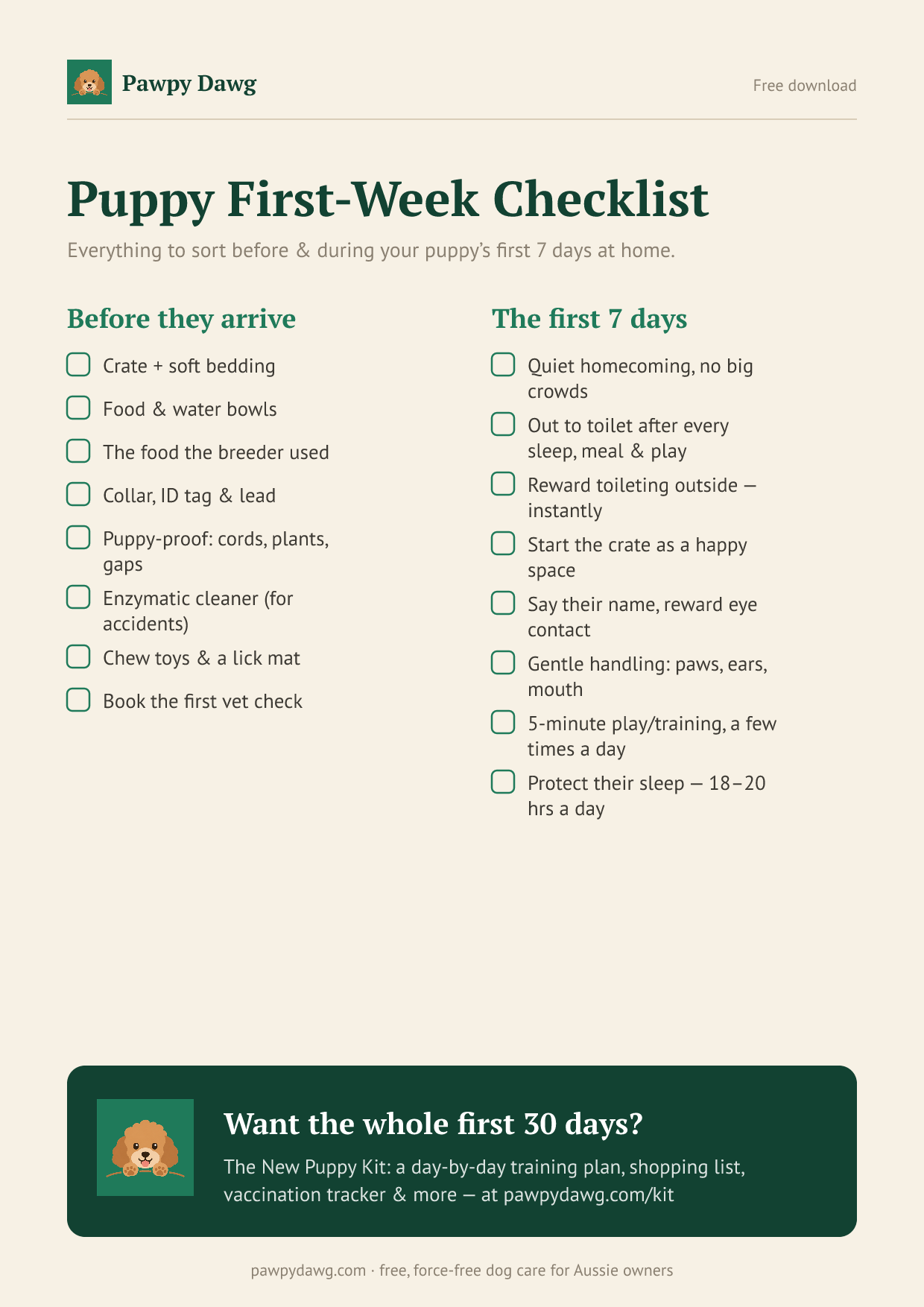
Free printable
Free: the Puppy First-Week Checklist
Everything to sort before and during your puppy's first 7 days home — a printable one-pager. Plus the occasional genuinely useful dog tip. No spam, unsubscribe anytime.
Related guides
Is Pet Insurance Worth It in Australia? The Honest Maths
Is pet insurance worth it in Australia? We crunch real premiums vs real vet bills — cruciate surgery, snake bite & more — so you can decide with confidence.
Read the guide →
How Much a Dog Really Costs Per Year in Australia (2026 Breakdown)
How much does a dog cost per year in Australia? 2026 line-item breakdown covering food, vet, insurance, grooming & the costs first-timers always miss.
Read the guide →
Dog Vaccination Schedule in Australia: What, When and What It Costs
Confused by C3, C5 and kennel cough? Here's your complete dog vaccination schedule Australia cost guide — puppy timelines, adult boosters & typical AUD prices.
Read the guide →