
Dog GPS Trackers in Australia: Do You Need One and Which Type?
Bluetooth tag or GPS tracker? Find the right dog GPS tracker in Australia — coverage, costs, battery life, and which dogs actually need one.

Written by Bradley Brown
Founder & editor · Reviewed 2026-11-08
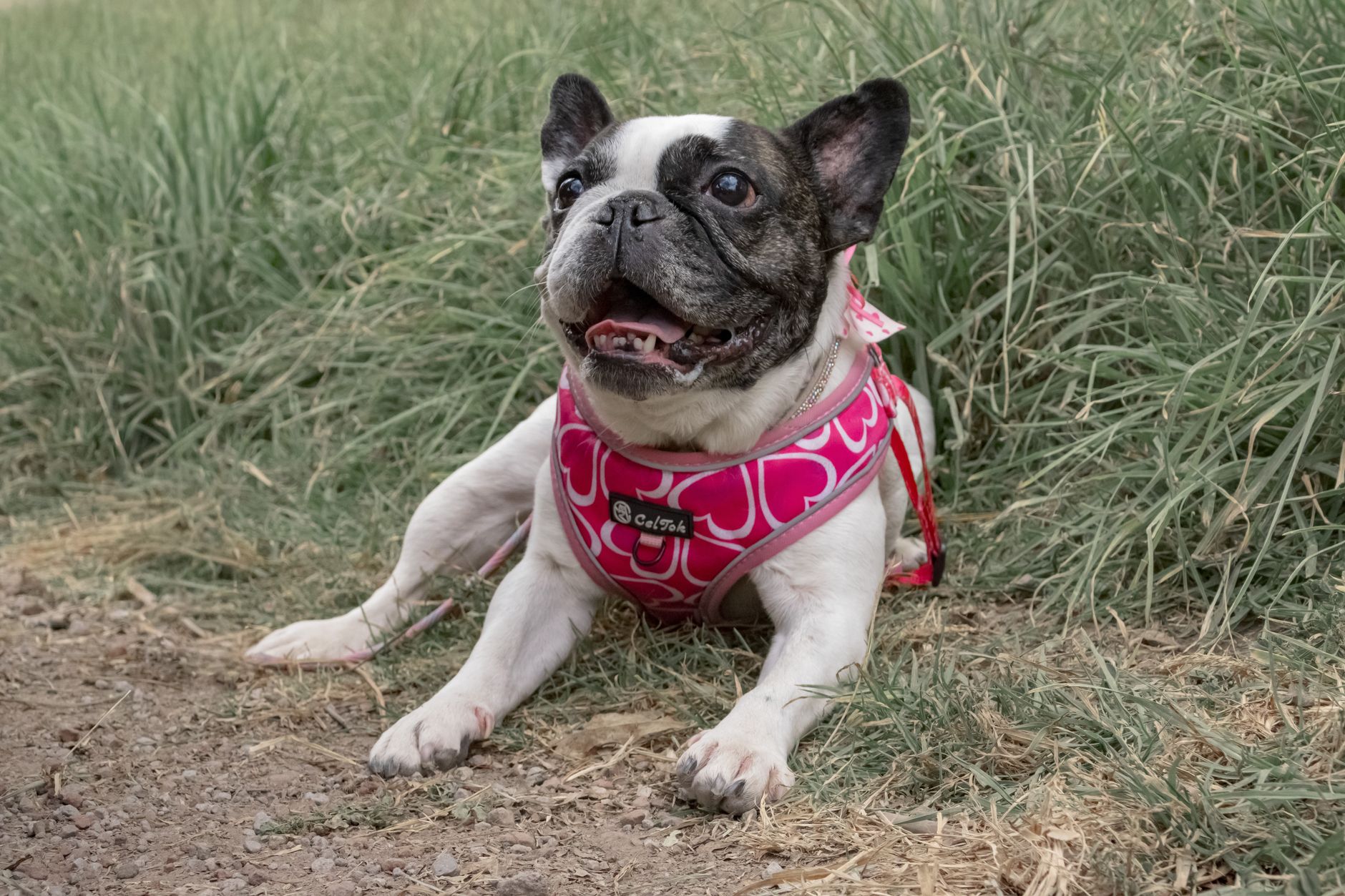
Losing a dog — even for ten minutes — is a stomach-dropping experience. Whether your dog is an escape artist, a bush-walking companion, or just an opportunist who bolts when the gate swings open, a tracking device can shift you from frantic to found in minutes. Here's how to cut through the noise and pick the right one.
Isn't a Bluetooth tag the same as a GPS tracker?
Not even close, and this is the most common mistake people make at the pet-shop checkout.
Bluetooth tags (Apple AirTag, Tile, Samsung SmartTag) use your phone's Bluetooth signal — typically effective up to about 30–60 metres in open air, far less through walls or bush. They work by pinging any compatible device in the broader network that passes near your tag. In a dense city suburb, that network is thick; in regional or rural Australia, it can be almost non-existent. If your dog slips out at 2 am in a quiet street, there may be no devices nearby to register the tag at all. They're better thought of as "help me find what I left on the couch" tools than serious dog-recovery devices.
GPS trackers use satellite positioning and transmit your dog's real-time location via a mobile data (LTE/3G) network to an app on your phone. They work wherever there's mobile coverage — which, in Australia, is a genuinely important caveat (more on that below). Real-time updates, movement history, geofence alerts when your dog leaves a set zone: these are features Bluetooth simply can't offer.
Bottom line: If your dog has ever genuinely gone missing — not just wandered behind the shed — only a GPS tracker gives you actionable, real-time data.
How good is GPS tracker coverage in rural and regional Australia?
This is where many Australian owners get burnt. GPS trackers rely on the mobile network, not GPS satellites directly, to transmit location data. The satellite fixes the position; the mobile network sends that position to your phone. No mobile signal = no live updates.
Australia's mobile coverage map has significant gaps. The major networks — Telstra, Optus, Vodafone — vary dramatically once you leave the coast and major highways. Telstra's network covers the most land area by a considerable margin, so a tracker running on Telstra infrastructure (or one that's network-agnostic and can roam) will outperform an Optus-only device in a regional setting.
Before buying, check the manufacturer's network spec and cross-reference it with the Telstra coverage checker for your area. Some devices — like the Tractive LTE — operate on multiple networks and select the strongest available signal.
If you're genuinely remote (think outback stations, alpine hiking), no current consumer GPS pet tracker will reliably cover you. In those scenarios, a satellite communicator designed for people (like a Garmin inReach) paired with a custom mount is a niche but real option, though these are built for humans and cost $600–$1,500+ AUD.
What do subscriptions actually cost, and are they worth it?
Every GPS tracker requires a subscription to function — the hardware is essentially useless without it because the cellular data has to be paid for somewhere. Don't be caught out by a seemingly cheap device that locks you into expensive ongoing costs.
Here's a realistic comparison of common options available in Australia:
| Device | Approx. upfront (AUD) | Monthly subscription (AUD) | Approx. annual cost (AUD) | Network |
|---|---|---|---|---|
| Apple AirTag | $45–$55 | Nil | ~$50 | Bluetooth / Apple network |
| Tile Mate | $35–$45 | Nil (premium ~$50/yr) | ~$35–$95 | Bluetooth / Tile network |
| Tractive LTE | $79–$99 | ~$9–$13/mo (or ~$65/yr) | ~$160–$225 | LTE multi-network |
| Whistle Go Explore | ~$130–$160 | ~$12–$17/mo | ~$270–$360 | LTE |
| Garmin T5 (hunting dogs) | $700–$900 | Nil (no subscription) | ~$750–$950 upfront | Satellite/VHF — no mobile needed |
A few things to note: annual subscriptions are almost always cheaper than month-by-month. Tractive and Whistle regularly discount annual plans, so check at the time of purchase. The Garmin T5 is a specialist hunting-dog device with no subscription, but its upfront cost reflects that.
How long does the battery actually last?
Battery life on GPS trackers is a legitimate pain point — the radio transmissions that make them useful drain power fast.
Most consumer GPS trackers offer:
- Live tracking mode: 2–5 hours (constant pinging)
- Standard tracking mode (updates every few minutes): 1–5 days
- Power-save / sleep mode (infrequent updates): Up to 1–2 weeks
Bluetooth tags like AirTags use a replaceable CR2032 battery lasting roughly 12 months because they draw almost no power.
Practically, most owners charge their GPS tracker every couple of days if the dog is active outdoors. Tractive and Whistle both have apps that remind you when battery is low — set a "charge on Sunday night" habit and it becomes a non-issue. Devices like the Tractive also have a "sleep when stationary" mode that extends battery life significantly for dogs who mostly laze around at home and only need tracking on walks.
Which dogs actually need a GPS tracker?
Not every dog does — and there's no guilt in deciding yours doesn't. Here's a quick way to think about it:
Likely worth it if your dog:
- Has escaped or bolted previously, even once
- Is a sighthound (Greyhound, Whippet, Saluki) or high-prey-drive breed that switches off recall when stimulated
- Lives on a large rural property with unfenced boundaries
- Regularly accompanies you on off-lead bush walks or trail runs
- Is a working dog covering large paddocks
Probably overkill if your dog:
- Is a low-energy breed that rarely leaves your side
- Has a secure yard and reliable recall
- Is a small companion dog that is never off-lead
A microchip is mandatory in every Australian state and territory and remains the gold standard for permanent identification if your dog is handed in to a vet or shelter. A GPS tracker is a real-time recovery tool, not a replacement for microchipping and council registration — it's a layer on top.
Are there any safety risks or downsides to wearing a tracker?
The main practical concerns are weight, fit, and durability.
Weight: Most GPS trackers weigh 35–70 g. This is negligible for a Labrador but meaningful for a small dog under 5 kg. Check the manufacturer's minimum weight recommendation — Tractive and Whistle both specify a minimum dog weight for safe, comfortable use.
Fit: Trackers attach to the collar. A poorly fitted collar becomes a snagging hazard, especially in bush terrain. Use a correctly fitted flat collar (two-finger rule) and check that the device sits against the scruff rather than hanging loose. Avoid attaching a tracker to a harness chest strap where it can rub or restrict movement.
Durability: Look for an IP67 or IP68 water-resistance rating — this means the device handles rain and creek crossings without issue. Many Australian dogs swim regularly, so this isn't optional.
Data privacy: These devices track your dog's movement, which also broadly maps your own movements and home address. Read the privacy policy of any subscription service you sign up for. Established brands like Tractive and Whistle are GDPR-compliant (the EU standard, which is more rigorous than current Australian requirements).
The tech has matured considerably in the past three years. For escape-prone dogs or owners who spend serious time outdoors with their dog, a dog GPS tracker Australia-suited to your coverage area is one of the more genuinely useful things you can buy.
As an Amazon Associate we earn from qualifying purchases.
Frequently asked questions
Do dog GPS trackers work in rural Australia?
GPS trackers rely on the mobile network to transmit your dog's location, so coverage depends on where you live. Telstra-based trackers cover the most regional ground. In truly remote areas with no mobile signal, consumer pet GPS trackers won't update in real time — check your area on a coverage map before buying.
Is an Apple AirTag good enough for tracking my dog?
An AirTag works well in dense urban areas where there are plenty of Apple devices nearby to relay the signal, but it's not a real-time GPS tracker. It can't show you live movement or alert you the moment your dog leaves the yard, and it's unreliable in quiet streets or rural areas. For a dog that actually escapes, a dedicated GPS tracker is a better choice.
How much does a dog GPS tracker cost per month in Australia?
Expect to pay around $65–$160 AUD per year on a subscription plan, which works out to roughly $6–$13 per month. Paying annually is almost always cheaper than month-to-month. The hardware itself typically costs $80–$160 AUD upfront for mainstream options like Tractive or Whistle.
Can a GPS tracker replace a microchip for my dog?
No — microchipping is a legal requirement in all Australian states and territories and remains the primary way a vet or shelter can identify your dog if it's handed in without its collar. A GPS tracker is a real-time recovery tool that complements microchipping, not a replacement for it.
How long does a GPS dog tracker battery last?
In standard tracking mode (updates every few minutes), most devices last 1–5 days per charge. Live tracking with constant updates drains the battery in 2–5 hours. Setting the tracker to power-save mode when your dog is at home and charging it every couple of days is the most practical routine for most owners.
What is the minimum dog size for a GPS tracker?
Most GPS trackers are recommended for dogs weighing at least 4–9 kg, depending on the brand. The device weight of 35–70 g can be uncomfortable for smaller dogs, and collar fit is harder to get right. Check the manufacturer's minimum weight guideline and always use a correctly fitted flat collar.
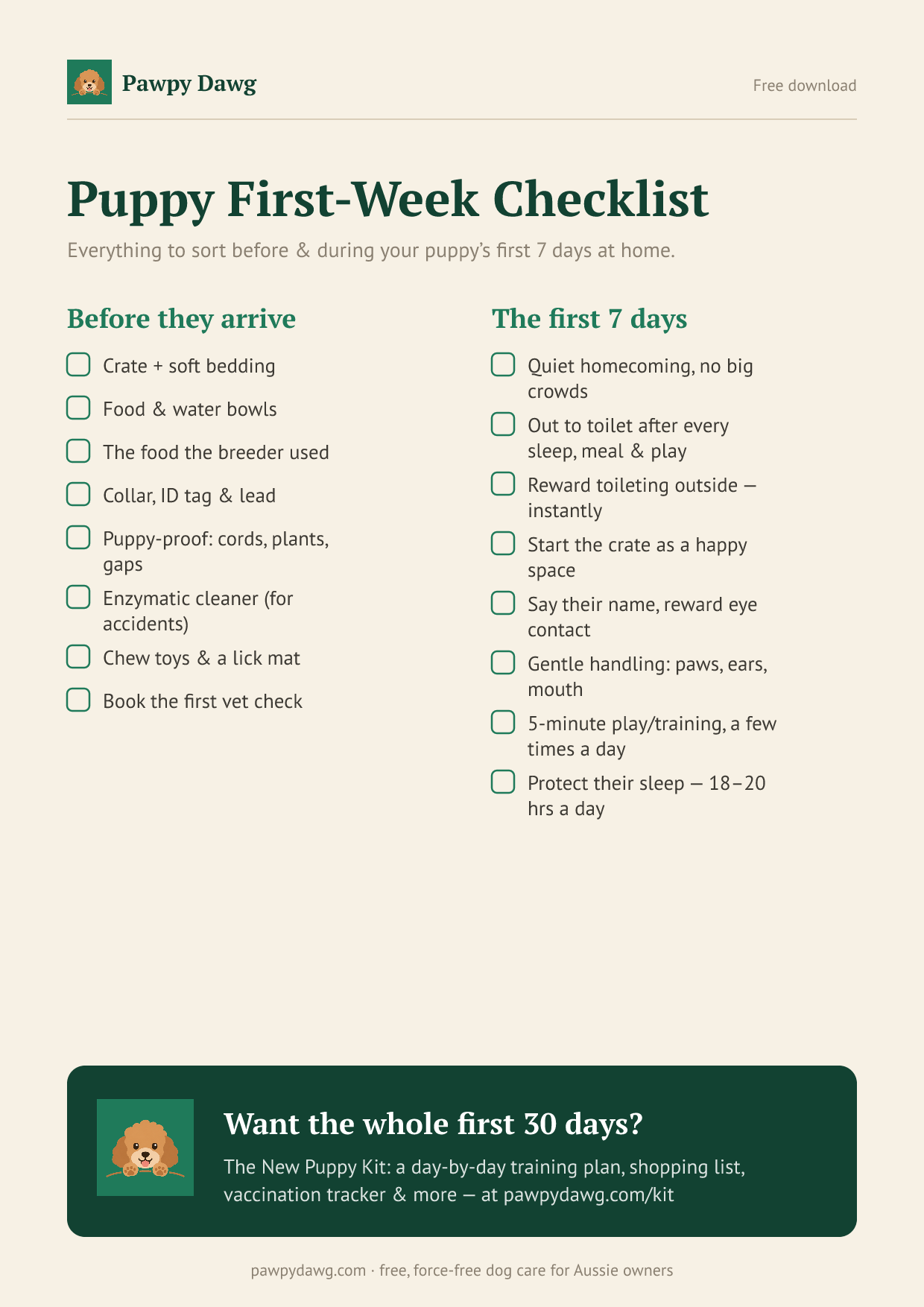
Free printable
Free: the Puppy First-Week Checklist
Everything to sort before and during your puppy's first 7 days home — a printable one-pager. Plus the occasional genuinely useful dog tip. No spam, unsubscribe anytime.
Related guides

Is Pet Insurance Worth It in Australia? The Honest Maths
Is pet insurance worth it in Australia? We crunch real premiums vs real vet bills — cruciate surgery, snake bite & more — so you can decide with confidence.
Read the guide →
How Much a Dog Really Costs Per Year in Australia (2026 Breakdown)
How much does a dog cost per year in Australia? 2026 line-item breakdown covering food, vet, insurance, grooming & the costs first-timers always miss.
Read the guide →
Dog Vaccination Schedule in Australia: What, When and What It Costs
Confused by C3, C5 and kennel cough? Here's your complete dog vaccination schedule Australia cost guide — puppy timelines, adult boosters & typical AUD prices.
Read the guide →