
Building a Dog First Aid Kit for Australian Conditions
Build a dog first aid kit Australia-ready: ticks, snakes, heat, cuts, what NOT to use, where to store it, and emergency numbers to save right now.

Written by Bradley Brown
Founder & editor · Reviewed 2026-11-14
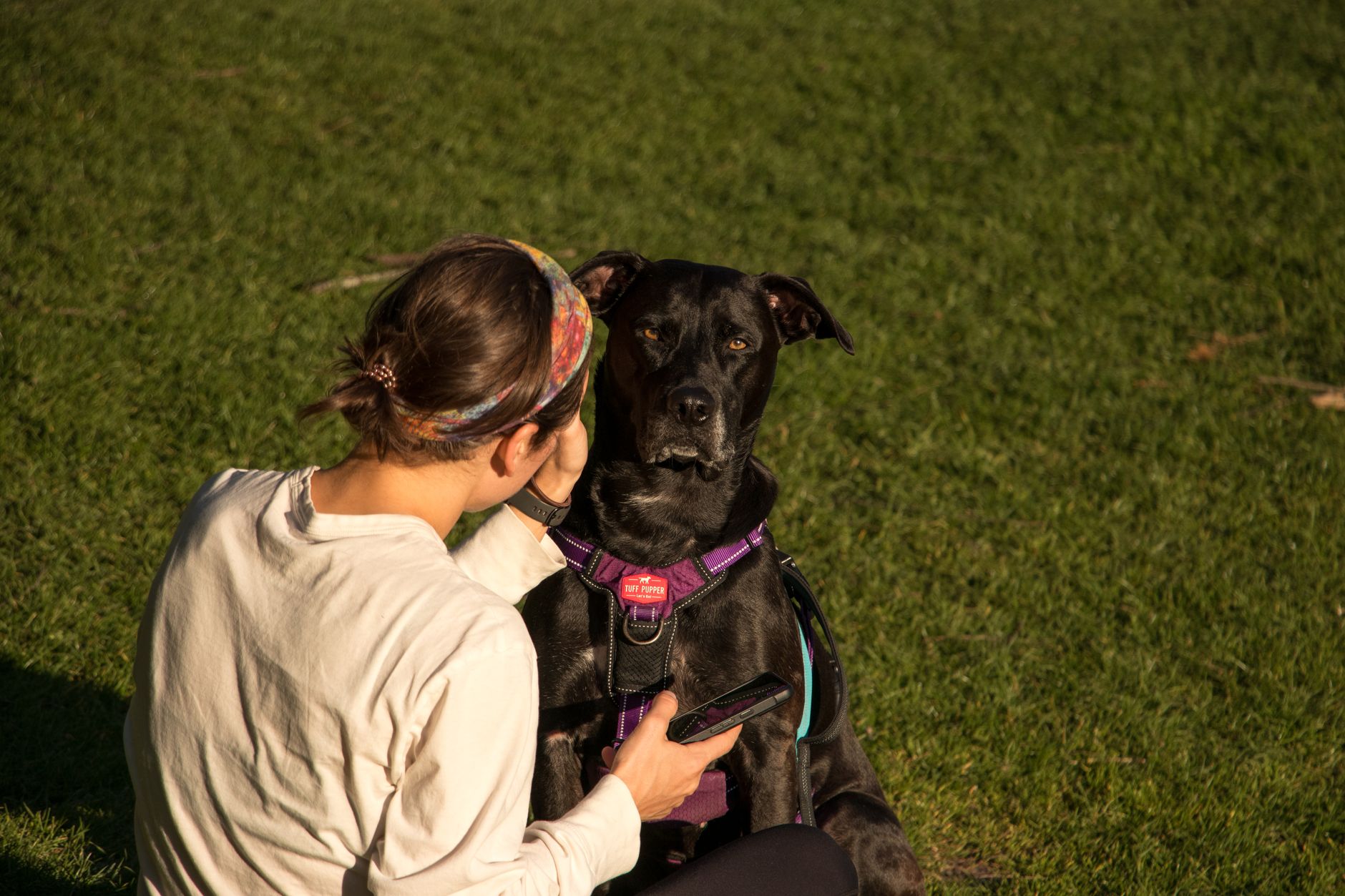
If your dog has ever eaten something suspicious on a bush walk or you've pulled a tick off and had no idea what to do next, you're not alone — and you haven't failed your dog. Most Australian owners are underprepared simply because nobody tells them what "prepared" actually looks like here. Our conditions are genuinely different: paralysis ticks, brown snakes, 40-degree summers, and remote properties that are an hour from the nearest vet.
Here's what to pack, what to skip, and the one thing to do before you close this tab.
Save These Numbers Right Now
Before you buy a single bandage, open your phone and save:
- Your regular vet (name + after-hours line — they're often different numbers)
- Your nearest 24-hour emergency vet
- Animal Poisons Helpline: 1300 869 738 (operates 24/7, charges a consult fee of around $65 AUD — worth every cent at 2 am)
This takes 90 seconds and is the single highest-value thing you can do today. A well-stocked kit means nothing if you're Googling in a panic while your dog is seizing.
What Goes in an Australian Dog First Aid Kit
Standard kits sold at pet stores are often designed for Northern Hemisphere markets. They're missing tick-specific tools and sometimes include products that are dangerous for dogs. Build your own using the list below.
Wound Care
- Sterile saline solution (at least 500 mL) — for flushing wounds and eyes; safe, effective, cheap
- Non-adherent wound dressings (Melolin or similar) — won't pull at the wound when removed
- Conforming bandage (e.g., Easifix or Coban self-adhesive bandage) — to hold dressings in place
- Micropore tape — to secure bandage ends without sticking to fur
- Blunt-nosed scissors — for cutting fur away from wounds or cutting bandage
- Sterile gauze squares (at least 10) — for padding and pressure
What NOT to use on dogs: Skip Dettol, TCP, hydrogen peroxide, and methylated spirits — all are toxic to dogs at concentrations typically used by humans. Plain saline or clean running water is your safest wound flush.
Tick Tools
Paralysis ticks (Ixodes holocyclus) are found along the east coast and can kill a dog within 24–72 hours of the toxin taking hold.
- Fine-tipped tick-removing forceps or a tick twister — grips at the head; do not use fingers, Vaseline, or burning — these cause the tick to inject more toxin
- Magnifying glass or phone torch — to check the tick is fully removed and inspect the skin around it
- Tick diary card (a small notepad or notes app entry) — record the time and location of removal; vets need this
After removal, monitor for wobbliness, voice change, or breathing difficulty. If any appear, go straight to the vet — do not wait.
Snake Bite Supplies
Australia has some of the world's most venomous snakes, and dogs are frequently bitten on the face or legs.
- Thick conforming bandage (at least 2 rolls) — for pressure-immobilisation bandaging on limbs
- Marker pen — to mark the edge of swelling on the skin, so the vet can track progression
Pressure-immobilisation bandaging is appropriate for limb bites from non-funnel-web snakes in humans — for dogs, the main priority is immobilising the dog and getting to a vet fast. Do not cut, suck, or tourniquet the bite. Keep the dog still and carry, don't walk, them to the car.
Heat and Dehydration
- Digital rectal thermometer (normal dog temp: 38–39.2°C) — essential for assessing heatstroke
- Foil emergency blanket — for keeping a dog warm in shock; also useful for shade
- Collapsible water bowl and 1 L of water — for hydration on the go; also for cooling a hot dog
- Wet cooling cloth (keep one in a zip-lock bag) — soak and apply to groin, armpits, and paw pads for a dog showing signs of heat stress
If a dog's temperature exceeds 40°C, begin cooling immediately but head to a vet regardless — internal organ damage can occur even after the dog "seems fine."
Other Essentials
- Disposable gloves (at least 4 pairs) — always treat wounds with gloves on
- Muzzle that fits your dog — a dog in pain bites, even a beloved one; include a measuring note of your dog's snout length
- Dog-safe eye wash — saline eyewash is fine; never use Visine or human decongestant eye drops
- Penlight or head torch — checking pupils, wounds, and ticks in low light
- Copy of your dog's vet records — vaccination status, medications, and any known allergies (a photo on your phone counts)
Kit vs. No Kit: What You're Actually Dealing With
| Situation | Without a kit | With a kit |
|---|---|---|
| Paralysis tick found | Fingers to remove → risk of toxin injection | Tick twister → clean removal + timed note for vet |
| Deep cut on walk | Torn shirt or nothing | Saline flush, non-stick dressing, bandage to control bleed |
| Snake bite suspected | Panic, Googling, delays | Pressure bandage on, dog carried, driving within minutes |
| Suspected heatstroke | Guessing at severity | Temperature measured, cooling started, vet called |
| Poisoning | Guessing what to do | Animal Poisons Helpline called with product name in hand |
Where to Keep It and How to Maintain It
One kit at home isn't enough if you camp, hike, or visit regional areas regularly. A second smaller kit in a dry bag for the car or backpack is worth assembling. Use a bright-coloured waterproof case — a fishing tackle box or a zip-locked nylon pouch both work well.
Check expiry dates on saline, dressings, and batteries every six months — set a phone reminder for January and July. Replace anything used immediately so the kit is never half-empty when you need it.
Keeping it under $80 AUD is realistic if you buy from a chemist rather than a pet-branded retailer — the components are identical.
Frequently asked questions
Can I use human antiseptic cream on my dog's cut?
Most human antiseptics — including Dettol, Savlon, and hydrogen peroxide — are harmful to dogs and can delay healing or cause toxicity if licked. Flush the wound with sterile saline or clean running water and cover it with a non-stick dressing until your vet can assess it.
What should I do immediately after finding a paralysis tick on my dog?
Remove the tick promptly using fine-tipped forceps or a tick twister, gripping as close to the skin as possible and pulling straight out without twisting. Note the time and body location of removal. Watch your dog closely for 24–48 hours for wobbliness, a changed bark, or difficulty breathing — any of these signs means an urgent vet visit.
How do I know if my dog has been bitten by a snake?
Signs include sudden collapse or weakness (sometimes with apparent recovery), vomiting, drooling, dilated pupils, muscle tremors, and difficulty breathing. The bite wound itself is often invisible. Keep your dog still, apply a pressure bandage to any limb bite, and get to a vet immediately — do not wait for symptoms to worsen.
Is there a ready-made dog first aid kit I can buy in Australia?
Pre-made kits are available from some pet stores and online retailers, but most are based on generic international templates and lack paralysis tick tools or guidance specific to Australian hazards. It's more reliable to build your own using a chemist for wound-care supplies and a pet store or online retailer for tick removers and a correctly sized muzzle.
What's the Animal Poisons Helpline and when should I call it?
The Animal Poisons Helpline (1300 869 738) is an Australian 24/7 service staffed by specialists in veterinary toxicology. Call it whenever your dog may have ingested something toxic — a chemical, plant, medication, or bait — before symptoms appear if possible. There is a consult fee of around $65 AUD, but the advice can save your dog's life and prevent unnecessary treatment.
How do I treat a dog for heatstroke before reaching the vet?
Move the dog to shade or an air-conditioned space immediately and apply wet cloths to the groin, armpits, neck, and paw pads. Use cool (not ice cold) water — ice can cause blood vessels to constrict and slow cooling. Take the dog's temperature if you have a rectal thermometer; anything above 40°C is an emergency. Drive to the vet while continuing to cool the dog — do not wait to see if they improve.
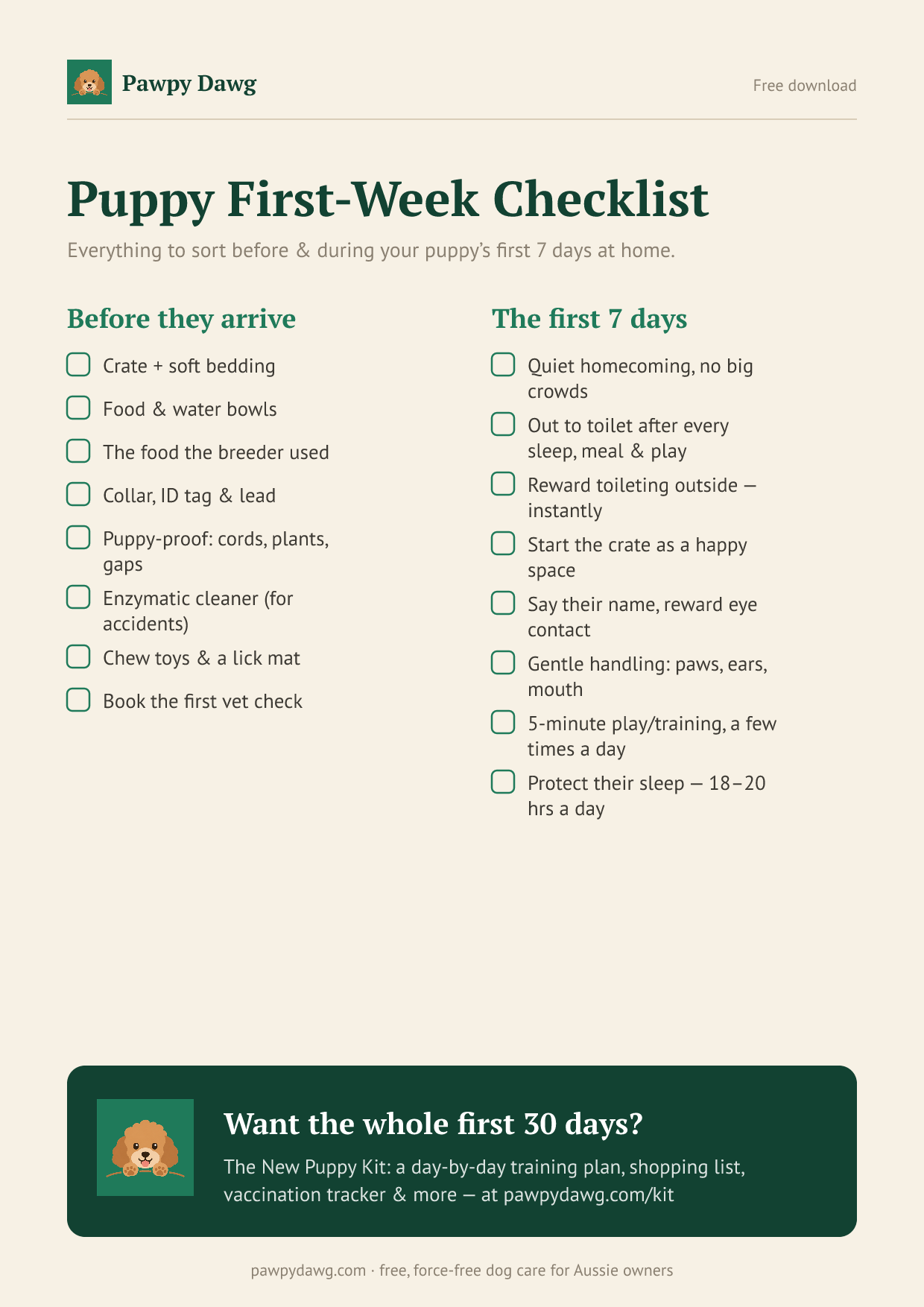
Free printable
Free: the Puppy First-Week Checklist
Everything to sort before and during your puppy's first 7 days home — a printable one-pager. Plus the occasional genuinely useful dog tip. No spam, unsubscribe anytime.
Related guides

Is Pet Insurance Worth It in Australia? The Honest Maths
Is pet insurance worth it in Australia? We crunch real premiums vs real vet bills — cruciate surgery, snake bite & more — so you can decide with confidence.
Read the guide →
How Much a Dog Really Costs Per Year in Australia (2026 Breakdown)
How much does a dog cost per year in Australia? 2026 line-item breakdown covering food, vet, insurance, grooming & the costs first-timers always miss.
Read the guide →
Dog Vaccination Schedule in Australia: What, When and What It Costs
Confused by C3, C5 and kennel cough? Here's your complete dog vaccination schedule Australia cost guide — puppy timelines, adult boosters & typical AUD prices.
Read the guide →