
Shih Tzu Training Guide: A Realistic 8-Week Plan
A week-by-week shih tzu training plan built around their real temperament. Calm, 5–10 min daily sessions that actually work for busy Australian owners.

Written by Bradley Brown
Founder & editor · Reviewed 2026-07-19
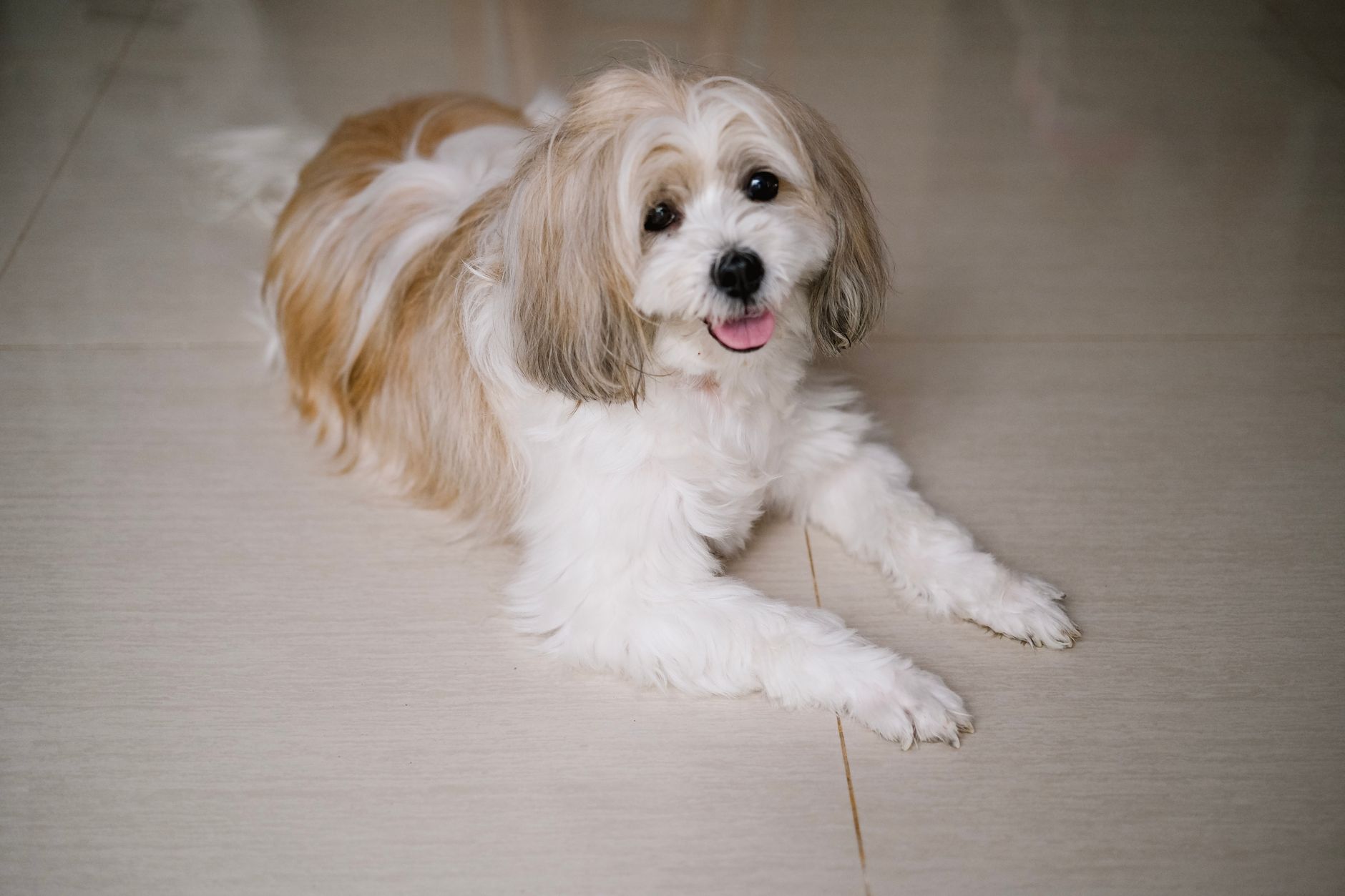
Mia bought Biscuit from a breeder in the Hunter Valley when he was nine weeks old. By week three, the eight-year-old Shih Tzu was sitting on the couch like a tiny emperor, ignoring every "sit" and "come" she attempted, and barking at the ceiling fan for twenty minutes every evening. Mia's partner started joking that Biscuit was "untrainable." Mia started Googling at midnight.
Here's the truth: Biscuit is not broken. Shih Tzus were bred for centuries as companion dogs to Chinese royalty — animals whose entire job was to be adored, not to fetch ducks or herd livestock. They are intelligent, socially tuned-in, and perfectly capable of learning. They just learn on their own terms, and if you approach Shih Tzu training the same way you'd train a Border Collie or a Labrador, you will absolutely hit a wall.
The plan below is eight weeks, five to ten minutes a day. That's it.
What's Actually Going On Inside That Fluffy Head
Shih Tzus score as moderately trainable in most canine behaviour literature — not because they lack intelligence, but because they have low working drive and high social motivation. They are not trying to please you so much as they are trying to maintain a pleasant relationship with you. That's a subtle but important difference.
Practical consequences:
- Repetition bores them fast. Five reps of "sit" in a session is often enough. Ten reps and they start doing the doggy equivalent of a shrug.
- Harshness backfires badly. A sharp "no" or a leash jerk tends to shut a Shih Tzu down rather than redirect them. They sulk. Sessions end.
- Food is powerful, but so is praise and touch. A small, soft treat combined with a warm "yes!" and a gentle ear scratch lands far better than a treat alone.
- They tire quickly but recover quickly. Short sessions are not a compromise — they are the correct approach for this breed.
The 8-Week Plan
Weeks 1–2 — Foundation Before Anything Else
Before Biscuit learns a single cue, Mia needs to establish two things: a marker word (or clicker) and a predictable reward. Choose either "yes" or a click to mark the exact moment the dog does the right thing. This precision is what makes training stick.
Week 1 daily session (5 minutes):
- Charge the marker: say "yes" and immediately give a treat, ten times. Repeat twice a day for two days.
- Introduce name recognition: say the dog's name once, quietly. The instant they flick eyes toward you — "yes," treat. Practise in a low-distraction room.
Week 2 daily session (5–7 minutes):
- Add sit: hold a treat at the dog's nose, arc it slowly back over their head. The moment the bottom touches the floor — "yes," treat. No pushing on the hindquarters.
- End every session with 30 seconds of calm patting. This is not wasted time; it builds a positive association with the training ritual itself.
What you're not doing yet: "down," "stay," loose-lead walking, toilet training. One thing at a time.
Weeks 3–4 — Name + Sit + the Start of "Come"
By now Biscuit reliably looks at Mia when she says his name in the living room. Time to build on that.
"Come" (recall) introduction: Crouch low, open arms, say "Biscuit, come" in a bright, happy voice — not the tone you'd use to call someone into a disciplinary meeting. When he arrives, throw a small party: treats, praise, pats. Never call the dog to you for something they find unpleasant (nail trims, baths) during this phase. If you need to do something unpleasant, go and collect the dog instead.
Sit in new locations: practise sit in the kitchen, in the backyard, near the front door. A cue the dog only knows in one room is not really learned yet.
Toilet training note: If you're also working on toileting (common at this stage), keep a diary of times your Shih Tzu naturally eliminates — usually within 15 minutes of waking, eating, or playing. Take them to the designated spot at those times, wait, and mark/reward the moment they go. Shih Tzus can be slower to toilet train than many breeds; eight to twelve weeks is normal. Do not punish accidents.
Weeks 5–6 — "Down," Duration, and the Lead
"Down" introduction: Ask for sit first. Then hold a treat at the dog's nose and lower it slowly to the floor between their front paws, drawing it slightly toward you. Most Shih Tzus will slide into a down. "Yes," treat, celebration.
Building duration on "sit" and "down": Once the dog sits, wait one second before marking. Then two. Then three. You're teaching them that holding the position earns the reward, not just the initial movement.
Loose-lead walking: Start indoors. Hold the lead, walk a few steps, and the moment the dog is beside you without tension on the lead — "yes," treat. Shih Tzus pull less than large breeds, but they are champion stop-and-sniffers. Let them sniff freely as a reward after a stretch of good walking, rather than fighting every sniff.
Weeks 7–8 — Real-World Proofing
This is where most owners give up too early, believing the dog has "forgotten" what they learned. They haven't. Distractions simply require a new level of practice.
Add one distraction per session:
- Another person in the room
- A toy on the floor
- Outside in the backyard
- On a quiet footpath
Keep the criteria easy when the distraction is high. If Biscuit nails "sit" at home but loses the plot on the footpath, that's normal — drop back to just name recognition outdoors and rebuild from there.
Introduce "leave it": Hold a treat in a closed fist. When the dog stops nosing at it and backs off — "yes," open the other hand and reward from that hand. This becomes invaluable when they find a chicken bone on a walk.
Quick Reference: What to Expect Week by Week
| Week | Focus Skill | Session Length | Realistic Goal |
|---|---|---|---|
| 1 | Marker + name | 5 min | Dog looks at you when called |
| 2 | Sit | 5–7 min | Reliable sit in one room |
| 3–4 | Come + sit in new places | 7 min | Recall from 2–3 metres indoors |
| 5–6 | Down + duration + lead | 7–10 min | Holds sit/down for 5 seconds |
| 7–8 | Proofing + leave it | 10 min | Skills work with mild distractions |
A Note on Barking (Because Biscuit Still Eyes That Ceiling Fan)
Demand barking and alert barking are common Shih Tzu traits. The ceiling-fan situation Mia faces is almost certainly alert barking at movement. The fix is simple but requires consistency: do not react, do not comfort, do not scold. Any attention — positive or negative — rewards the bark. Wait for a two-second pause, then calmly say "good quiet" and reward. Over ten to fourteen days, those pauses get longer.
Costs to Budget For
A basic Shih Tzu training setup in Australia is inexpensive. A bag of small, soft training treats (Zuke's Minis or similar) runs around $15–$22 AUD. A clicker is under $5 AUD. If you want structured support, a six-week group puppy or beginner obedience class typically costs $150–$280 AUD depending on your city — money well spent for the in-person feedback alone.
Eight weeks from now, Mia's problem isn't that Biscuit is stubborn. The problem is that nobody told her he needed shorter sessions, softer feedback, and a reason to cooperate rather than a command to obey. Give a Shih Tzu those three things and they're genuinely a pleasure to train.
As an Amazon Associate we earn from qualifying purchases.
Frequently asked questions
Are Shih Tzus hard to train?
Shih Tzus are not hard to train, but they do respond differently to training than high-drive working breeds. They respond best to short sessions (5–10 minutes), positive reinforcement, and gentle handling. Harsh corrections or long repetitive drills tend to cause them to switch off entirely.
How long does it take to toilet train a Shih Tzu?
Shih Tzus are generally slower to toilet train than many other breeds, and eight to twelve weeks is a realistic timeframe for a puppy. Consistency is key — take them to their designated spot after waking, eating, and play sessions, and reward immediately when they go in the right spot. Punishing accidents is counterproductive and can make the process take longer.
What treats work best for training a Shih Tzu?
Small, soft treats work best because they can be eaten quickly without interrupting the training rhythm. Look for treats around the size of a pea — products like Zuke's Minis or small pieces of cooked chicken or cheese are popular choices. Avoid large crunchy biscuits that take time to chew and break your dog's focus.
My Shih Tzu knows 'sit' at home but ignores me outside. Is something wrong?
Nothing is wrong — this is called a lack of 'proofing' and it's completely normal. A cue learned in one location needs to be practised gradually in new environments before it becomes reliable outdoors. Start with your backyard, then a quiet footpath, rewarding generously each time the environment is new.
How do I stop my Shih Tzu barking at everything?
The most effective approach for Shih Tzu barking is to withhold all attention — including eye contact and verbal corrections — during barking, then calmly mark and reward the moment there is quiet. Any attention during barking, even a frustrated 'no,' can inadvertently reinforce the behaviour. Consistency over ten to fourteen days typically produces a noticeable improvement.
Can I train an older Shih Tzu, or is it too late?
Adult and senior Shih Tzus are absolutely trainable. Older dogs can take a little longer to learn new habits, particularly if they've practised an unwanted behaviour for years, but the same positive reinforcement methods apply. In some ways, older dogs have better focus than puppies and are less easily distracted during sessions.
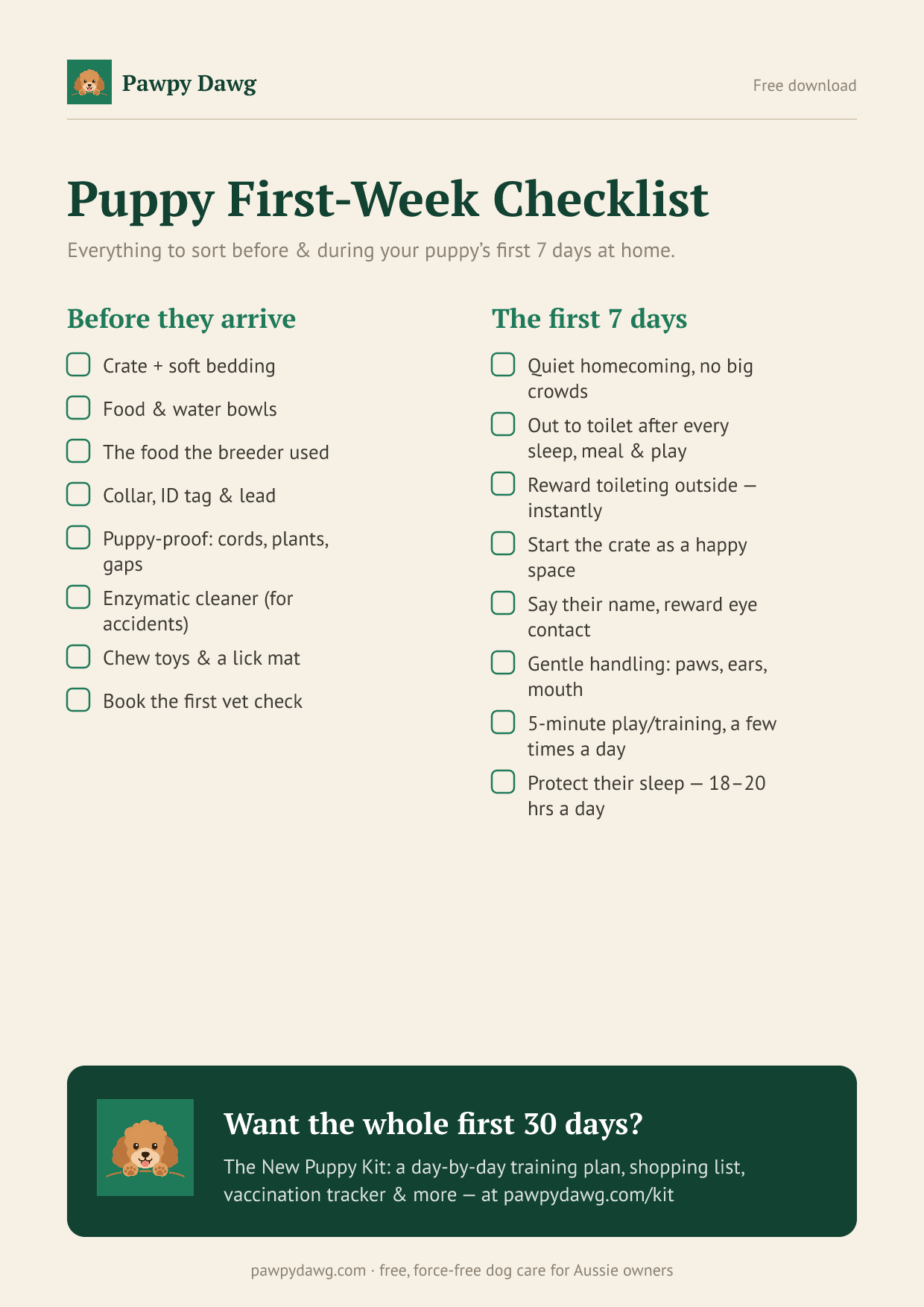
Free printable
Free: the Puppy First-Week Checklist
Everything to sort before and during your puppy's first 7 days home — a printable one-pager. Plus the occasional genuinely useful dog tip. No spam, unsubscribe anytime.