
Australian Shepherd Training Guide: A Realistic 8-Week Plan
A realistic, week-by-week Australian Shepherd training plan built for their energy and smarts. Practical 5–10 min daily sessions that actually work.

Written by Bradley Brown
Founder & editor · Reviewed 2026-07-19
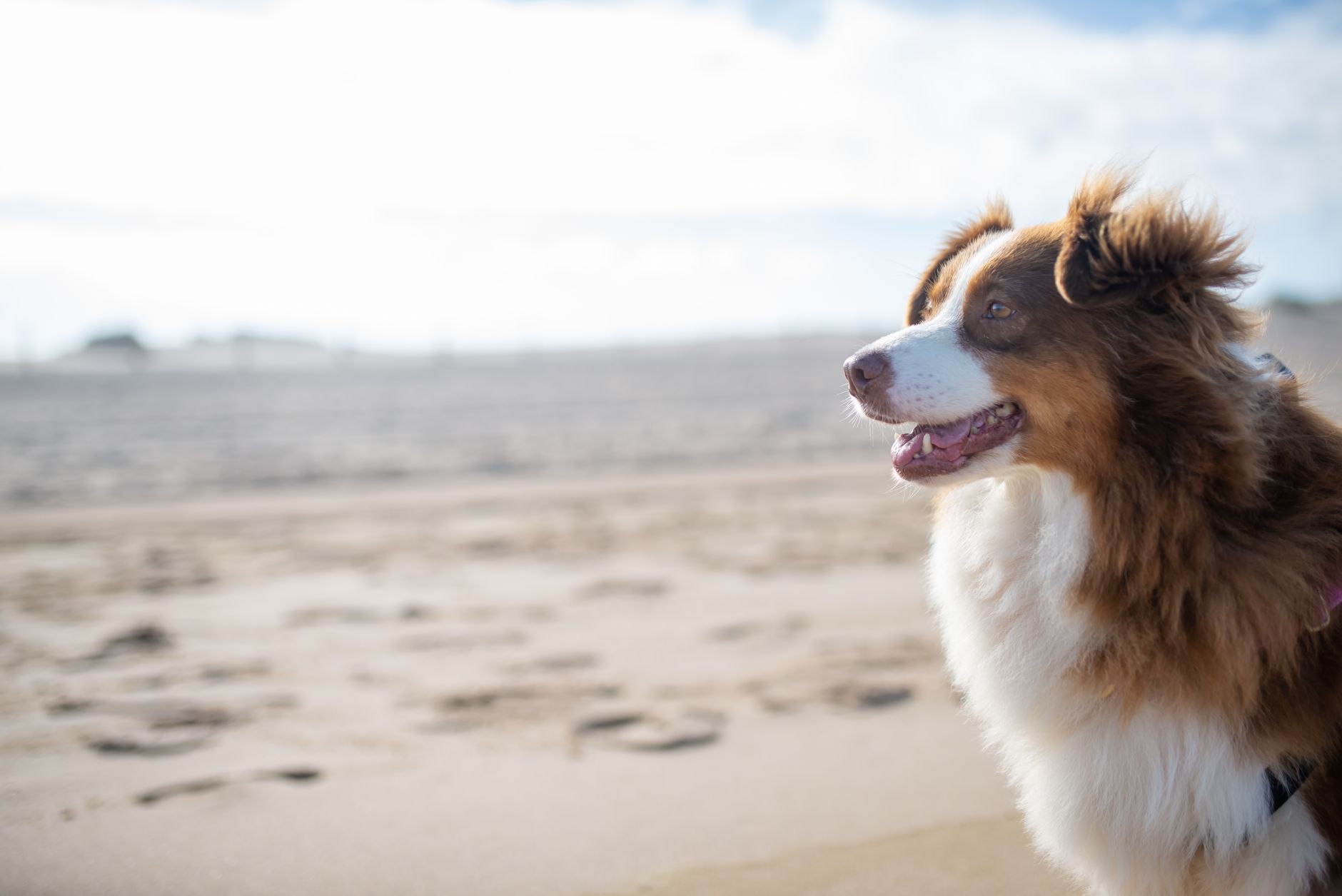
If you've got an Australian Shepherd who seems to have more ideas than you do — and the energy to act on all of them — you're not doing it wrong. Aussies are intense dogs, and without a clear structure, that intelligence quickly turns into chaos. The good news: they're also one of the most trainable breeds on the planet, and a consistent 5–10 minutes a day will get you somewhere fast.
Your Quick Win for Today
Before anything else, teach a hand touch. Hold your flat palm a few centimetres from your dog's nose. The moment they sniff or bump it, mark with a "yes!" and give a treat. Do this five times. That's it. Hand touch builds focus, teaches your Aussie to check in with you, and becomes a tool you'll use throughout this entire plan. It takes two minutes and it works.
What Makes Australian Shepherd Training Different
Aussies were bred to make decisions independently while working livestock across long distances. That means you're working with a dog who has genuine problem-solving instincts — which is brilliant, but also means they'll fill any training vacuum with their own curriculum. Barking at movement, herding kids, spinning, nipping at heels: these aren't bad behaviour. They're an unemployed working dog doing the only job it knows.
The other thing to understand: Aussies are extremely sensitive to tone and body language. Harsh corrections often shut them down or make them anxious. Positive reinforcement — rewarding what you want rather than punishing what you don't — works far better with this breed and is backed by the mainstream veterinary and animal behaviour community as the most effective long-term approach.
Keep sessions short. Five to ten minutes, two to three times a day, beats one exhausting 45-minute session. Always end on something your dog can succeed at.
The 8-Week Plan
Weeks 1–2: Foundation and Focus
Start with the four basics: sit, drop, stay (just 2–3 seconds at first), and the hand touch from above. Work in a low-distraction space — inside, away from windows. Use high-value treats your dog doesn't get at other times (small pieces of cooked chicken or cheese work well). The goal isn't perfection; it's building the habit of your dog looking to you for direction.
Introduce a marker word ("yes!") or a clicker if you prefer. Consistency matters more than equipment. By the end of week two, most Aussies will have a reliable sit and a growing drop.
Weeks 3–4: Duration, Distance and Name Response
Extend your "stay" — aim for 10–15 seconds by the end of week four. Begin adding a step back before releasing. Practise a strong name response: say your dog's name once, and the moment they look at you, mark and reward. This becomes your emergency recall foundation.
Start basic loose-lead walking. Aussies pull because forward movement is self-rewarding. Every time the lead goes tight, stop completely. When they return to your side and the lead goes slack, move forward. It feels slow at first; it clicks within a week.
Weeks 5–6: Impulse Control
This is where Aussie training really pays off. Work on "leave it" — place a treat on the floor, cover it with your hand, wait for your dog to back off, then reward from your other hand (not the one on the floor). Practise "wait" at doorways before meals and before going outside. These exercises directly address the herding impulse — teaching your dog that pausing earns better outcomes than rushing.
Add a "go to mat" or "place" behaviour. Send your dog to a designated mat and reward them for staying there. This becomes your go-to when guests arrive or you need five minutes of peace.
Weeks 7–8: Real-World Proofing
Take everything outside. A behaviour your dog knows perfectly in the kitchen is essentially a new skill in a park. Start in low-distraction areas and build up. Practise recall (using the name response you built in weeks 3–4) in a fenced area — call, reward big, never call your dog to you for anything unpleasant.
Introduce one trick or enrichment activity — spin, find it (nose work), or a simple retrieve. Aussies thrive when they have a "job," and trick training satisfies that need without requiring a sheep paddock.
Keeping the Momentum Going
After week eight, you don't need to stop — you just need to maintain. Short daily sessions keep skills sharp and your dog mentally satisfied. A five-minute training session tires an Aussie more than a twenty-minute walk, because it engages the part of their brain they were built to use.
If specific problems like reactivity, separation anxiety, or persistent herding behaviour aren't improving with this foundation work, a session or two with a qualified, force-free trainer is a smart investment — expect to pay around $100–$180 AUD per session depending on your location. You haven't failed; some issues simply need a professional eye.
Australian Shepherd training isn't about controlling a difficult dog. It's about giving a brilliant, high-drive dog the structure it genuinely needs to settle and thrive.
Frequently asked questions
How much exercise does an Australian Shepherd need alongside training?
Adult Aussies generally need 1–2 hours of physical activity daily, but mental stimulation matters just as much. Short training sessions, puzzle feeders, and nose work can take the edge off on days when a long run isn't possible. A physically tired but mentally bored Aussie will still find trouble.
What age should I start training my Australian Shepherd puppy?
You can start the moment your puppy comes home, typically at 8 weeks. Puppies have short attention spans, so keep sessions to 2–3 minutes and focus on name response, sit, and gentle handling. Early socialisation — positive exposure to people, surfaces, sounds, and other dogs — is just as important as formal obedience at this stage.
My Australian Shepherd keeps herding my kids — how do I stop it?
Herding children is normal Aussie behaviour, not aggression, but it does need redirecting. Teach a solid 'leave it' and 'go to mat' so your dog has an alternative behaviour when kids are running. Management — keeping your dog on a lead or behind a gate during high-energy play — prevents rehearsal of the behaviour while you train. Consistent practice over several weeks is usually enough to reduce it significantly.
Are Australian Shepherds easy to train compared to other breeds?
Aussies rank among the most trainable breeds — they pick up new behaviours quickly and genuinely enjoy working with their owner. The challenge isn't intelligence; it's that they learn bad habits just as fast as good ones, and they need mental engagement to stay settled. With consistent, positive training they're a joy to work with.
My Aussie already knows the basics — can I skip the early weeks?
If your dog has solid sit, drop, and name response, you can move straight into weeks 3–4 and focus on impulse control and real-world proofing. The hand touch and mat work in the earlier weeks are still worth adding if you haven't done them — they fill gaps that show up later in reactivity and recall reliability.
Is it too late to train an adult or rescue Australian Shepherd?
Not at all. Adult dogs are often easier to train than puppies because they can concentrate for longer. Rescue Aussies may need a few weeks to decompress before formal training begins, but once settled, they respond well to the same positive approach. The 8-week plan works at any age.
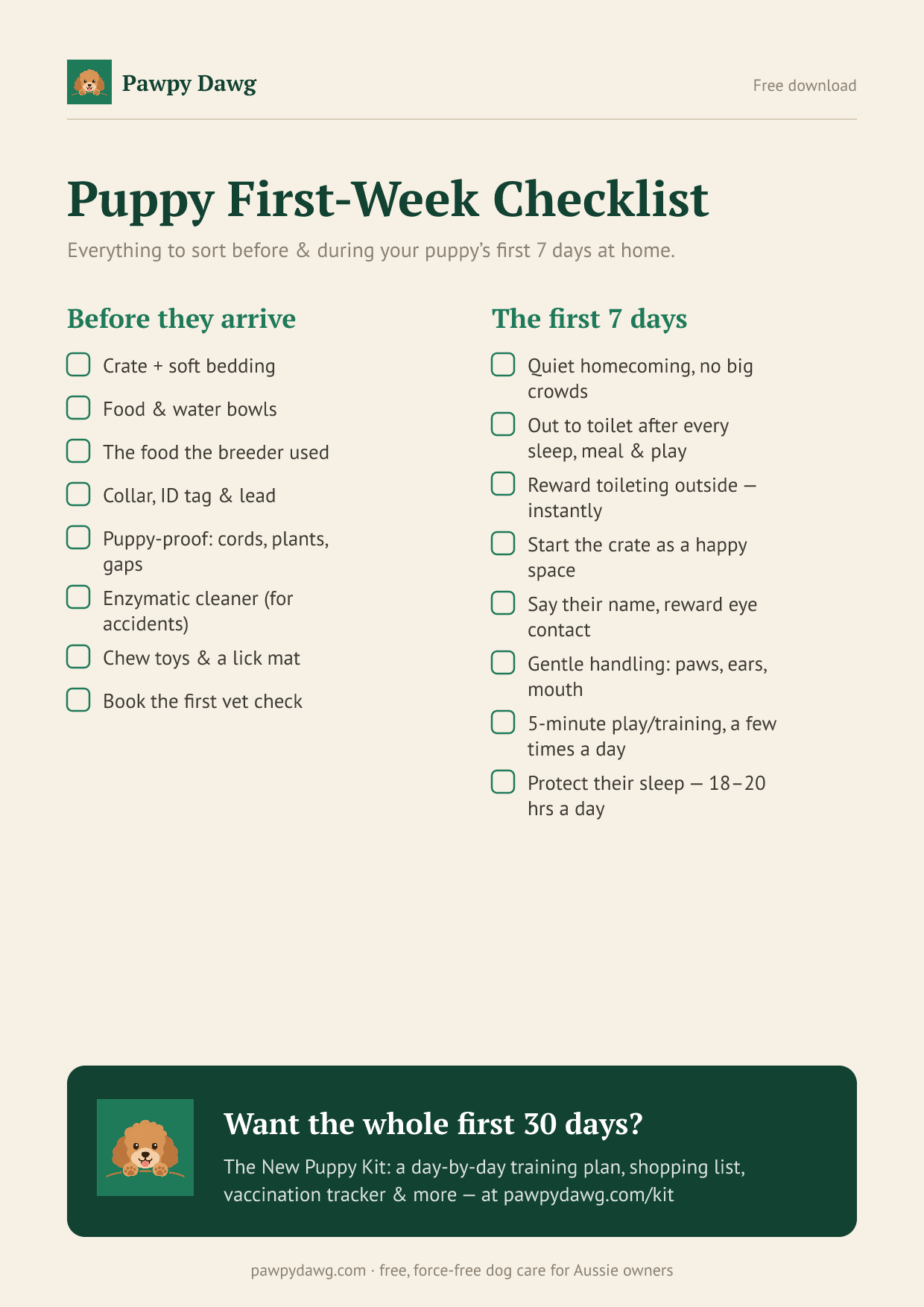
Free printable
Free: the Puppy First-Week Checklist
Everything to sort before and during your puppy's first 7 days home — a printable one-pager. Plus the occasional genuinely useful dog tip. No spam, unsubscribe anytime.